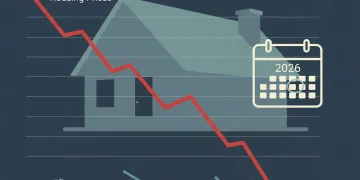
Navigating the 2026 Housing Market: Will Rising Mortgage Rates Cool Demand Nationally?
The real estate landscape is constantly evolving, influenced by a myriad of economic factors, demographic shifts, and policy decisions. As we look ahead to the 2026 housing market, one of the most pressing questions on everyone’s mind revolves around the potential impact of mortgage rate fluctuations. Specifically, how would a 0.75% mortgage rate increase cool demand nationally, and what does this mean for prospective buyers, current homeowners, and investors?
Understanding the dynamics of the 2026 housing market requires a deep dive into historical trends, current economic indicators, and future projections. The housing sector is a cornerstone of the national economy, and changes within it ripple through various other industries, from construction to retail. This comprehensive guide aims to unpack these complexities, offering insights into what the future might hold for real estate in the United States.
Anúncios
The Current Economic Climate and Its Influence on the 2026 Housing Market
Before we project into 2026, it’s crucial to understand the current economic environment. Inflation, interest rate policies by central banks, employment figures, and consumer confidence all play significant roles in shaping the housing market. Recent years have seen unprecedented shifts, including periods of historically low interest rates that fueled a robust housing boom, followed by rapid increases aimed at curbing inflation. These past cycles provide valuable context for predicting the trajectory of the 2026 housing market.
A strong job market typically translates to higher consumer confidence and greater purchasing power, which can sustain housing demand even in the face of rising costs. Conversely, economic downturns or periods of high unemployment can severely depress demand, leading to price corrections. The interplay between these factors will be pivotal in determining the overall health and direction of the 2026 housing market.
Anúncios
Furthermore, global economic events, supply chain issues, and geopolitical tensions can indirectly influence domestic markets. For instance, disruptions in material supplies can drive up construction costs, impacting new home builds and subsequently existing home prices. Understanding these broader economic forces is essential for anyone trying to anticipate the future of real estate.
The Mortgage Rate Conundrum: A 0.75% Increase and Its Implications
The central question we’re addressing is the impact of a 0.75% mortgage rate increase on the 2026 housing market. To put this into perspective, even a seemingly small percentage point shift can have substantial effects on monthly mortgage payments and, consequently, on buyer affordability and demand. For example, on a $400,000 mortgage, a 0.75% increase could translate to hundreds of dollars more per month, significantly altering a household’s budget.
Understanding Mortgage Rate Sensitivity
Mortgage rates are highly sensitive to the Federal Reserve’s monetary policy. When the Fed raises its benchmark interest rate, it typically leads to higher borrowing costs across the board, including for mortgages. This is a common strategy employed to cool an overheating economy and combat inflation. If inflation remains stubbornly high, further rate hikes, including a 0.75% increase, become more probable.
The immediate effect of higher mortgage rates is a reduction in purchasing power. Buyers who were pre-approved for a certain loan amount at a lower rate might find themselves needing to adjust their budget downwards or reconsider their homeownership aspirations altogether. This phenomenon is particularly acute for first-time homebuyers and those at the lower end of the income spectrum, who are often most sensitive to changes in monthly payments.
Moreover, higher rates can also lead to a ‘lock-in’ effect for existing homeowners. Those with lower fixed-rate mortgages may be less inclined to sell their current homes and purchase new ones, as doing so would mean trading their favorable rate for a significantly higher one. This can further constrain housing supply, even as demand potentially softens, creating a complex market dynamic for the 2026 housing market.
Cooling Demand Nationally: A Deep Dive into the 2026 Housing Market
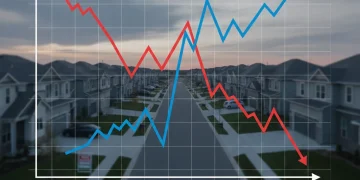
If a 0.75% mortgage rate increase were to occur, the most immediate and widespread effect would likely be a cooling of national housing demand. This doesn’t necessarily mean a crash, but rather a moderation from previous frenzied periods. The extent of this cooling would depend on several factors, including the starting point of mortgage rates, the overall economic resilience, and regional variations.
Impact on Buyer Behavior
Higher rates typically lead to a more cautious buyer pool. Many potential buyers might choose to delay their home purchase, waiting for rates to potentially stabilize or decline, or to save up a larger down payment to offset higher monthly costs. This pause in activity can reduce competition, which, in turn, can slow down the pace of home price appreciation or even lead to modest price reductions in some areas. The urgency that characterized previous boom markets would likely dissipate in the 2026 housing market under such conditions.
Furthermore, the psychological impact of rising rates should not be underestimated. News of increasing borrowing costs can create uncertainty and dampen enthusiasm, leading to a ‘wait-and-see’ approach among a significant segment of the population. This shift in sentiment is a powerful force in real estate markets.

Affordability Crisis: A Growing Concern in the 2026 Housing Market
Even before significant rate increases, affordability has been a persistent challenge in many parts of the country. A 0.75% hike would exacerbate this crisis, pushing homeownership further out of reach for many. The ratio of median home prices to median incomes has been stretched thin, and higher mortgage payments only worsen this disparity. This is a critical factor in understanding the 2026 housing market.
Areas with already high home prices and competitive markets would likely feel the squeeze most acutely. While luxury markets might be somewhat insulated due to the wealth of buyers, the middle and entry-level segments would experience significant pressure. This could lead to a bifurcation of the market, where high-end properties continue to perform relatively well, while more affordable segments struggle with reduced demand.
The challenge of affordability also affects rental markets. If fewer people can afford to buy, demand for rentals increases, potentially driving up rental prices. This creates a challenging environment for individuals and families trying to build wealth and achieve financial stability, making the 2026 housing market a topic of broad social and economic interest.
Regional Variations in the 2026 Housing Market
It’s important to remember that the U.S. housing market is not a monolith. The impact of a 0.75% mortgage rate increase would vary significantly across different regions and local markets. Factors such as local job growth, population migration patterns, housing supply levels, and the overall economic health of a specific area will determine how it responds to national trends in the 2026 housing market.
Boomtowns vs. Stagnant Markets
Fast-growing areas with robust job markets and strong in-migration might experience a softer landing, with demand remaining relatively resilient despite higher rates. These ‘boomtowns’ often have underlying economic strengths that can absorb some of the shocks. Think of tech hubs or cities with diversified economies that continue to attract new residents and businesses. The 2026 housing market in these areas might see a slowdown in appreciation rather than outright price declines.
Conversely, areas with stagnant job growth, declining populations, or an oversupply of housing might be more vulnerable to significant downturns. In these markets, higher mortgage rates could tip the balance, leading to more pronounced reductions in demand and potentially larger price corrections. Understanding these regional nuances is crucial for any stakeholder in the 2026 housing market.
Furthermore, regulatory environments and local zoning laws also play a role. Areas with restrictive zoning that limits new construction may face ongoing supply shortages, which could prop up prices even in a cooling market. In contrast, regions with more permissive building policies might see supply catch up to demand more quickly, leading to greater price stability or even declines.
Supply-Side Dynamics in the 2026 Housing Market
While much of the discussion focuses on demand, the supply side of the housing equation is equally critical for the 2026 housing market. The availability of homes for sale, both new and existing, significantly influences prices and market activity. A prolonged period of underbuilding in many parts of the country has contributed to the supply shortages we’ve seen, which could be a persistent feature of the 2026 housing market.
New Construction Challenges
New home construction faces its own set of challenges, including high material costs, labor shortages, and regulatory hurdles. Higher interest rates can also increase the cost of financing for developers, potentially slowing down the pace of new builds. If new construction continues to lag behind demand, even a cooling market might not see a substantial increase in available homes, which could prevent significant price drops.
The availability of land, particularly in desirable urban and suburban areas, also plays a crucial role. As developable land becomes scarcer and more expensive, the cost of new homes naturally increases. These supply-side constraints mean that even if demand cools, a severe oversupply situation leading to a market crash is less likely in many regions. The 2026 housing market will still contend with these structural issues.

Existing Home Inventory
As mentioned earlier, existing homeowners with low fixed-rate mortgages might be reluctant to sell if it means taking on a new mortgage at a much higher rate. This ‘golden handcuff’ effect can keep existing home inventory low, even if overall market activity slows. A limited supply of homes for sale, coupled with still-present underlying demand (even if reduced), can act as a floor for prices, preventing steep declines in the 2026 housing market.
However, external factors like job relocations, family changes, or financial distress can still compel homeowners to sell, regardless of mortgage rates. The balance between these ‘must-sell’ situations and the ‘lock-in’ effect will largely determine the inventory levels in the 2026 housing market.
What Does This Mean for Different Stakeholders in the 2026 Housing Market?
The potential shifts in the 2026 housing market due to rising mortgage rates have distinct implications for various groups.
Prospective Homebuyers
For prospective homebuyers, particularly first-time buyers, a cooling market might present both challenges and opportunities. On one hand, higher mortgage rates mean higher monthly payments, making homeownership less affordable. On the other hand, reduced competition and potentially slower price appreciation could offer a chance to negotiate more favorable terms or find properties that were previously out of reach due to bidding wars. Patience and a clear understanding of their financial limits will be key for those entering the 2026 housing market.
Current Homeowners
Current homeowners, especially those with low fixed-rate mortgages, are in a relatively strong position. Their equity has likely increased in recent years, and their monthly payments are stable. However, those looking to sell and buy a new home might face the dilemma of trading their low rate for a higher one, potentially leading to a larger monthly payment even if their new home’s price is similar. The 2026 housing market will require careful financial planning for these individuals.
Real Estate Investors
Real estate investors will need to adapt their strategies for the 2026 housing market. While rapid appreciation might slow, opportunities could emerge in specific segments or regions. Investors might focus more on cash flow properties, distressed assets, or areas with strong rental demand. Due diligence and a keen understanding of local market dynamics will be more important than ever. The era of easy gains might be over, replaced by a need for more strategic and nuanced investment approaches.
The Rental Market
As homeownership becomes less accessible for some, demand for rental properties is likely to remain strong, or even increase. This could put upward pressure on rental prices, benefiting landlords but further straining the budgets of renters. The interplay between the for-sale and rental markets is crucial to understanding the broader housing ecosystem in the 2026 housing market.
Beyond Mortgage Rates: Other Factors Shaping the 2026 Housing Market
While mortgage rates are a dominant factor, several other elements will contribute to the shape of the 2026 housing market.
Demographic Shifts
The ongoing demographic shifts in the U.S. will continue to influence housing demand. Millennials are still a significant force, entering their prime homebuying years, while Gen Z is beginning to emerge. The preferences of these generations, such as a desire for walkable communities, sustainable homes, or specific types of urban/suburban living, will shape the types of housing in demand. The aging population also has an impact, with some downsizing and others seeking age-restricted communities, adding another layer of complexity to the 2026 housing market.
Remote Work Trends
The permanence of remote and hybrid work models will continue to reshape where people choose to live. This trend has already fueled demand in smaller cities and rural areas, as people are no longer tethered to expensive urban centers. If remote work remains prevalent, it could continue to decentralize housing demand, leading to sustained growth in unexpected places and potentially easing pressure on traditional metropolitan areas in the 2026 housing market.
Government Policies and Regulations
Government policies at local, state, and federal levels can significantly impact the 2026 housing market. Zoning reforms, affordable housing initiatives, tax incentives for homebuyers or developers, and infrastructure investments can all influence supply, demand, and affordability. Changes in property tax laws or regulations around short-term rentals could also have localized effects.
Conclusion: A Balanced Outlook for the 2026 Housing Market
The 2026 housing market is poised to be a period of adjustment and recalibration. While a 0.75% mortgage rate increase would undoubtedly cool demand nationally, leading to a more balanced market, it’s unlikely to trigger a widespread collapse. Instead, we can expect a moderation of price growth, increased inventory in some areas, and a more cautious approach from buyers and sellers alike.
Affordability will remain a central challenge, exacerbated by higher borrowing costs. Regional variations will be pronounced, with some markets demonstrating greater resilience than others. Supply-side constraints, particularly in new construction and existing home inventory, will continue to provide a floor for prices, preventing severe declines in many areas.
For those navigating the 2026 housing market, flexibility, strategic planning, and a thorough understanding of local conditions will be paramount. Whether you are buying, selling, or investing, staying informed about economic indicators, demographic shifts, and policy changes will be crucial to making sound decisions in the evolving real estate landscape. The market may be cooling, but opportunities will still exist for those who are prepared and patient.