Understanding the 2026 Social Security COLA: How It Impacts Your Retirement Income in the US
Anúncios
For millions of Americans, Social Security benefits form the bedrock of their retirement income. These benefits are not static; they are adjusted annually to account for inflation through a mechanism known as the Cost-of-Living Adjustment (COLA). As we look ahead, understanding the projected 2026 Social Security COLA becomes paramount for effective retirement planning. This comprehensive guide will delve into what the COLA is, how it’s calculated, what factors might influence the 2026 adjustment, and most importantly, how it could impact your financial well-being in the years to come.
What is the Social Security COLA?
The Cost-of-Living Adjustment (COLA) is an annual increase in Social Security and Supplemental Security Income (SSI) benefits. Its primary purpose is to help beneficiaries maintain their purchasing power in the face of inflation. Without COLA, the fixed dollar amount of benefits would gradually lose value over time as the cost of goods and services rises. This adjustment is a vital component of the Social Security program, ensuring that the financial security of retirees, disabled individuals, and survivors is not eroded by economic changes.
Anúncios
The concept of COLA was introduced in 1975, designed to provide an automatic increase in benefits each year based on changes in the Consumer Price Index. Before 1975, increases in benefits required specific acts of Congress. The automatic COLA mechanism removed a significant political hurdle and ensured that beneficiaries would not have to wait for legislative action to see their benefits reflect economic realities.
How is the 2026 Social Security COLA Calculated? The Role of CPI-W
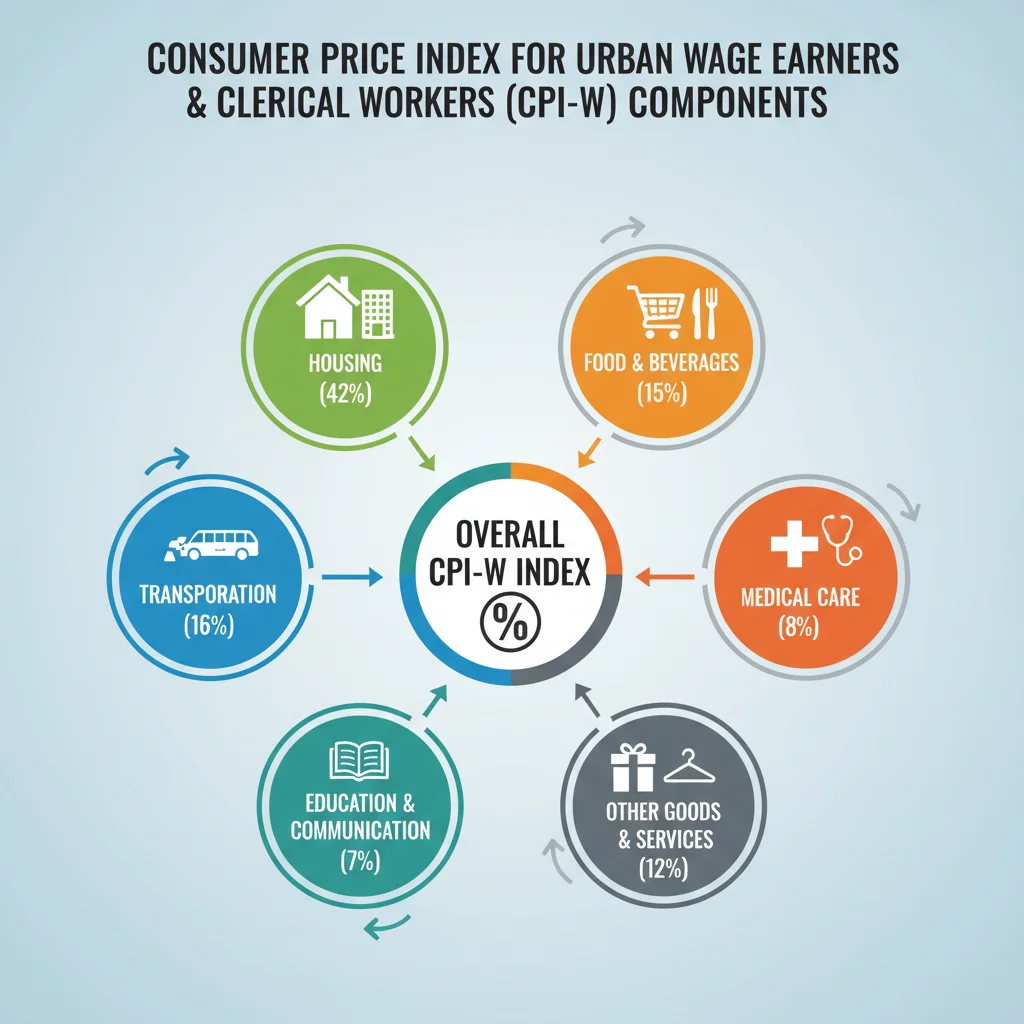
The calculation of the Social Security COLA is a precise process overseen by the Social Security Administration (SSA). It is primarily based on the Consumer Price Index for Urban Wage Earners and Clerical Workers (CPI-W). The CPI-W is a measure of the average change over time in the prices paid by urban wage earners and clerical workers for a market basket of consumer goods and services.
The CPI-W Methodology
To determine the COLA for a given year, the SSA compares the average CPI-W for the third quarter (July, August, and September) of the current year with the average CPI-W for the third quarter of the most recent year in which a COLA was payable. The percentage increase between these two averages, if any, is the COLA. If there is no increase, or if prices decrease, there is no COLA for that year. It’s important to note that a decrease in the CPI-W does not result in a reduction of benefits; rather, benefits remain at their current level.
Anúncios
For the 2026 Social Security COLA, the SSA will compare the average CPI-W for the third quarter of 2025 with the average CPI-W for the third quarter of 2024 (assuming a COLA was payable in 2025). This forward-looking calculation means that economic conditions in the latter half of 2025 will be crucial in determining the adjustment for 2026.
Why CPI-W and Not Other Indices?
Critics often argue that the CPI-W may not accurately reflect the spending patterns of seniors, who typically spend more on healthcare and housing compared to younger urban wage earners. Alternative indices, such as the Consumer Price Index for the Elderly (CPI-E), are sometimes proposed as a more appropriate measure. However, current law mandates the use of CPI-W for COLA calculations. Any change to this methodology would require congressional action.
The debate over which index to use is significant because even small differences in inflation measurement can lead to substantial differences in benefit amounts over a retiree’s lifetime. For the 2026 Social Security COLA, and indeed for all future COLAs, this discussion remains a key point of public and political interest.
Factors Influencing the 2026 Social Security COLA
Several economic indicators and trends will play a significant role in shaping the 2026 Social Security COLA. Understanding these factors can help beneficiaries anticipate potential adjustments and plan accordingly.
Inflationary Pressures
The most direct driver of COLA is inflation. If the cost of living, as measured by CPI-W, continues to rise significantly through 2025, it is likely to result in a higher COLA for 2026. Conversely, a period of low inflation or deflation would lead to a smaller or even no COLA.
Recent years have seen fluctuating inflation rates, influenced by global events, supply chain disruptions, and fiscal policies. Predicting inflation accurately more than a year in advance is challenging, but economic forecasts from government agencies and private institutions provide some guidance. These forecasts will be closely watched as we approach the COLA determination period for 2026.
Energy Prices
Energy costs, particularly gasoline and utilities, are a substantial component of the CPI-W. Fluctuations in oil prices and energy production can have a direct and often immediate impact on the overall inflation rate. A surge in energy prices in 2025 could push the CPI-W higher, potentially leading to a more robust 2026 Social Security COLA.
Food Prices
Food prices are another critical factor. These costs are often influenced by weather patterns, global demand, agricultural policies, and transportation expenses. Sustained increases in food prices would contribute to a higher CPI-W and, consequently, a larger COLA.
Housing Costs
Housing, including rent and owners’ equivalent rent, is typically the largest component of household budgets and thus a significant factor in CPI-W. Trends in the housing market, such as rising rents or property values, can exert upward pressure on the COLA. Given the current dynamics in many housing markets, this factor will be particularly relevant for the 2026 Social Security COLA.
Healthcare Costs
While CPI-W may not perfectly reflect seniors’ healthcare spending, healthcare costs are still a component. The ongoing rise in medical expenses, prescription drug prices, and health insurance premiums contributes to overall inflation and can influence the COLA, even if indirectly for the general urban wage earner population.
Economic Growth and Wage Trends
Broader economic conditions, including GDP growth and wage trends, can also indirectly affect inflation and thus the COLA. A strong economy with robust wage growth can sometimes lead to increased consumer demand and higher prices. Conversely, an economic slowdown might temper inflation.
Projecting the 2026 Social Security COLA
While it’s too early for official projections from the Social Security Administration, various independent organizations and economists will begin to offer their forecasts for the 2026 Social Security COLA as economic data for 2025 becomes available. These projections are often based on current inflation trends, futures markets for commodities, and economic models.
Typically, initial forecasts are highly speculative and become more accurate as the third quarter of the preceding year approaches. Beneficiaries should look for updates from reputable sources like the Congressional Budget Office (CBO), the Committee for a Responsible Federal Budget, and various financial publications as 2025 progresses.
How Will the 2026 Social Security COLA Impact Your Retirement Income?
The impact of the 2026 Social Security COLA on your retirement income can be multifaceted, extending beyond just the increase in your monthly benefit check.
Direct Increase in Benefits
The most immediate effect will be a direct increase in your monthly Social Security benefit amount. For example, if the COLA is 3%, a beneficiary currently receiving $1,800 per month would see their benefit increase to $1,854. This extra income is designed to help cover the rising costs of living.
Medicare Part B Premiums
One crucial consideration is the interaction between COLA and Medicare Part B premiums. By law, the increase in your Part B premium cannot exceed the dollar amount of your Social Security COLA increase for most beneficiaries (this is known as the ‘hold harmless’ provision). However, if the COLA is very low or zero, and Medicare premiums rise significantly, it can feel as though your net benefit has decreased, even if your gross benefit remains the same or slightly increases.
For high-income beneficiaries, the ‘hold harmless’ provision does not apply, meaning their Part B premiums can increase regardless of their COLA. This is an important detail for those planning their retirement budget.
Taxation of Social Security Benefits
An increase in your Social Security benefits due to COLA could potentially push your modified adjusted gross income (MAGI) over certain thresholds, making a larger portion of your benefits subject to federal income tax. Currently, up to 50% or 85% of Social Security benefits can be taxable, depending on your combined income.
It’s a common concern that COLAs, while intended to help, can inadvertently lead to higher tax burdens, effectively reducing the net benefit of the adjustment. This phenomenon is often referred to as ‘bracket creep’ for Social Security benefits.
Impact on Other Government Benefits
Some other government benefits, such as Supplemental Security Income (SSI), are also adjusted by COLA. However, other means-tested programs may have income limits that could be impacted by an increase in Social Security benefits. Beneficiaries need to understand how a COLA might affect their eligibility for various assistance programs.
Preparing for the 2026 Social Security COLA and Beyond
Proactive planning is key to navigating the uncertainties of future COLAs and ensuring a secure retirement. Here are strategies to consider:
Monitor Economic Indicators
Stay informed about inflation trends, particularly the CPI-W. While you can’t control these factors, being aware of them can help you anticipate potential COLA outcomes. Follow financial news and updates from the Social Security Administration.
Review Your Budget Annually
Regardless of the COLA, it’s good practice to review your retirement budget annually. Account for rising costs in areas not perfectly captured by COLA, such as out-of-pocket healthcare expenses. Adjust your spending as needed to align with your income and financial goals.
Diversify Retirement Income Sources
Relying solely on Social Security can be risky. Diversifying your retirement income with pensions, 401(k)s, IRAs, and other investments provides a buffer against low COLAs and other economic fluctuations. A diversified portfolio can offer growth potential that outpaces inflation.
Consider Long-Term Care Planning
Healthcare costs in retirement are a significant concern. Planning for long-term care, whether through insurance or personal savings, can protect your financial security, especially if COLAs do not keep pace with medical inflation.
Consult a Financial Advisor
A qualified financial advisor can provide personalized guidance on how the 2026 Social Security COLA and future adjustments might affect your overall retirement plan. They can help you optimize your income streams, manage taxes, and make informed decisions about your investments.

Legislative Considerations and Future of COLA
The methodology for calculating COLA has been a subject of ongoing debate in Congress. While no immediate changes are anticipated for the 2026 Social Security COLA, discussions about reforming the system persist.
Chained CPI
One frequently discussed alternative is the ‘chained CPI.’ This index accounts for consumer substitution, meaning it assumes that when the price of one good rises, consumers will switch to a cheaper alternative. Using a chained CPI typically results in lower inflation measurements and thus smaller COLAs compared to CPI-W. Proponents argue it’s a more accurate measure of consumer behavior, while opponents contend it would unfairly reduce benefits for seniors.
CPI-E (Consumer Price Index for the Elderly)
As mentioned earlier, many advocate for using the CPI-E, which is specifically designed to reflect the spending patterns of households headed by individuals aged 62 or older. This index often shows higher inflation rates than CPI-W due to the greater weight of healthcare costs in seniors’ budgets. Switching to CPI-E would likely result in higher COLAs, offering greater financial protection for retirees.
The Future of Social Security
Beyond COLA methodology, the long-term solvency of the Social Security program itself is a pressing issue. Demographic shifts, including lower birth rates and increased life expectancy, are putting pressure on the system. While not directly related to the 2026 Social Security COLA calculation, discussions about broader Social Security reform could eventually impact how benefits are calculated and adjusted in the future.
These legislative debates highlight the political and economic complexities surrounding Social Security. Beneficiaries and future retirees alike have a vested interest in staying informed about these discussions, as they could shape the future of retirement income in the US.
Conclusion: Navigating Your Retirement with the 2026 Social Security COLA
The 2026 Social Security COLA will be a crucial adjustment for millions of Americans relying on these benefits. While the exact percentage won’t be known until late 2025, understanding the factors that influence it – primarily inflation as measured by CPI-W – is essential for effective retirement planning.
By monitoring economic trends, reviewing your personal budget, diversifying your income, and seeking professional financial advice, you can better prepare for any adjustments to your Social Security benefits. The COLA mechanism is designed to protect your purchasing power, but a holistic approach to retirement planning ensures that you are well-positioned to meet your financial goals in the face of evolving economic landscapes. Staying informed and proactive is your best strategy for a secure and comfortable retirement.