529 Plans 2025: State-Sponsored College Savings Comparison

Anúncios
529 college savings plans in 2025 offer a powerful, tax-advantaged vehicle for families in the United States to save for future educational expenses, with state-sponsored programs providing varied investment strategies and benefits.
Navigating the landscape of higher education costs can feel overwhelming, but smart financial planning can make a significant difference. For families across the United States, 529 college savings plans represent one of the most effective tools available to prepare for these expenses. These state-sponsored investment accounts offer unique tax advantages, making them a cornerstone of many long-term educational savings strategies. In 2025, understanding the nuances of these plans, comparing the various state options, and grasping their financial impact is more important than ever. This guide will delve into the critical aspects of 529 plans, helping you make informed decisions for your child’s future.
Anúncios
Understanding the Basics of 529 Plans in 2025
Before diving into comparisons, it’s essential to grasp what a 529 plan entails. These plans are tax-advantaged savings vehicles designed to encourage saving for future education costs. They are sponsored by states, state agencies, or educational institutions, and while named after Section 529 of the Internal Revenue Code, their specific features can vary significantly from state to state.
There are generally two main types of 529 plans: college savings plans and prepaid tuition plans. Each offers distinct advantages and disadvantages depending on your financial goals and risk tolerance.
College Savings Plans vs. Prepaid Tuition Plans
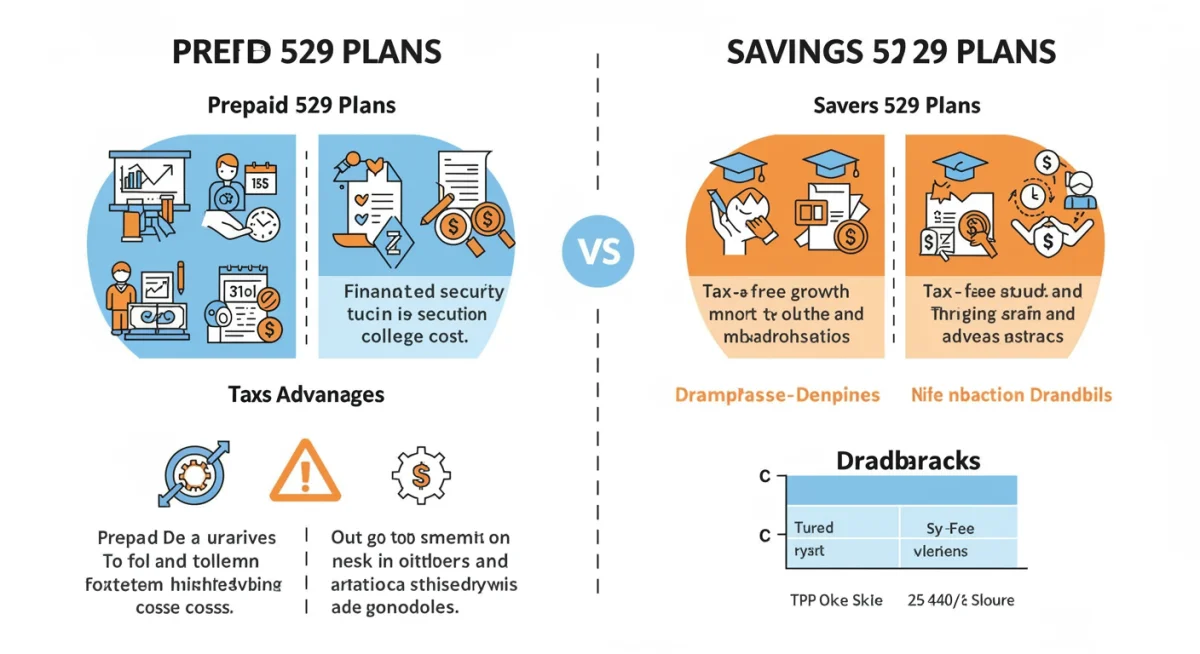
College savings plans are investment accounts that allow your money to grow tax-free, and withdrawals for qualified education expenses are also tax-free. They are more common and offer greater flexibility in terms of where the funds can be used. Prepaid tuition plans, on the other hand, allow you to purchase future tuition credits at today’s prices, effectively hedging against tuition inflation. These are typically more restrictive, often tied to in-state public universities.
Anúncios
- College Savings Plans: Investment-based, tax-free growth, tax-free withdrawals for qualified expenses, wider institutional eligibility.
- Prepaid Tuition Plans: Lock in tuition rates, protection against inflation, often limited to in-state public schools.
- Flexibility: Savings plans offer more investment choices and can be used at virtually any accredited institution nationwide.
The choice between these two types often comes down to your comfort level with investment risk and your certainty about where your child might attend college. Many families opt for college savings plans due to their broader utility and potential for higher growth, though this also comes with market risk.
Key Tax Advantages and Financial Impact
One of the primary reasons 529 plans are so popular is their significant tax benefits. These advantages can substantially boost your savings over time, making a considerable financial impact on your ability to fund higher education.
The federal tax benefits are universal to all 529 plans, regardless of the state sponsor. However, many states offer additional incentives, such as state income tax deductions or credits for contributions, which can further enhance the appeal of these plans.
Federal Tax Benefits of 529 Plans
At the federal level, 529 plans offer a powerful combination of tax benefits:
- Tax-Deferred Growth: Your investments grow free from federal income tax. This means you don’t pay taxes on earnings each year as you might with other investment accounts.
- Tax-Free Withdrawals: Qualified withdrawals, used for eligible education expenses, are completely free from federal income tax. This includes tuition, fees, books, supplies, equipment, and even room and board for students enrolled at least half-time.
- Gift Tax Exclusion: Contributions to a 529 plan are considered gifts and qualify for the annual gift tax exclusion. You can even front-load five years’ worth of contributions at once, up to $90,000 for an individual or $180,000 for a married couple in 2025, without incurring gift tax.
These federal benefits alone make 529 plans a compelling option. When combined with potential state-level incentives, the financial advantages become even more pronounced. Understanding these tax implications is crucial for maximizing your savings potential.
Comparing State-Sponsored 529 Plans in 2025
While federal tax benefits are consistent, the specific features of 529 plans vary widely by state. This means that choosing the right plan often involves looking beyond your home state’s offering, especially if your state does not provide a significant tax deduction for contributions.
When comparing plans, key factors to consider include investment options, fees, performance history, and state-specific tax benefits. Some states offer highly regarded plans that attract investors nationwide, regardless of residency.
Factors for State Plan Comparison
To make an informed decision, evaluate the following aspects of different state plans:
- Investment Options: Look at the variety and quality of underlying investment portfolios. Do they offer age-based options, static portfolios, or individual fund choices? Who manages these investments?
- Fees and Expenses: Compare administrative fees, underlying fund expense ratios, and any other charges that can eat into your returns. Lower fees generally mean more money growing for education.
- State Tax Benefits: If your state offers a tax deduction or credit for contributions to its own 529 plan, this can be a significant advantage. However, some states extend these benefits even if you invest in another state’s plan.
- Residency Requirements: Most plans are open to residents of any state, but some might have specific benefits or restrictions for in-state participants.
A thorough comparison will involve researching several plans and potentially consulting with a financial advisor to determine which best aligns with your financial situation and educational goals. The best plan for one family may not be the best for another, so personalization is key.
Investment Strategies and Portfolio Options
The investment options within 529 plans are crucial for their long-term growth potential. Most plans offer a range of portfolios designed to suit different risk tolerances and time horizons. Understanding these strategies can help you select the most appropriate allocation for your savings.
Age-based portfolios are particularly popular, as they automatically adjust the asset allocation over time, becoming more conservative as the beneficiary approaches college age. This hands-off approach simplifies investment management for many families.
Popular Investment Approaches within 529s
- Age-Based Portfolios: These are diversified portfolios that automatically rebalance, shifting from more aggressive investments (like stocks) to more conservative ones (like bonds and cash) as the beneficiary gets older.
- Static Portfolios: These maintain a fixed asset allocation, such as 100% equities, 60% equities/40% bonds, or 100% bonds. You choose the risk level and remain there unless you manually change it.
- Individual Fund Options: Some plans allow you to select specific mutual funds or exchange-traded funds (ETFs) to build your own portfolio. This offers the most control but requires more investment knowledge.
The investment strategy you choose should align with your risk tolerance, your child’s age, and the overall timeframe until college. Regular review of your portfolio is also recommended to ensure it continues to meet your objectives.
Impact on Financial Aid and Other Considerations
While 529 plans offer significant benefits, it’s also important to understand their potential impact on financial aid eligibility. For many families, financial aid can be a crucial component of funding higher education, so understanding how 529s are assessed is vital.
Generally, 529 plans are treated favorably in financial aid calculations, especially when compared to other types of assets. However, certain aspects, such as who owns the account, can influence the outcome.
529 Plans and FAFSA Calculations
The Free Application for Federal Student Aid (FAFSA) is the gateway to federal student aid. Here’s how 529 plans are typically treated:
- Parent-Owned Plans: If a 529 plan is owned by a dependent student’s parent, it is considered a parental asset. Only a small percentage (up to 5.64%) of parental assets are counted in the Expected Family Contribution (EFC) calculation.
- Student-Owned Plans: If the student is the owner (and not a dependent of their parents), the asset is assessed at a higher rate (20%).
- Grandparent-Owned Plans: Historically, distributions from grandparent-owned 529 plans were counted as untaxed student income, often reducing aid significantly. However, the FAFSA Simplification Act, fully implemented for the 2024-2025 award year and continuing into 2025-2026, largely mitigates this issue by no longer requiring the reporting of cash support from relatives on the FAFSA. This is a crucial change for families.
It’s important to stay updated on FAFSA rules, as they can change. Consulting with a financial aid expert can provide personalized guidance on how your 529 plan might affect your specific financial aid eligibility.
Navigating Changes and Future Trends in 2025
The financial landscape is ever-evolving, and 529 plans are no exception. Recent legislative changes and anticipated future trends could impact how these plans are used and their overall effectiveness in 2025 and beyond. Staying informed about these developments is key to optimizing your college savings strategy.
One notable change includes the ability to roll over unused 529 funds into a Roth IRA, thanks to the SECURE Act 2.0. This new flexibility adds another layer of versatility to these plans.
SECURE Act 2.0 and Other Developments
The SECURE Act 2.0, enacted in late 2022, introduced several significant changes, including:
- 529 to Roth IRA Rollovers: Starting in 2024, unused 529 plan funds can be rolled over to a Roth IRA for the beneficiary, subject to certain limits and conditions. This provides an excellent “fail-safe” option for families whose children do not use all their 529 funds for education.
- Qualified Education Expenses Expansion: While not new for 2025, it’s worth remembering that 529 plans can cover a broad range of expenses, including K-12 tuition (up to $10,000 annually), apprenticeship programs, and student loan repayments (up to $10,000 lifetime per beneficiary).
- State-Specific Enhancements: States continually review and update their 529 plan offerings, sometimes introducing new tax benefits, investment options, or lower fees. Keeping an eye on developments in your preferred state’s plan is always a good idea.
These changes underscore the dynamic nature of 529 plans and the importance of regularly reviewing your strategy. The ability to transfer funds to a Roth IRA, in particular, offers unprecedented flexibility, ensuring that your dedicated savings can still benefit the beneficiary, even if their educational path changes.
Choosing the Right 529 Plan for Your Family
The decision to open a 529 plan and select the right one is a significant step toward securing your child’s educational future. With numerous state-sponsored options available, a thoughtful approach, considering your family’s unique financial situation and goals, is paramount.
It’s not just about finding the lowest fees or the highest historical returns, but about aligning the plan’s features with your long-term objectives and risk tolerance.
Steps to Select Your Ideal 529 Plan
Here’s a practical approach to choosing the best plan:
- Assess Your Home State’s Benefits: Start by checking if your state offers a tax deduction or credit for contributions to its own 529 plan. If so, this might be your best starting point.
- Research Out-of-State Options: If your home state’s plan isn’t competitive or doesn’t offer significant tax incentives, explore highly-rated plans from other states. Many excellent plans are open to residents nationwide.
- Evaluate Investment Choices: Consider the range of investment portfolios, their underlying funds, and their performance history. Look for diverse options that match your risk profile.
- Compare Fees: Scrutinize all fees, including administrative fees, program management fees, and underlying fund expense ratios. Lower fees mean more money working for you.
- Understand Financial Aid Implications: Be aware of how the plan might affect future financial aid eligibility, especially with the updated FAFSA rules.
Ultimately, the best 529 plan is one that you consistently contribute to, that aligns with your financial goals, and that helps you achieve your dream of funding your child’s higher education. Don’t hesitate to seek advice from a qualified financial planner to help navigate these complex decisions.
| Key Aspect | Brief Description |
|---|---|
| Tax Benefits | Federal tax-free growth and withdrawals for qualified education expenses; potential state tax deductions/credits. |
| Plan Types | College savings plans (investment-based) and prepaid tuition plans (lock in future tuition rates). |
| Financial Aid Impact | Parent-owned 529s are assessed favorably as parental assets (up to 5.64% of EFC); FAFSA Simplification changes grandparent-owned rules. |
| New Flexibility | SECURE Act 2.0 allows rollovers of unused 529 funds to a Roth IRA for the beneficiary (with limits). |
Frequently Asked Questions About 529 Plans
The primary benefits of a 529 plan include tax-deferred growth on investments and tax-free withdrawals for qualified education expenses. Many states also offer additional tax deductions or credits for contributions, further enhancing the financial advantages for savers.
Yes, 529 plans can be used to pay for K-12 tuition expenses, up to $10,000 per beneficiary per year, without incurring federal income tax on the withdrawals. This flexibility makes 529s valuable for both college and pre-college educational needs.
If your child doesn’t attend college, you have several options. You can change the beneficiary to another qualified family member, use the funds for your own education, or, thanks to the SECURE Act 2.0, roll up to $35,000 (lifetime limit) into a Roth IRA for the beneficiary.
No, 529 plans vary significantly by state. While federal tax benefits are universal, investment options, fees, performance, and state-specific tax incentives differ. It’s crucial to compare various state-sponsored plans to find the one best suited for your financial goals.
Parent-owned 529 plans are considered parental assets and have a minimal impact on financial aid (up to 5.64% of EFC). The FAFSA Simplification Act has also reduced the impact of grandparent-owned 529 plans on aid calculations, making them more favorable.
Conclusion
In 2025, 529 college savings plans remain an indispensable tool for families committed to funding higher education. Their unique tax advantages, coupled with diverse investment options and increasing flexibility, make them a cornerstone of effective financial planning. By understanding the differences between state-sponsored programs, carefully considering investment strategies, and staying informed about legislative changes like the SECURE Act 2.0, families can maximize their savings potential. Choosing the right 529 plan requires diligent research and often a personalized approach, but the long-term benefits in securing a brighter educational future for beneficiaries are undeniable. Prioritizing consistent contributions and periodic review of your chosen plan will pave the way for educational success.