Maximize Social Security: Claiming Strategies for 2026

Anúncios
Maximizing Your Social Security Benefits: Essential Claiming Strategies for 2026
As you approach retirement, one of the most critical financial decisions you’ll make is when and how to claim your Social Security benefits. This isn’t just about receiving a check; it’s about optimizing a lifetime of contributions to secure your financial future. For those eyeing retirement in 2026 or planning their benefits around that timeframe, understanding the nuances of the Social Security system is paramount. This comprehensive guide will delve into advanced strategies for maximizing your Social Security 2026 benefits, ensuring you make the most informed choices for your unique situation.
The Social Security Administration (SSA) provides a safety net for millions of Americans, offering retirement, disability, and survivor benefits. While the system might seem straightforward, the timing of your claim can significantly impact the total amount of benefits you receive over your lifetime. With potential adjustments and economic shifts, planning for Social Security 2026 requires a proactive and informed approach.
Anúncios
Understanding Your Full Retirement Age (FRA) for Social Security 2026
The cornerstone of Social Security claiming is your Full Retirement Age (FRA). This is the age at which you are entitled to 100% of your primary insurance amount (PIA). For anyone born in 1960 or later, your FRA is 67. If you were born between 1943 and 1954, your FRA was 66. For those born between 1955 and 1959, your FRA gradually increases by a few months each year until it reaches 67. Understanding your specific FRA is vital because it serves as the benchmark for benefit adjustments, both upward and downward.
Why FRA Matters for Social Security 2026
- Claiming Early: If you claim benefits before your FRA, your monthly payment will be permanently reduced. You can claim as early as age 62, but doing so can result in a reduction of up to 30% of your PIA. This reduction is calculated based on the number of months you claim before your FRA.
- Claiming at FRA: Claiming at your FRA means you receive 100% of your earned benefit. This is often a comfortable middle ground for many retirees, providing a stable income stream without significant reductions or the need to wait longer.
- Claiming Late: Delaying benefits past your FRA can significantly increase your monthly payments. For each year you delay claiming beyond your FRA, up to age 70, you earn delayed retirement credits (DRCs). These credits can boost your annual benefit by 8% per year, resulting in a substantial increase over your lifetime.
For individuals planning their Social Security 2026 benefits, knowing your FRA is the first step in formulating a strategic claiming plan. It allows you to project your potential benefits at different claiming ages and assess the financial implications of each choice.
The Power of Delayed Retirement Credits: Boosting Your Social Security 2026 Benefits
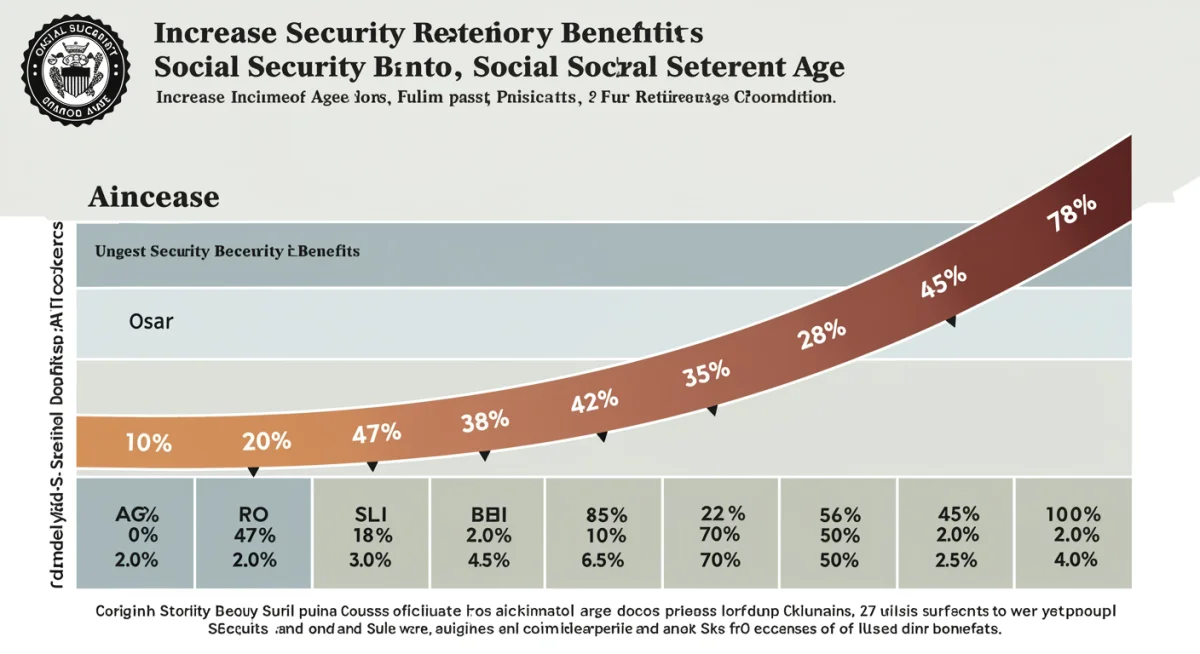
One of the most effective ways to maximize your Social Security 2026 benefits is to delay claiming past your Full Retirement Age (FRA). This strategy leverages Delayed Retirement Credits (DRCs), which can add a significant boost to your monthly payment. For individuals born in 1943 or later, DRCs accrue at a rate of 8% per year (or two-thirds of 1% per month) for each year you delay claiming, up to age 70. After age 70, there are no additional credits for delaying, so claiming at 70 is generally the optimal point for maximization through this method.
Anúncios
How Delayed Retirement Credits Work
Let’s consider an example: If your FRA is 67 and your primary insurance amount (PIA) is $2,000 per month, delaying until age 70 would result in a 24% increase (3 years x 8% per year). This means your monthly benefit would jump to $2,480. Over a retirement spanning 20 or 30 years, this additional $480 per month can amount to hundreds of thousands of dollars in extra income.
The decision to delay claiming isn’t always easy. It requires careful consideration of several factors:
- Health and Longevity: If you anticipate a long lifespan, delaying benefits can be a highly advantageous strategy. The longer you live, the more you benefit from the increased monthly payouts.
- Current Income Needs: Can you comfortably cover your living expenses without Social Security income between your FRA and age 70? This might involve drawing from other retirement accounts (401(k), IRA), working part-time, or relying on other savings.
- Spousal and Survivor Benefits: Delaying your benefits can also positively impact your spouse’s potential spousal or survivor benefits, which are often based on your earnings record. We will explore this in more detail later.
- Investment Returns: Some individuals might consider claiming early and investing their Social Security income, hoping for higher returns than the DRCs offer. However, this strategy carries investment risk, whereas DRCs are a guaranteed return from the government.
For those planning their Social Security 2026 strategy, the 8% annual increase from DRCs is a powerful incentive to delay if your financial situation allows. It’s a guaranteed, inflation-adjusted return that is hard to beat in most investment markets.
Coordinating Spousal and Survivor Benefits for Maximum Social Security 2026 Payouts
Social Security isn’t just about individual benefits; it also offers significant provisions for spouses and survivors. Understanding how these benefits interact with your own claiming strategy is crucial for maximizing your household’s overall Social Security 2026 income. This is especially important for couples, where coordinated claiming can yield significantly higher lifetime benefits.
Spousal Benefits
If you are married, your spouse may be eligible to receive spousal benefits based on your earnings record, even if they have little or no earnings history of their own. A spouse can receive up to 50% of your primary insurance amount (PIA). However, claiming spousal benefits before their own FRA will result in a permanent reduction.
Key Considerations for Spousal Benefits:
- Your Spouse Must Be at Least 62: A spouse can start receiving benefits as early as age 62, or at any age if they are caring for a child under 16 or disabled.
- Your Benefits Must Be Claimed: Generally, your spouse cannot claim spousal benefits until you have filed for your own retirement benefits.
- Higher of Their Own or Spousal: The SSA will always pay the higher of a person’s own earned benefit or their spousal benefit. They cannot receive both in full.
- File and Suspend (No Longer Available for New Filers): It’s important to note that the “file and suspend” strategy, which allowed an individual to file for benefits at FRA and immediately suspend them to allow a spouse to claim spousal benefits while the primary earner’s benefits continued to grow, was largely eliminated for those born after January 1, 1954. If you were born on or before this date, you might still be able to use this strategy.
Survivor Benefits
If your spouse passes away, you may be eligible for survivor benefits. A surviving spouse can receive up to 100% of the deceased worker’s benefit amount if they claim at their own FRA. If claimed earlier, the benefit will be reduced. Furthermore, survivor benefits can be claimed as early as age 60 (or age 50 if disabled).
Key Considerations for Survivor Benefits:
- Switching Strategies: A surviving spouse has the flexibility to claim one benefit (e.g., their own reduced retirement benefit) and switch to the higher survivor benefit later, or vice-versa, if it benefits them. This is a powerful planning tool for maximizing lifetime income.
- Remarriage: If a surviving spouse remarries before age 60 (or 50 if disabled), they generally cannot receive survivor benefits. However, if they remarry after age 60 (or 50 if disabled), they can still receive survivor benefits.
Coordinating for Couples: A Strategic Approach for Social Security 2026
For couples, the goal is often to maximize the combined lifetime benefits. This frequently involves one spouse delaying their benefits to age 70 to maximize their DRCs, while the other spouse considers claiming earlier, or utilizing spousal benefits strategically. For instance, the lower-earning spouse might claim their own benefits early, while the higher-earning spouse delays until 70. Or, if the higher earner has already filed, the lower-earning spouse might claim spousal benefits until their own benefit at a later age (e.g., FRA or 70) surpasses the spousal amount.
These decisions are highly individualized and depend on age differences, earnings histories, health, and other income sources. Consulting with a financial advisor specializing in Social Security can provide invaluable guidance for optimizing your Social Security 2026 claiming strategy as a couple.
Working While Receiving Benefits: The Earnings Test for Social Security 2026
For many individuals, retirement isn’t a hard stop to working. Some choose to work part-time, pursue new ventures, or simply need additional income. If you plan to work while receiving Social Security benefits before your Full Retirement Age (FRA), you need to be aware of the Social Security earnings test. This test can temporarily reduce your benefits if your income exceeds certain thresholds.
Understanding the Earnings Limit
The rules for the earnings test depend on whether you are below your FRA, or in the year you reach your FRA:
- Before Full Retirement Age: If you are under your FRA for the entire year, the SSA will deduct $1 from your benefits for every $2 you earn above a certain annual limit. For 2024, this limit is $22,320. These limits are typically adjusted annually.
- In the Year You Reach Full Retirement Age: In the year you reach your FRA, a different earnings limit applies. The SSA will deduct $1 from your benefits for every $3 you earn above a higher annual limit. For 2024, this limit is $59,520. Importantly, only earnings before the month you reach your FRA are counted. Once you reach your FRA, the earnings test no longer applies, and you can earn as much as you want without your benefits being reduced.
It’s crucial to remember that any benefits withheld due to the earnings test are not permanently lost. When you reach your FRA, your ongoing monthly benefits will be recalculated to account for the withheld amounts, effectively crediting you for the months you didn’t receive full benefits. This means your future payments will be slightly higher.
Implications for Social Security 2026 Planning
If you anticipate working in 2026 while also claiming Social Security benefits, especially if you are below your FRA, factor the earnings test into your financial projections. It might influence your decision of when to claim. For instance, if your earnings are substantial enough to cause significant benefit reductions, it might be more advantageous to delay claiming until you reach your FRA or reduce your work hours.
Conversely, if you need the income and your earnings are below the threshold, claiming earlier might be a viable option. The key is to understand the trade-offs and how the earnings test impacts your overall financial picture for Social Security 2026.

Understanding Taxation of Social Security Benefits for Social Security 2026
While Social Security benefits provide a vital income stream, it’s important to remember that a portion of these benefits may be subject to federal income tax. This can be an unexpected surprise for some retirees and is a critical factor in planning your overall Social Security 2026 financial strategy.
How Benefits Are Taxed
The amount of your Social Security benefits that is taxable depends on your “provisional income.” Provisional income is calculated as the sum of:
- Your adjusted gross income (AGI) from your tax return.
- Any tax-exempt interest (like from municipal bonds).
- One-half of your Social Security benefits.
Based on your provisional income, up to 85% of your Social Security benefits may be taxable:
- If your provisional income is between $25,000 and $34,000 (single filer) or $32,000 and $44,000 (married filing jointly): Up to 50% of your benefits may be taxable.
- If your provisional income is above $34,000 (single filer) or $44,000 (married filing jointly): Up to 85% of your benefits may be taxable.
It’s important to note that these thresholds are not indexed for inflation, meaning more and more retirees find their benefits subject to taxation over time as their other income sources or even their Social Security benefits themselves increase.
State Taxes on Social Security
In addition to federal taxes, some states also tax Social Security benefits. As of 2024, 10 states tax Social Security benefits: Colorado, Connecticut, Kansas, Minnesota, Missouri, Montana, Nebraska, New Mexico, Rhode Island, and Utah. If you reside in one of these states, this is another layer of taxation to consider when planning for Social Security 2026.
Tax Planning Strategies
Understanding the taxation rules can help you implement strategies to potentially minimize your tax liability:
- Manage Your Provisional Income: If you have control over when you take distributions from certain retirement accounts (e.g., traditional IRAs vs. Roth IRAs), you might be able to manage your AGI to keep your provisional income below the thresholds.
- Roth Conversions: Converting traditional IRA money to a Roth IRA in lower-income years before claiming Social Security can reduce future required minimum distributions (RMDs) from traditional accounts, which count towards provisional income. Roth distributions themselves are tax-free and do not count towards provisional income.
- Tax-Efficient Withdrawals: Develop a withdrawal strategy that considers the tax treatment of various accounts (taxable, tax-deferred, tax-free) to minimize the impact on your provisional income.
For effective Social Security 2026 tax planning, consulting with a tax professional or financial advisor is highly recommended. They can help you navigate the complexities and create a strategy tailored to your specific financial situation.
Key Considerations and Advanced Strategies for Social Security 2026
Beyond the fundamental claiming ages and spousal benefits, several other factors and advanced strategies can influence your optimal Social Security 2026 claiming decision. A holistic approach considers your entire financial landscape, not just your Social Security statement.
Health and Life Expectancy
Your personal health and family history of longevity are significant factors. If you have a shorter life expectancy due to health issues, claiming benefits earlier might make more sense, even with the reduced monthly payment, to ensure you receive benefits for a longer duration. Conversely, if you expect to live well into your 80s or 90s, delaying until age 70 often yields the highest cumulative payout.
Other Retirement Income Sources
Consider your other sources of retirement income, such as pensions, 401(k)s, IRAs, and personal savings. If you have substantial other income, you might be able to comfortably delay Social Security, allowing your benefits to grow. If Social Security will be your primary income source, claiming earlier might be a necessity, even if it means a reduced benefit.
Inflation Protection
Social Security benefits are adjusted annually for inflation through Cost-of-Living Adjustments (COLAs). This is a valuable feature that protects your purchasing power over time. When you delay claiming, the larger initial benefit you receive at age 70 (due to DRCs) will also be subject to COLAs, meaning it will grow even more over your retirement. This makes delaying an even more attractive option for long-term financial security.
Divorced Spouse Benefits
If you were married for at least 10 years and are now divorced, you may be eligible for benefits based on your ex-spouse’s earnings record. This can be a significant benefit, especially if your ex-spouse was a higher earner. The rules are specific:
- You must be unmarried.
- You must be age 62 or older.
- Your ex-spouse must be entitled to Social Security retirement or disability benefits.
- The amount you would receive based on your own work record must be less than the amount you would receive based on your ex-spouse’s record.
Crucially, your ex-spouse does not need to know you are claiming, and your claim does not affect their benefits or the benefits of their current spouse. This can be a powerful, often overlooked, strategy for Social Security 2026 planning for divorced individuals.
Minor or Disabled Child Benefits
If you are receiving Social Security retirement or disability benefits, your minor children (under 18, or under 19 if still in high school) or adult children who were disabled before age 22 may also be eligible for benefits based on your record. This can significantly increase your household’s total Social Security income.
Understanding Your Social Security Statement
Regularly reviewing your Social Security Statement is essential. You can access it online through your My Social Security account. This statement provides estimates of your future benefits at different claiming ages, your earnings history, and an estimate of disability and survivor benefits. It’s your personal roadmap for Social Security 2026 planning.
Consulting a Financial Advisor
Given the complexity and the significant financial implications, consulting with a qualified financial advisor who specializes in Social Security planning is highly recommended. They can help you analyze your specific situation, project different claiming scenarios, and develop a personalized strategy that aligns with your overall retirement goals and risk tolerance. A good advisor can help you consider all angles, from taxation to longevity, ensuring you maximize your Social Security 2026 benefits.
Conclusion: Crafting Your Optimal Social Security 2026 Strategy
Navigating the intricacies of Social Security can feel daunting, but with careful planning and a clear understanding of your options, you can significantly enhance your retirement security. For those approaching retirement in or around 2026, the decisions you make regarding when and how to claim your benefits will have a lasting impact on your financial well-being.
The core message is clear: there is no one-size-fits-all answer. Your optimal Social Security 2026 strategy will depend on a multitude of personal factors, including your health, life expectancy, marital status, other sources of income, and your overall financial goals. Whether you choose to claim early, at your Full Retirement Age, or strategically delay until age 70, each path has its own set of advantages and disadvantages.
Remember the power of delayed retirement credits, the strategic considerations for spousal and survivor benefits, the impact of working while receiving benefits, and the importance of tax planning. Regularly reviewing your Social Security statement and seeking professional guidance are invaluable steps in this journey.
By taking the time to educate yourself and plan proactively, you can ensure that your Social Security 2026 benefits serve as a strong and reliable foundation for a comfortable and fulfilling retirement. Start your planning today to secure the future you envision.