Small Business Economic Outlook 2026: Strategies to Counter a Projected 0.5% Dip in Startup Funding
The year 2026 looms on the horizon, bringing with it both opportunities and challenges for the vibrant ecosystem of small businesses and startups. As we delve into the projected economic landscape, a crucial forecast demands our attention: a potential 0.5% dip in startup funding. While this might seem like a minor fluctuation, for many nascent businesses and those planning expansion, it can represent a significant hurdle. This comprehensive guide will equip you with practical solutions and insights into the financial impact, ensuring your small business not only survives but thrives amidst these anticipated changes. Understanding the small business funding environment is paramount for strategic planning and sustained growth.
Anúncios
Understanding the 2026 Economic Forecast and Its Impact on Small Business Funding
The global economy is a complex, interconnected web, and even seemingly minor shifts can have ripple effects across various sectors. The projected 0.5% dip in startup funding for 2026 is not an isolated event; it often reflects broader economic trends such as inflation, interest rate adjustments, geopolitical stability, and investor sentiment. For small businesses, particularly those in their early stages or seeking significant capital infusion, this forecast necessitates a proactive and adaptive approach to securing small business funding.
What Factors Contribute to a Funding Dip?
- Rising Interest Rates: Higher interest rates make borrowing more expensive, which can deter both investors and businesses from taking on new debt. This impacts venture capital firms’ cost of capital and the attractiveness of debt financing for startups.
- Inflationary Pressures: Persistent inflation can erode purchasing power, increase operational costs for businesses, and make investors more cautious, leading them to prioritize safer, less volatile investments.
- Geopolitical Uncertainties: Global events, conflicts, and trade tensions can create an environment of uncertainty, causing investors to pull back from riskier ventures, including early-stage startups.
- Market Saturation and Competition: In certain industries, increased competition and market saturation can make it harder for new startups to demonstrate unique value propositions and scalable business models, thus reducing investor interest.
- Shift in Investor Priorities: Investors might shift their focus towards more mature, profitable businesses or specific sectors deemed less risky or offering higher immediate returns, temporarily reducing the pool of capital available for early-stage startups.
- Regulatory Changes: New regulations or changes in existing policies can sometimes create an unfavorable climate for investment, particularly in sectors with high compliance costs or uncertain future frameworks.
The Direct Financial Impact on Small Businesses
A reduction in available startup funding translates directly into several financial challenges for small businesses:
- Increased Competition for Capital: With less money circulating, more businesses will be vying for the same limited pool of funds, making the fundraising process more arduous and competitive.
- Higher Cost of Capital: Lenders and investors might demand higher interest rates, larger equity stakes, or more stringent terms to compensate for perceived increased risk. This directly impacts the long-term financial health and ownership structure of the business.
- Slower Growth and Development: Businesses reliant on external funding for expansion, product development, or market penetration might experience delays or have to scale back their ambitions. This can hinder innovation and market responsiveness.
- Reduced Runway: Startups with limited cash reserves will find their runway shortened, forcing them to achieve profitability or secure additional funding much faster than initially planned.
- Difficulty in Attracting Talent: Without sufficient funding, offering competitive salaries, benefits, or equity options can become challenging, making it harder to attract and retain top talent crucial for growth.
Recognizing these potential impacts early allows small business owners to pivot their strategies and explore alternative avenues for securing essential small business funding.
Anúncios
Practical Solutions: Diversifying Your Funding Strategy for 2026
The key to navigating a tighter funding landscape is diversification. Relying solely on traditional venture capital or bank loans might prove insufficient. Here are several practical strategies to bolster your small business funding in the face of a projected dip:
1. Explore Alternative Funding Avenues
Beyond the conventional, a plethora of alternative funding options exist that can provide crucial capital:
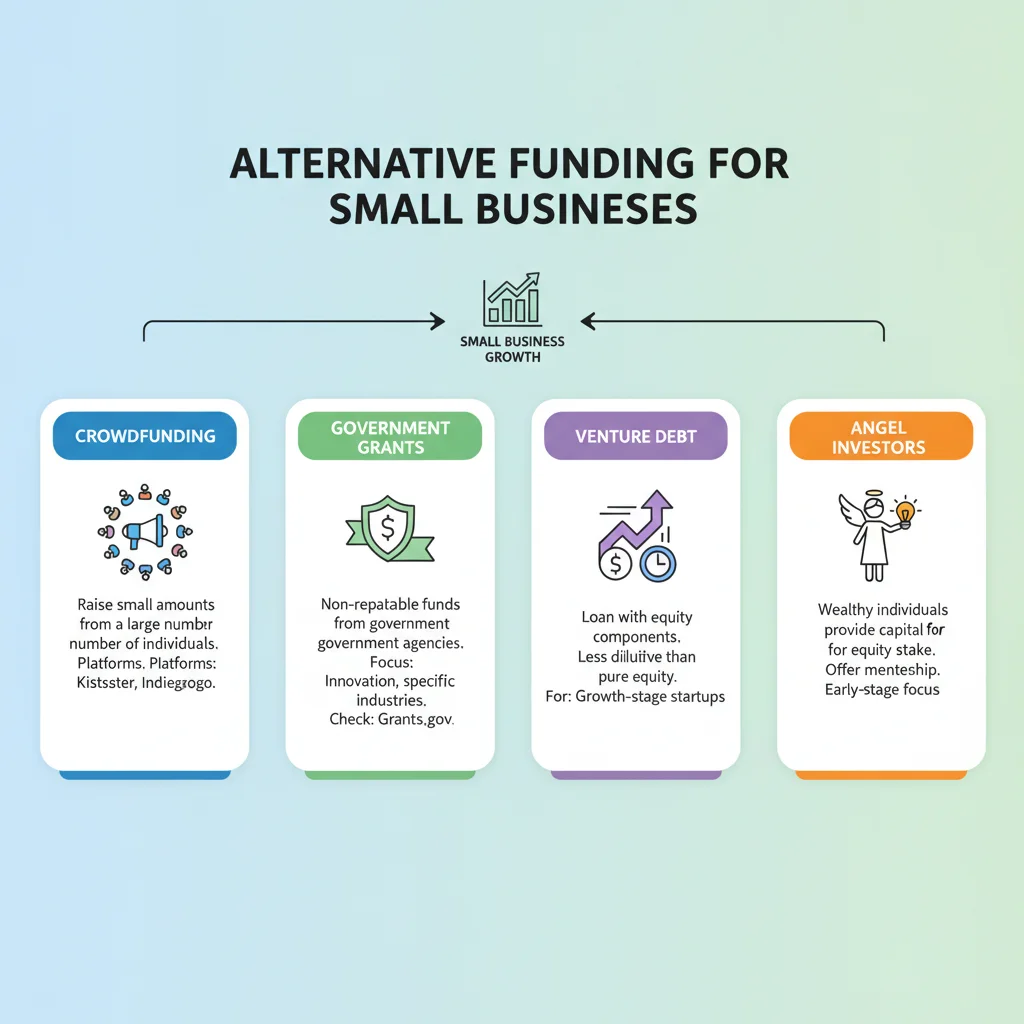
- Crowdfunding (Equity and Rewards-Based): Platforms like Kickstarter, Indiegogo, SeedInvest, and Republic allow businesses to raise capital from a large number of individuals. Rewards-based crowdfunding can validate market interest and pre-sell products, while equity crowdfunding offers a way to sell small stakes in your company to a broad investor base.
- Government Grants and Programs: Many governments offer grants, subsidies, and loan programs specifically designed for small businesses, particularly those in innovative sectors, underserved communities, or those contributing to specific economic goals. Research federal, state, and local programs relevant to your industry and location.
- Angel Investors: High-net-worth individuals who invest their own money in early-stage companies in exchange for equity. They often provide valuable mentorship and industry connections in addition to capital. Networking is crucial for connecting with angel investors.
- Venture Debt: A hybrid financing option that combines elements of traditional debt and venture capital. It provides capital without significant equity dilution and is often used by venture-backed companies to extend their runway or finance specific growth initiatives.
- Revenue-Based Financing (RBF): Investors provide capital in exchange for a percentage of the company’s future revenue until a certain multiple of the original investment is repaid. This can be attractive for businesses with predictable revenue streams and desire to avoid equity dilution.
- Small Business Administration (SBA) Loans: Government-backed loans that offer more favorable terms than conventional bank loans, making them accessible to a wider range of small businesses. The SBA guarantees a portion of the loan, reducing risk for lenders.
- Invoice Factoring/Financing: Selling your outstanding invoices to a third party at a discount to get immediate cash. This is a good option for businesses with long payment cycles and immediate working capital needs.
By casting a wider net, businesses increase their chances of securing the necessary small business funding, even when traditional sources tighten.
2. Optimize Your Business Model and Financial Projections
In a competitive funding environment, a robust business model and meticulously crafted financial projections are non-negotiable. Investors will scrutinize every detail.
- Lean Operations: Focus on efficiency and cost-effectiveness. Identify and eliminate unnecessary expenses, automate processes where possible, and negotiate favorable terms with suppliers. A lean operation demonstrates financial prudence and maximizes the impact of every dollar.
- Clear Path to Profitability: Articulate a well-defined strategy for achieving profitability. Investors are increasingly looking for businesses that can demonstrate a clear path to generating sustainable revenue and positive cash flow, rather than solely relying on future funding rounds.
- Realistic and Detailed Financial Projections: Develop comprehensive financial forecasts (P&L, balance sheet, cash flow statements) that are based on realistic assumptions and supported by market research. Be prepared to defend your numbers and demonstrate a thorough understanding of your unit economics.
- Strong Value Proposition: Clearly define what makes your business unique and valuable to your target market. A compelling value proposition differentiates you from competitors and attracts investor interest, even in a tighter market.
- Customer Acquisition Cost (CAC) and Lifetime Value (LTV): Understand and optimize these key metrics. A low CAC and high LTV demonstrate efficient growth and a sustainable customer base, which are highly attractive to investors.
3. Strengthen Your Pitch and Network
Even with a stellar business, a poorly delivered pitch can be a deal-breaker. Refine your communication and leverage your network for better small business funding opportunities.
- Practice Your Pitch Deck: Your pitch deck should be concise, visually appealing, and tell a compelling story. Focus on the problem you’re solving, your solution, market opportunity, business model, team, and financial ask. Practice extensively to deliver it confidently and clearly.
- Build Strong Relationships: Networking is crucial. Attend industry events, join entrepreneurship communities, and connect with potential investors, mentors, and advisors. Often, funding comes through referrals and established relationships.
- Demonstrate Traction: Show, don’t just tell. Present concrete evidence of customer validation, revenue growth, user engagement, or strategic partnerships. Traction is the most powerful indicator of a business’s potential.
- Be Prepared for Due Diligence: Have all your legal documents, financial records, and operational data organized and ready for investor scrutiny. Transparency and preparedness build trust.
Financial Impact: Managing Cash Flow and Maximizing Resources
Beyond securing external funding, internal financial management becomes even more critical when the funding environment is challenging. Effective cash flow management and resource optimization are vital for sustained operation and growth.
1. Rigorous Cash Flow Management
Cash is king, especially during lean times. Proactive cash flow management is essential for navigating potential funding dips.
- Detailed Cash Flow Projections: Create weekly or monthly cash flow forecasts to anticipate inflows and outflows. This allows you to identify potential shortfalls well in advance and take corrective action.
- Optimize Accounts Receivable: Implement strategies to collect payments faster. Offer early payment discounts, send timely invoices, and follow up regularly on overdue accounts.
- Manage Accounts Payable Strategically: Negotiate longer payment terms with suppliers where possible, without jeopardizing relationships. Balance paying on time to maintain goodwill with holding cash for as long as feasible.
- Establish a Cash Reserve: Build an emergency fund that can cover several months of operating expenses. This provides a buffer against unexpected downturns or delays in funding.
- Monitor Burn Rate: Understand how quickly your business is spending its cash reserves. Identify areas where burn rate can be reduced without compromising critical operations or growth initiatives.
2. Strategic Cost Reduction and Efficiency
Every dollar saved is a dollar earned, and in a tight funding market, this adage holds even more weight.
- Review and Renegotiate Contracts: Periodically review all vendor contracts, leases, and service agreements. Look for opportunities to renegotiate terms, switch providers for better rates, or reduce service levels if they are no longer essential.
- Leverage Technology for Automation: Invest in software and tools that can automate repetitive tasks, reduce manual labor, and improve efficiency. This can lead to significant long-term cost savings.
- Energy Efficiency: Implement measures to reduce energy consumption in your workspace. This not only saves money but also aligns with sustainability goals, which can be attractive to certain investors and customers.
- Remote Work and Flexible Work Arrangements: Consider the cost savings associated with reduced office space, utilities, and commuting expenses by implementing or expanding remote work policies.
- Outsourcing Non-Core Functions: For tasks that are not central to your core business, consider outsourcing to specialized providers. This can be more cost-effective than hiring full-time employees and provides access to expert skills.

3. Focus on Revenue Generation and Profitability
Ultimately, a business that can generate its own revenue and achieve profitability is less reliant on external small business funding.
- Optimize Pricing Strategies: Regularly review your pricing to ensure it reflects the value you provide and covers your costs while remaining competitive. Consider dynamic pricing models if applicable.
- Expand Product/Service Offerings: Look for opportunities to diversify your revenue streams by introducing new products or services that complement your existing offerings and cater to your customer base.
- Improve Sales and Marketing Effectiveness: Invest in targeted marketing campaigns that yield high ROI. Refine your sales processes to convert leads more efficiently and increase average transaction value.
- Customer Retention: It’s often cheaper to retain existing customers than to acquire new ones. Implement strategies to enhance customer loyalty, improve customer service, and encourage repeat business.
- Identify New Markets: Explore opportunities to expand into new geographic markets or target new customer segments, which can unlock additional revenue potential.
Building Resilience: Long-Term Strategies for Sustainable Growth
Beyond immediate solutions, fostering a culture of resilience and adaptability is crucial for long-term success, especially when facing fluctuating small business funding landscapes.
1. Continuous Innovation and Adaptation
The business world is constantly evolving. Small businesses must remain agile and innovative to stay competitive.
- Market Research: Continuously monitor market trends, customer needs, and competitor activities. Use this information to inform product development and strategic decisions.
- Agile Development: Adopt agile methodologies for product development and business operations. This allows for quicker iterations, faster response to feedback, and reduced waste.
- Embrace Technology: Stay abreast of emerging technologies that can enhance your operations, improve customer experience, or create new revenue opportunities.
- Foster a Learning Culture: Encourage continuous learning and skill development within your team. An adaptable workforce is a powerful asset.
2. Strong Governance and Transparency
Good governance and transparent operations build trust with investors, partners, and customers, which is invaluable for securing small business funding.
- Robust Financial Reporting: Maintain accurate and up-to-date financial records. Regular, clear financial reporting demonstrates professionalism and accountability.
- Legal Compliance: Ensure your business adheres to all relevant laws and regulations. Compliance minimizes legal risks and enhances your credibility.
- Ethical Practices: Operate with integrity and ethical standards. This builds a strong brand reputation and fosters long-term relationships.
3. Strategic Partnerships and Collaborations
Leveraging external relationships can open doors to new resources, markets, and expertise.
- Industry Alliances: Form partnerships with complementary businesses. This can lead to shared resources, joint marketing efforts, and access to new customer segments.
- Mentor Networks: Engage with experienced entrepreneurs and business leaders. Their guidance can be invaluable in navigating challenges and identifying opportunities.
- Accelerator and Incubator Programs: These programs often provide not only mentorship and resources but also connections to investors and potential funding opportunities.
Conclusion: Proactive Planning for a Resilient 2026 and Beyond
The projected 0.5% dip in startup funding for 2026 serves as a crucial reminder for small businesses: proactive planning and adaptability are not just beneficial, they are essential. While the economic landscape may present challenges, it also offers opportunities for businesses that are well-prepared, innovative, and financially astute. By diversifying your small business funding strategies, optimizing your business model, rigorously managing your finances, and fostering a culture of resilience, you can not only counter the anticipated funding dip but also position your business for sustainable growth and success in 2026 and the years to come.
Embrace these practical solutions, understand their financial impact, and commit to continuous improvement. The future of your small business hinges on your ability to anticipate, adapt, and innovate, securing the necessary capital to turn challenges into stepping stones for triumph.