Navigating the 2026 Job Market: Essential Skills for Recent Graduates
Anúncios
Navigating the 2026 Job Market: 5 Essential Skills for Recent Graduates to Secure Employment
The landscape of employment is in a perpetual state of flux, driven by technological advancements, global economic shifts, and evolving societal demands. For recent graduates, understanding and adapting to these changes is not merely advantageous; it’s absolutely essential for securing meaningful employment. As we look towards 2026, the job market promises to be even more dynamic, requiring a new arsenal of skills beyond traditional academic qualifications. This in-depth guide will explore the critical competencies that will set recent graduates apart, ensuring they are not just employable, but also poised for long-term success and career growth.
The transition from academia to the professional world can be daunting. The expectations are different, the pace is faster, and the competition is often fierce. However, by proactively developing and honing specific skills, graduates can transform this challenge into an opportunity. This article focuses on five pivotal areas that will define success in the 2026 job market, offering actionable advice and insights for both current students and recent graduates alike. What are these 2026 Job Market Skills that will be your passport to a thriving career? Let’s delve in.
Anúncios
1. Digital Literacy and Technological Proficiency: Beyond Basic Computing
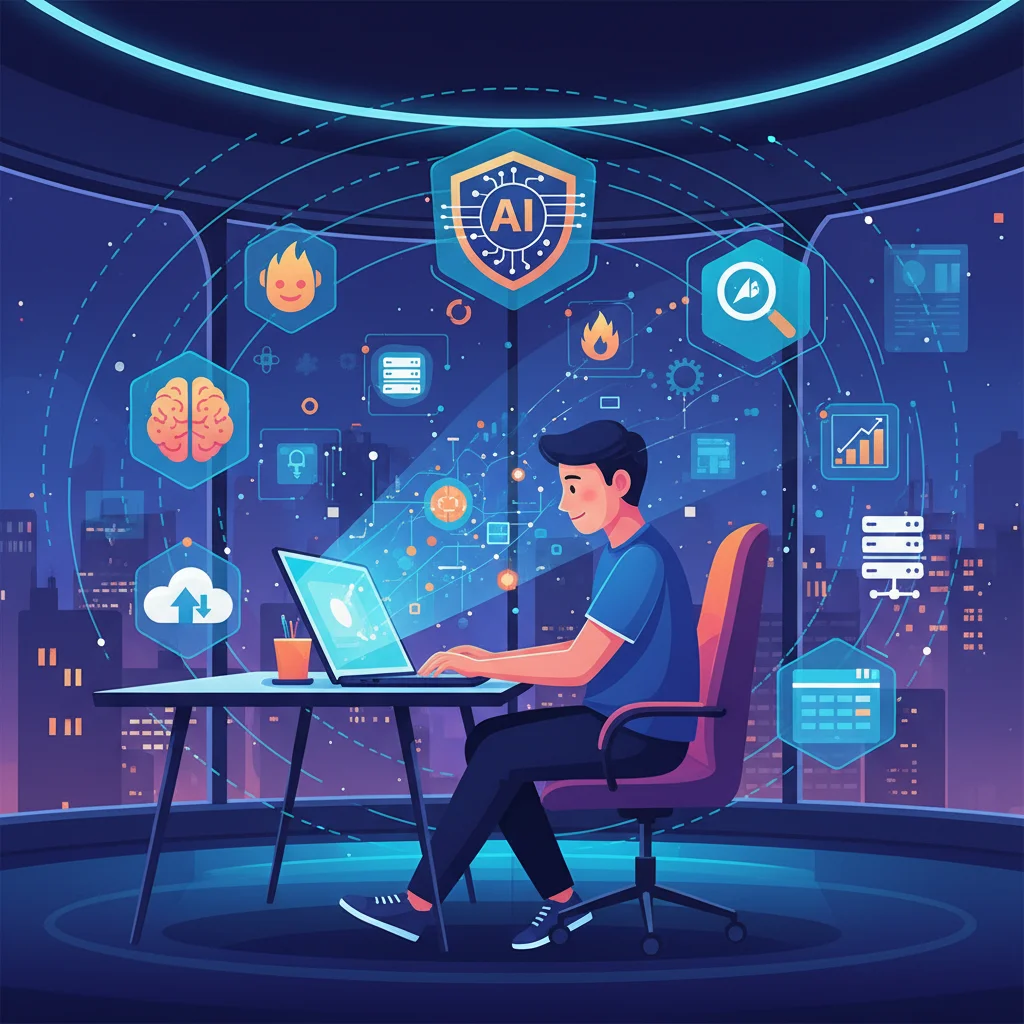
In an increasingly digital world, the notion of ‘computer literacy’ has evolved far beyond knowing how to use Microsoft Office. For the 2026 job market, digital literacy encompasses a broad spectrum of capabilities, including an understanding of data analytics, familiarity with artificial intelligence (AI) tools, cybersecurity awareness, and the ability to leverage cloud-based platforms. Recent graduates must be comfortable not just using technology, but also understanding its implications and potential for innovation within their respective fields.
The Rise of Data-Driven Decision Making
Almost every industry now relies on data to inform decisions, strategize, and measure success. Graduates who can interpret data, identify trends, and translate complex datasets into actionable insights will be highly sought after. This doesn’t necessarily mean becoming a data scientist, but rather possessing a foundational understanding of data analysis tools (like Excel, Google Sheets, or even introductory Python/R) and the critical thinking skills to question, evaluate, and utilize data effectively.
Anúncios
Embracing AI and Automation
AI and automation are no longer futuristic concepts; they are integrated into daily business operations. From customer service chatbots to automated marketing campaigns and predictive analytics, AI is reshaping how work is done. Recent graduates should not fear AI but rather learn to work alongside it. Understanding how AI tools can streamline tasks, enhance productivity, and provide creative solutions will be a significant asset. This includes familiarity with AI-powered content generation tools, project management software with AI integrations, and even basic machine learning concepts that affect various industries.
Cybersecurity Awareness: A Universal Responsibility
With more data being stored and transmitted digitally, cybersecurity is paramount. Every employee, regardless of their role, plays a part in protecting sensitive information. Graduates should have a strong understanding of best practices for online security, recognizing phishing attempts, safeguarding personal and company data, and understanding data privacy regulations (like GDPR or CCPA). This awareness protects not only the individual but also the organization from potentially devastating breaches.
Cloud Computing and Collaboration Tools
Remote and hybrid work models have solidified the importance of cloud computing and collaborative digital tools. Proficiency in platforms like Google Workspace, Microsoft 365, Slack, Zoom, and various project management software (e.g., Asana, Trello) is no longer a bonus but a baseline expectation. The ability to seamlessly collaborate, share documents, and manage projects in a virtual environment is a non-negotiable 2026 Job Market Skill.
To cultivate these skills, consider online courses, certifications (e.g., Google Data Analytics Certificate, Microsoft Certified: Azure Fundamentals), personal projects involving data or AI tools, and active participation in tech-focused clubs or workshops. The goal is to move beyond passive consumption of technology to active engagement and application.
2. Critical Thinking and Problem-Solving: Navigating Complexity
In a world overflowing with information and rapid changes, the ability to think critically and solve complex problems stands out as an invaluable asset. Employers in 2026 will be looking for graduates who can go beyond rote memorization or following instructions, instead demonstrating the capacity to analyze situations, evaluate information objectively, identify root causes, and devise innovative solutions.
Analyzing and Synthesizing Information
The sheer volume of information available today can be overwhelming. Critical thinkers can sift through this noise, identify credible sources, analyze data from multiple perspectives, and synthesize disparate pieces of information into coherent insights. This involves asking probing questions, challenging assumptions, and understanding biases.
Structured Problem-Solving Approaches
Problem-solving isn’t just about finding an answer; it’s about employing a systematic approach. Graduates who can define a problem clearly, break it down into smaller components, brainstorm potential solutions, evaluate their feasibility, and implement the most effective one, will be highly valued. Techniques like design thinking, root cause analysis, and SWOT analysis are excellent frameworks to develop these capabilities. These structured approaches are vital 2026 Job Market Skills across all industries.
Innovation and Creative Solutions
While critical thinking often focuses on logic and analysis, it also fuels creativity. The ability to think ‘outside the box’ and propose novel solutions to existing or emerging problems is a hallmark of strong problem-solvers. This involves a willingness to experiment, learn from failures, and continuously seek better ways of doing things. Companies are constantly seeking individuals who can contribute to their growth and competitive edge through innovative ideas.
Decision-Making Under Uncertainty
The 2026 job market will be characterized by uncertainty. Graduates will need to make informed decisions even when faced with incomplete information or ambiguous situations. This requires a degree of comfort with risk, the ability to weigh pros and cons effectively, and the courage to commit to a course of action while remaining open to adjusting if new information emerges.
To enhance these skills, engage in debates, analyze case studies, participate in hackathons or problem-solving competitions, and seek out roles (even volunteer ones) that require you to troubleshoot and find solutions. Practice articulating your thought process when solving problems, as this also strengthens your critical thinking.
3. Adaptability and Resilience: Thriving Amidst Change
Perhaps one of the most crucial 2026 Job Market Skills is adaptability. The pace of change in technology, business models, and global events means that what is relevant today might be obsolete tomorrow. Graduates who can quickly adjust to new circumstances, learn new tools, embrace different roles, and maintain a positive outlook in the face of setbacks will not only survive but thrive.
Embracing Continuous Learning (Lifelong Learning)
The concept of ‘lifelong learning’ is more pertinent than ever. A degree is no longer the end of education but the beginning. Graduates must cultivate a genuine curiosity and a proactive approach to acquiring new knowledge and skills throughout their careers. This includes staying updated on industry trends, pursuing further certifications, reading widely, and actively seeking out learning opportunities within their organizations. This commitment to ongoing development is a core component of adaptability.
Flexibility in Roles and Responsibilities
Job descriptions are becoming more fluid. Graduates entering the workforce in 2026 might find themselves taking on varied responsibilities, pivoting between projects, or even shifting career paths multiple times. The ability to be flexible, to step outside one’s comfort zone, and to contribute effectively in diverse capacities is a significant advantage. This also means being open to feedback and willing to evolve one’s skillset based on organizational needs.
Resilience in the Face of Setbacks
No career path is without its challenges. Graduates will inevitably encounter failures, rejections, and difficult situations. Resilience is the capacity to bounce back from these setbacks, learn from them, and continue moving forward with determination. This involves developing emotional intelligence, managing stress effectively, and maintaining a growth mindset that views obstacles as opportunities for development rather than insurmountable barriers.
Comfort with Ambiguity
Many roles in the 2026 job market will involve navigating ambiguous situations where there isn’t a clear-cut answer or a predefined path. Graduates who are comfortable with uncertainty, can initiate action without perfect information, and are skilled at bringing structure to unstructured problems will be highly valued. This ties back to critical thinking and problem-solving, but with an added layer of psychological fortitude.
To build adaptability and resilience, actively seek out new experiences, even those that might seem challenging. Embrace internships in diverse fields, take on leadership roles that push your boundaries, and practice self-reflection to understand your reactions to change. Develop coping mechanisms for stress and cultivate a network of mentors and peers for support.
4. Communication and Collaboration: Building Bridges in Diverse Teams
Effective communication and seamless collaboration are not soft skills; they are power skills. In a globalized, interconnected, and often remote workforce, the ability to convey ideas clearly, listen actively, and work constructively with diverse individuals and teams is paramount. The 2026 job market will demand graduates who can foster positive working relationships, resolve conflicts, and contribute to a cohesive team environment.
Clear and Concise Communication (Verbal and Written)
Whether it’s writing a professional email, delivering a presentation, or participating in a virtual meeting, clarity and conciseness are key. Graduates must be able to articulate complex ideas simply, tailor their message to different audiences, and ensure their meaning is understood. This also includes strong active listening skills – truly hearing and understanding others’ perspectives rather than just waiting to speak.
Interpersonal Skills and Emotional Intelligence
Collaboration thrives on strong interpersonal relationships. Emotional intelligence – the ability to understand and manage one’s own emotions, and to recognize and influence the emotions of others – is fundamental. Graduates with high emotional intelligence can navigate team dynamics, build rapport, empathize with colleagues, and resolve disagreements constructively. These are not merely ‘nice-to-have’ qualities; they are essential for effective teamwork and leadership.
Cross-Cultural and Global Collaboration
Many organizations operate globally, meaning graduates will often work with colleagues, clients, and partners from different cultural backgrounds. Understanding cultural nuances, respecting diverse perspectives, and adapting communication styles to facilitate cross-cultural collaboration are vital 2026 Job Market Skills. This goes beyond language proficiency and delves into an appreciation for different work ethics, communication norms, and decision-making processes.
Leveraging Collaboration Technologies
As mentioned under digital literacy, proficiency with collaboration tools is critical. However, it’s not just about knowing how to use the software; it’s about using it effectively to facilitate teamwork. This includes knowing when to use asynchronous communication (e.g., Slack, email) versus synchronous (e.g., video calls), organizing shared documents efficiently, and leveraging project management features to track progress and assign tasks. Efficient use of these tools enhances productivity and ensures everyone is on the same page.
To develop these skills, actively participate in group projects, join student organizations, seek out public speaking opportunities, and practice giving and receiving feedback. Consider volunteering in roles that require extensive interaction with diverse groups. Even simple acts like writing clear emails and practicing active listening in daily conversations can make a significant difference.

5. Creativity and Innovation: Driving Future Growth
While often associated with artistic fields, creativity and innovation are increasingly important across all sectors. The 2026 job market demands individuals who can not only solve existing problems but also envision new possibilities, develop novel approaches, and contribute to the growth and evolution of their organizations. This isn’t just about ‘big ideas’; it’s about a mindset that constantly seeks improvement and challenges the status quo.
Generating New Ideas and Solutions
Creativity involves the ability to think divergently – to generate a wide range of ideas and possibilities, even those that seem unconventional at first. This is crucial for product development, marketing strategies, process improvements, and even tackling social challenges. Graduates who can contribute fresh perspectives and innovative concepts will be highly valued for their potential to drive progress.
Design Thinking and User-Centric Approaches
Many industries are adopting design thinking methodologies, which prioritize understanding user needs and iteratively developing solutions. Graduates familiar with this human-centered approach – involving empathy, ideation, prototyping, and testing – will be well-equipped to contribute to the creation of effective and desirable products, services, and experiences. This systematic way of fostering innovation is a key 2026 Job Market Skill.
Experimentation and Risk-Taking
Innovation often requires stepping into the unknown and being willing to experiment. This means being comfortable with the possibility of failure, viewing it as a learning opportunity rather than an endpoint. Graduates who are not afraid to propose new ideas, test hypotheses, and learn from the outcomes will be instrumental in helping organizations adapt and evolve.
Continuous Improvement Mindset
Innovation isn’t always about revolutionary breakthroughs; it can also be about continuous, incremental improvements. Graduates who possess a mindset of constantly looking for ways to optimize processes, enhance efficiency, and deliver better results will contribute significantly to an organization’s long-term success. This ties into critical thinking and problem-solving, but with a forward-looking, proactive emphasis on creation.
To foster creativity and innovation, engage in activities that stimulate divergent thinking, such as brainstorming sessions, art, music, or writing. Actively seek out diverse perspectives and expose yourself to new ideas and fields of study. Practice reframing problems and challenging conventional solutions. Participate in innovation challenges or entrepreneurial projects to gain hands-on experience in bringing new ideas to life.
Preparing for the Future: A Holistic Approach
While these five skills are presented individually, they are deeply interconnected and mutually reinforcing. Digital literacy enhances problem-solving; adaptability requires both critical thinking and resilience; communication is essential for effective collaboration and sharing innovative ideas. The most successful graduates in the 2026 job market will be those who develop a holistic blend of these competencies.
Practical Steps for Recent Graduates:
- Audit Your Skills: Honestly assess your current proficiency in each of these areas. What are your strengths? Where do you need to improve?
- Seek Learning Opportunities: Utilize online courses (Coursera, edX, LinkedIn Learning), workshops, certifications, and even YouTube tutorials to fill skill gaps. Many universities also offer alumni access to learning resources.
- Gain Real-World Experience: Internships, volunteer work, part-time jobs, and personal projects are invaluable for applying and refining these skills in practical settings. They also provide tangible examples for your resume and interviews.
- Network Strategically: Connect with professionals in your desired field. Informational interviews can provide insights into the specific skills valued in their roles and industries. Mentors can offer guidance and support.
- Practice Self-Reflection: Regularly evaluate your progress, identify areas for further development, and celebrate your achievements. Continuous self-assessment is key to ongoing growth.
- Build a Strong Portfolio: For many roles, especially in creative or tech fields, demonstrating your skills through a portfolio of projects is more impactful than simply listing them.
- Stay Curious and Engaged: Read industry publications, follow thought leaders, and participate in relevant online communities. Staying informed about trends and developments will keep your skills relevant and your mindset sharp.
The 2026 job market is not a distant future; it’s rapidly approaching. For recent graduates, the time to prepare is now. By focusing on developing these five essential skills – Digital Literacy and Technological Proficiency, Critical Thinking and Problem-Solving, Adaptability and Resilience, Communication and Collaboration, and Creativity and Innovation – you can confidently step into the professional world, secure employment, and build a fulfilling and impactful career. Embrace continuous learning, be proactive in your development, and remember that your greatest asset is your capacity to grow and evolve. These 2026 Job Market Skills are not just for obtaining a job, but for building a future.