US Unemployment Benefits 2026: State-by-State Overview & Changes
Anúncios
US Unemployment Benefits 2026: A State-by-State Overview of Changes
Understanding the landscape of US Unemployment Benefits 2026 is crucial for millions of Americans. As the economy evolves and legislative priorities shift, so too do the rules and regulations governing unemployment insurance programs. This comprehensive guide aims to shed light on the anticipated changes, eligibility criteria, application processes, and state-specific nuances that will define unemployment benefits in the coming year. Whether you are currently unemployed, anticipate a job loss, or simply wish to stay informed about vital social safety nets, this article provides the essential information you need.
The federal-state unemployment insurance (UI) system is a complex tapestry, with each state having the autonomy to set its own benefit amounts, duration, and eligibility requirements within federal guidelines. This means that what applies in California might be vastly different from what applies in Texas or New York. For 2026, we can expect continued adjustments as states react to economic forecasts, labor market trends, and potentially new federal directives. Staying informed about these changes is not just about knowing your rights; it’s about being prepared and understanding the resources available to you during challenging times.
Anúncios
The Foundation of US Unemployment Benefits: A Brief Refresher
Before delving into the specifics of US Unemployment Benefits 2026, it’s helpful to revisit the core principles of the unemployment insurance system. Established in 1935 as part of the Social Security Act, UI provides temporary financial assistance to eligible workers who are unemployed through no fault of their own. It’s a joint federal-state program, meaning both levels of government play a role in its funding and administration.
Who Funds Unemployment Benefits?
Unemployment benefits are primarily funded by taxes paid by employers. These taxes are levied on a portion of each employee’s wages, with the rates varying by state and by the employer’s claims history. The federal government also collects a small unemployment tax, which funds administrative costs and provides loans to states whose UI trust funds become depleted during economic downturns. This funding mechanism ensures that the system is largely self-sustaining, though federal interventions, like those seen during the COVID-19 pandemic, can significantly alter its scope and reach.
Anúncios
Core Eligibility Requirements
While specific requirements vary by state, the fundamental criteria for receiving unemployment benefits generally include:
- Monetary Eligibility: Applicants must have earned a certain amount of wages during a specified period (known as the ‘base period’) prior to their unemployment. This ensures that only individuals with a recent attachment to the workforce can claim benefits.
- Unemployment Through No Fault of Your Own: This is a cornerstone of UI. You must have lost your job due to reasons beyond your control, such as a layoff, reduction in force, or business closure. Voluntarily quitting a job or being fired for misconduct typically disqualifies an individual from receiving benefits, though exceptions can exist.
- Able and Available for Work: Claimants must be physically and mentally capable of working and actively seeking new employment. This often involves registering with state employment agencies, participating in job search activities, and being willing to accept suitable work if offered.
These foundational elements will remain largely consistent in US Unemployment Benefits 2026, but the specifics of monetary eligibility, what constitutes ‘suitable work,’ and job search requirements are areas where states frequently make adjustments.
Anticipated Trends and Federal Outlook for 2026
Looking ahead to US Unemployment Benefits 2026, several overarching trends are likely to influence both federal guidance and state-level policy decisions. The economic recovery post-pandemic, inflation rates, and the evolving nature of work (e.g., gig economy, remote work) are all factors that could prompt changes.
Potential Federal Reforms
While no major federal overhauls are definitively planned for 2026, discussions around modernizing the UI system are ongoing. These discussions often center on:
- Expanding Coverage: Calls to extend UI coverage to more gig workers and independent contractors, who are currently often excluded, are persistent. States might be encouraged or mandated to develop new frameworks for these workers.
- Automating and Streamlining Processes: The pandemic highlighted significant bottlenecks in state UI systems. Federal initiatives might focus on providing resources and incentives for states to upgrade their technology, making applications faster and more user-friendly, and reducing fraud.
- Benefit Adequacy and Duration: There’s a perennial debate about whether current benefit levels and durations are sufficient to support unemployed workers. While federal standards are broad, some argue for a national minimum benefit or more robust extended benefit triggers.
Any federal legislation would likely aim to create a more resilient and equitable UI system, but the political landscape will heavily influence the feasibility and scope of such reforms. Therefore, for US Unemployment Benefits 2026, it’s more probable that states will continue to lead the way in incremental adjustments.
State-by-State Changes: What to Expect in 2026
The true variability in US Unemployment Benefits 2026 will be at the state level. Each state regularly reviews its UI laws, often making annual or biennial adjustments. These changes can impact several key areas:
Benefit Amounts and Duration
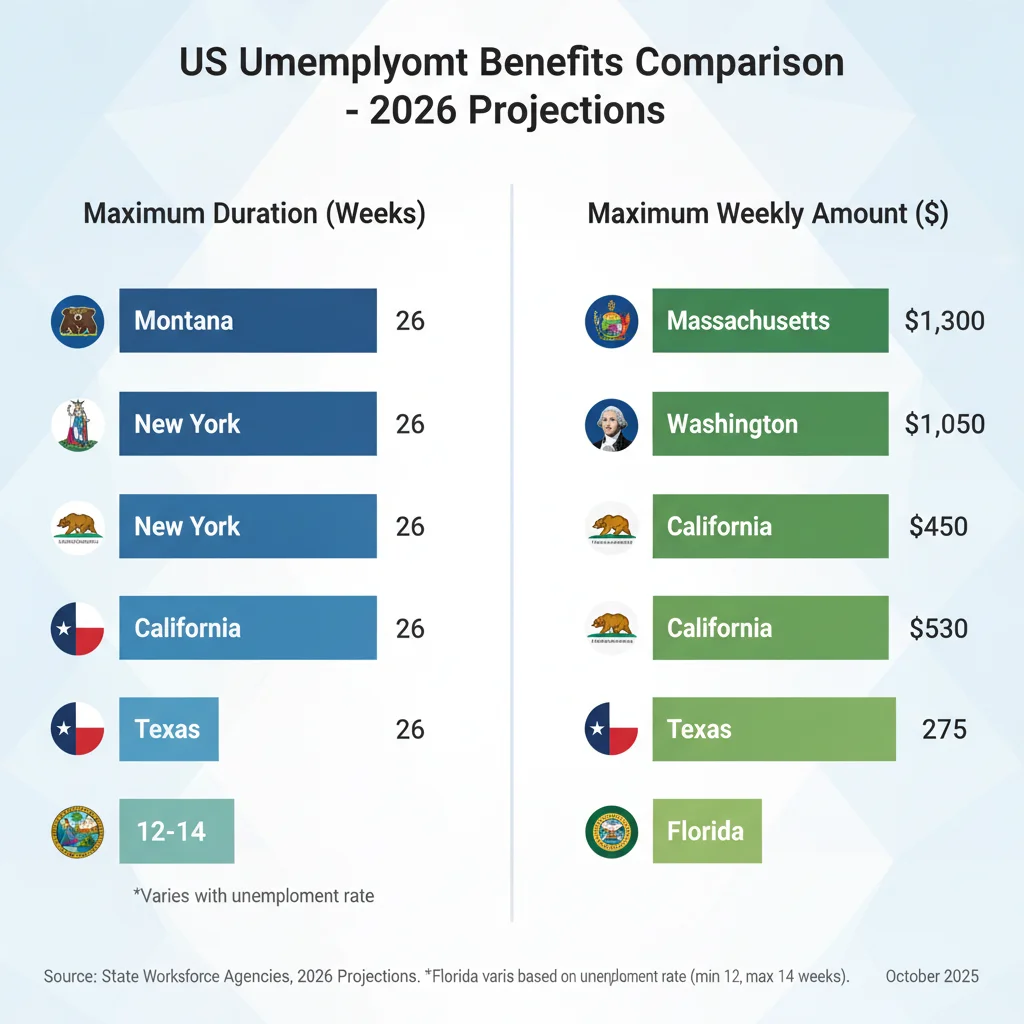
Maximum weekly benefit amounts (WBA) and the standard duration of benefits (typically 26 weeks in most states, but some offer less) are often adjusted based on state economic conditions and legislative action. States with strong economies might consider increasing maximum benefits, while those facing fiscal challenges might look for ways to stabilize their UI trust funds, potentially through adjustments to duration or eligibility.
- Example: A state might increase its maximum WBA to account for inflation, or conversely, a state facing a depleted UI trust fund might reduce its maximum duration for benefits in the absence of federal extensions.
Eligibility Criteria and Disqualification Rules
States can fine-tune their eligibility requirements. This could include changes to:
- Base Period Calculations: How wages are calculated to determine monetary eligibility.
- Definition of ‘Suitable Work’: What an unemployed individual is expected to accept as a job offer. This can be particularly relevant in sectors experiencing rapid technological change.
- Job Search Requirements: The number of job contacts required per week, or specific activities claimants must undertake to demonstrate active job seeking. Some states might introduce stricter reporting requirements.
- Rules for Voluntary Quits and Misconduct: While generally disqualifying, states have specific definitions for what constitutes ‘good cause’ for quitting or ‘misconduct’ leading to termination. These definitions can be refined.
Application and Appeals Processes
Many states are continually working to modernize their UI systems. For US Unemployment Benefits 2026, expect continued efforts to:
- Digitalize Services: More states will likely move towards fully online application and claims management systems, making it easier for claimants to apply, certify, and manage their benefits.
- Improve Communication: Enhanced digital portals and communication channels to provide clearer guidance and updates to claimants.
- Streamline Appeals: Efforts to make the appeals process more transparent and efficient, though this remains a complex area.

Navigating State-Specific Information for 2026
Given the state-centric nature of UI, pinpointing exact changes for US Unemployment Benefits 2026 requires checking specific state resources. Here’s a general guide:
Key States to Watch for Policy Shifts
While all states are subject to change, some are often at the forefront of policy innovation or adjustments due to their economic size, political climate, or unique labor market dynamics. States like California, New York, Florida, Texas, and Illinois frequently introduce changes that can set precedents or reflect broader trends. However, it’s essential to monitor your specific state’s Department of Labor or Workforce Development agency.
Where to Find the Most Up-to-Date Information
The most accurate and current information on US Unemployment Benefits 2026 for your specific state will always come directly from your state’s official government websites:
- State Department of Labor (DOL) or Workforce Development Agency: This is your primary resource. Search for your state’s specific agency (e.g., ‘California EDD,’ ‘Texas Workforce Commission’). These sites will have detailed guides on eligibility, how to apply, weekly reporting requirements, and any legislative updates.
- State Legislative Websites: To track proposed or passed legislation that could impact UI benefits, visit your state’s legislative website. This can provide insight into upcoming changes before they are fully implemented.
- Federal Department of Labor (DOL): The federal DOL website provides an overview of the UI program and links to individual state agencies, serving as a good starting point.
Application Process for US Unemployment Benefits in 2026
The application process for US Unemployment Benefits 2026 will generally follow established procedures, but with an increasing emphasis on online platforms and digital communication. Understanding these steps is vital for a smooth application.
Step 1: Gather Necessary Documentation
Before you even start the application, collect all relevant documents. This typically includes:
- Social Security number
- Driver’s license or state ID
- Mailing address and phone number
- Bank account information for direct deposit (recommended)
- Employment history for the last 18 months, including names and addresses of all employers, dates of employment, and reasons for separation.
- Gross earnings for each employer.
- If you were separated from military service, your DD-214.
- If you are a non-citizen, your Alien Registration Number and expiration date.
Step 2: File Your Initial Claim Promptly
As soon as you become unemployed, file your claim. Most states require you to file in the state where you worked, even if you live in another state. Delaying your claim can result in lost benefits, as benefits are typically paid from the date you file, not the date you became unemployed.
The preferred method for filing in 2026 will overwhelmingly be online through your state’s Department of Labor website. Some states may still offer phone or in-person options, but these are often slower and less efficient.
Step 3: Understand Your Waiting Period
Most states have a waiting week, meaning you won’t receive payment for the first week you are eligible for benefits. This week is usually served after your claim is approved. Be aware of your state’s specific waiting period rules for US Unemployment Benefits 2026.
Step 4: Certify for Benefits Regularly
Once your claim is approved, you must regularly certify (usually weekly or bi-weekly) that you are still unemployed, able and available for work, and actively seeking employment. This is crucial for continuing to receive benefits. Failure to certify can lead to a suspension or termination of benefits.
Step 5: Actively Search for Work
As a condition of receiving benefits, you are generally required to conduct an active job search. States have varying requirements for the number of job contacts per week and the types of activities that qualify. Keep detailed records of your job search activities, including dates, company names, contact persons, and outcomes, as you may be asked to provide this information.
Step 6: Be Prepared for Potential Delays and Appeals
Despite improvements, delays can occur, especially if there are issues with your claim (e.g., your former employer disputes your reason for separation). If your claim is denied, you have the right to appeal the decision. The appeals process involves several stages, often starting with a hearing before an administrative law judge. It’s advisable to seek legal counsel or assistance from worker advocacy groups if you are going through an appeal.
Navigating Challenges and Optimizing Your Claim
While the system for US Unemployment Benefits 2026 aims to be supportive, claimants can encounter various challenges. Being proactive and informed can significantly improve your experience.
Common Pitfalls to Avoid
- Incomplete or Inaccurate Applications: Double-check all information before submitting. Errors can lead to delays or denials.
- Missing Certification Deadlines: Always certify on time, as states are strict about these schedules.
- Not Documenting Job Search: Maintain meticulous records of all job search efforts.
- Failing to Respond to Agency Requests: If the state UI agency requests additional information, respond promptly.
- Misunderstanding Eligibility Rules: Ensure you genuinely meet your state’s criteria to avoid overpayment issues later.
Tips for a Smooth Process
- Read All Correspondence Carefully: State UI agencies communicate important information via mail or secure online portals. Don’t ignore these notices.
- Keep Records: Maintain copies of your application, certifications, job search log, and any communication with the UI agency.
- Use Online Resources: Take advantage of online FAQs, tutorials, and chat features offered by your state’s UI website.
- Seek Assistance: If you’re struggling with the process, look for local workforce centers, legal aid organizations, or non-profits that offer free assistance to unemployed workers.
The Economic Impact of Unemployment Benefits in 2026
Beyond individual assistance, US Unemployment Benefits 2026 play a significant role in broader economic stability. UI acts as an economic stabilizer, injecting funds into local economies during downturns, which helps maintain consumer spending and prevents more severe recessions.
Supporting Local Economies
When individuals receive unemployment benefits, they are more likely to spend that money on essential goods and services, supporting local businesses and jobs. This ripple effect helps to mitigate the negative impact of job losses on communities.
Bridging the Gap
For individuals, UI provides a critical bridge between jobs, allowing them to focus on finding suitable employment rather than taking the first available job out of desperation. This can lead to better job matches, higher productivity in the long run, and a stronger workforce.
Challenges to the System
Despite its benefits, the UI system faces ongoing challenges, including:
- Trust Fund Solvency: During major economic crises, state UI trust funds can be quickly depleted, requiring federal loans. Maintaining solvency is a perpetual balancing act for states.
- Fraud Prevention: As more processes move online, states must continuously invest in robust fraud detection and prevention measures to protect the integrity of the system.
- Adaptability to Modern Workforce: The rise of the gig economy and remote work challenges traditional definitions of employment and employer-employee relationships, necessitating policy adjustments to ensure equitable coverage.
Addressing these challenges will be key for states and the federal government as they refine the system for US Unemployment Benefits 2026 and beyond.
Conclusion: Staying Informed and Prepared for 2026
The landscape of US Unemployment Benefits 2026 will undoubtedly feature a mix of continuity and change. While the foundational principles of unemployment insurance remain steadfast, state-level adjustments to eligibility, benefit amounts, duration, and application processes are a constant. For anyone potentially needing to access these benefits, proactive engagement and thorough understanding are paramount.
By familiarizing yourself with your state’s specific Department of Labor resources, understanding the core eligibility requirements, and staying abreast of any legislative updates, you can navigate the system much more effectively. Unemployment benefits serve as a vital lifeline, offering temporary financial relief and allowing individuals the space to seek new opportunities. Being prepared is the best strategy to ensure that if you ever need to rely on this critical safety net, you can do so with confidence and efficiency.
Remember, the information provided here is a general guide. Always refer to your specific state’s official unemployment insurance website or contact their agency directly for the most accurate and personalized information regarding US Unemployment Benefits 2026.