Decoding Economic Signals: Your Guide to Savvy Financial Decisions
Anúncios
Flipping through financial news can feel like trying to read a foreign language. Terms like ‘CPI,’ ‘yield curve,’ and ‘federal funds rate’ are thrown around, leaving most of us wondering what it all means for our actual bank accounts. It’s easy to tune it out, assuming it’s just noise for Wall Street traders. But what if a few of these signals were the key to protecting your savings, getting a better deal on a loan, or even negotiating a higher salary?
The economy isn’t some distant, abstract force; it’s a collection of interconnected trends that directly impact your daily life. The price of your morning coffee, the interest rate on your credit card, and the security of your job are all tied to these larger movements. Understanding the basics is no longer optional for anyone looking to build financial stability. It’s the difference between being a passive passenger on a turbulent ride and being an informed driver who can navigate the road ahead.
Ignoring these signals is like driving without a dashboard—you’re moving, but you have no idea if you’re about to run out of gas or if the engine is overheating. This guide will serve as your manual. We’ll decode the three most critical economic indicators that affect your personal finances, translate them into plain English, and provide practical strategies. You’ll learn how to adjust your budget during inflation, manage debt when interest rates shift, and position your career for success in any job market.
Anúncios
The Pulse of the Economy: What Indicators Matter to You?
Thinking about “the economy” can feel like trying to understand a complex machine without a manual. It’s vast and intimidating. But you don’t need a Ph.D. in economics to make smart financial decisions. You just need to know which gauges on the dashboard matter for your personal journey. Paying attention to a few key numbers can reveal a lot about your financial health.
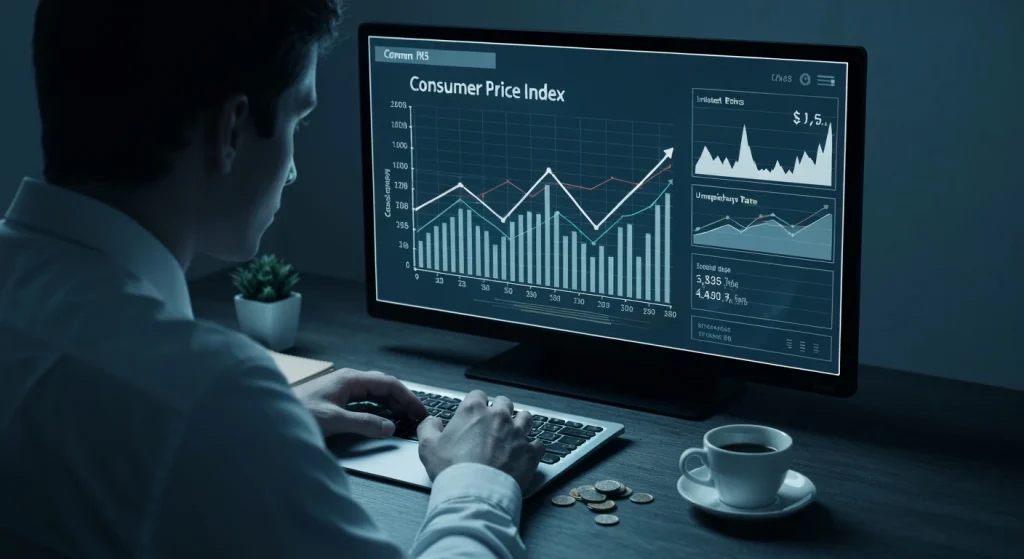
These figures, known as economic indicators, are essentially the economy’s vital signs. They provide data-driven clues about financial trends, helping you anticipate changes instead of just reacting to them. Monitoring these signals is like checking the weather before a long drive; it prepares you for what’s ahead. The three most critical indicators for your wallet are the Consumer Price Index (CPI), interest rates, and the unemployment rate.
Key Indicators and Their Everyday Impact
Each of these indicators tells a different part of the story, but they all connect directly to your daily life. The Consumer Price Index (CPI) measures the average change over time in the prices paid by urban consumers for a market basket of consumer goods and services. Simply put, it’s the most widely used measure of inflation. When the Bureau of Labor Statistics reports a 3.1% rise in the CPI, it means the cost of your typical purchases—from groceries to gasoline—has increased by that amount over the last year.
Anúncios
Then you have interest rates, set by central banks, which dictate the cost of borrowing money. What most people miss is how a seemingly small change here can have big consequences. For instance, a 1% increase in mortgage rates can add hundreds of dollars to a monthly payment on a new home loan. This affects everything from your ability to buy a car to the return you get on your savings account.
Finally, the unemployment rate measures the percentage of the labor force that is jobless and actively seeking employment. This number is a direct reflection of the health of the job market. A low unemployment rate, say below 4%, often leads to higher wages and better job security, making it a good time to consider future-proofing your career path. A high rate, suggests a tougher job market and potential economic downturn.
Understanding these concepts is the first step in navigating economic shifts effectively. Here is a simple breakdown:
| Indicator | What It Means | Direct Impact on You |
|---|---|---|
| Consumer Price Index (CPI) | Measures inflation and the cost of living. | Affects your spending power. Higher CPI means your money buys less. |
| Interest Rates | The cost of borrowing money for consumers and businesses. | Impacts borrowing costs for mortgages, auto loans, and credit cards. |
| Unemployment Rate | The percentage of the workforce without a job. | Influences job security, wage growth, and career opportunities. |
These indicators rarely move in isolation. An interest rate hike might be intended to cool down high inflation, but it could also slow down the job market—a delicate balancing act. The real skill is learning to see how these forces interact.
Navigating Inflation: Strategies for Protecting Your Wallet
Seeing the Consumer Price Index (CPI) tick upwards is one thing, but feeling it in your grocery bill is another entirely. When prices for everyday goods and services rise, your purchasing power shrinks. It is a direct hit to your financial stability. The key isn’t to panic, but to adapt your financial strategy with precision and foresight.
Budgeting for Rising Costs
An old budget in an inflationary period is like a map with the wrong scale; it will get you lost. Your first move should be a complete review of your spending. Many people find that categories like food, gas, and utilities have swelled, eating into funds previously allocated for savings or entertainment. A study from the University of Chicago’s Becker Friedman Institute noted that during recent inflationary spikes, lower-income households saw their required spending increase by as much as 8.7% while their wages failed to keep pace.
Instead of just cutting back randomly, consider re-calibrating your entire budget. The popular 50/30/20 rule (50% needs, 30% wants, 20% savings) may need a temporary adjustment to a 55/25/20 split. This small shift acknowledges the higher cost of necessities while still prioritizing your long-term savings goals. The underrated factor here is tracking; use an app or a simple spreadsheet to see exactly where the money is going. You might be surprised by how much small, frequent purchases add up.
Smart Spending and Saving Habits
Once your budget is updated, the next step is to optimize your outflow. This is about becoming a more deliberate consumer, not necessarily a minimalist. Think of it as a game of financial offense. Are you still paying for a subscription service you haven’t used in months? Canceling just two underused services could free up $30-$50 per month, which counteracts the rising cost of your weekly gas fill-up.
This is also a prime time to negotiate. Many service providers, from cable companies to cell phone carriers, are willing to offer discounts to retain customers—but they rarely offer them unprompted. A 15-minute phone call could potentially lower your monthly bill by 10-20%. This proactive approach to managing your finances is central to successfully navigating the broader economic shifts that impact everyone.
Here are a few actionable steps to implement immediately:
- Conduct a subscription audit: Review bank statements for all recurring charges and cancel any that no longer provide value.
- Buy in bulk (selectively): For non-perishable items you use regularly, buying larger quantities can offer a lower cost per unit. Be careful not to overbuy perishable goods that could lead to waste.
- Embrace generic brands: For many items, from pantry staples to over-the-counter medicine, the store brand is chemically identical to the name brand but costs 25-50% less.
- Plan meals and shop with a list: This simple discipline drastically reduces impulse buys, which are a major source of budget overruns.
Investment Approaches in an Inflationary Environment
Holding too much cash during high inflation is a guaranteed way to lose purchasing power. Think about it: if inflation is running at 5%, the $1,000 sitting in your savings account will only be able to buy $950 worth of goods and services a year from now. This is why investing becomes so important; it’s the process of putting your money to work to outpace the rate of inflation. Your goal is to achieve a positive real return, which is your investment return minus the inflation rate.
This doesn’t mean you should make risky, speculative bets. Instead, focus on assets that have historically performed well when the dollar’s value is declining. For many, this is a new and intimidating challenge, but one that is directly tied to future-proofing your long-term financial security. The question then becomes where to allocate those funds for the best potential protection.
Real Estate vs. Stocks
Two of the most common inflation hedges are real estate and stocks. Real estate is a tangible asset whose value tends to rise with inflation. If you own property, its market value may increase, and if you’re a landlord, you can adjust rent to keep pace with rising costs—one of the more direct ways to protect your income stream.
Stocks, represent ownership in businesses. The data suggests—though not conclusively—that companies with strong pricing power can be effective inflation hedges. These are businesses that can pass their own increased costs (for materials, labor, etc.) onto customers without losing significant business. Look for companies with strong brand loyalty and required products. While past performance is not a guarantee, diversifying across different types of assets is a proven strategy for managing risk in any economic climate.
The average person doesn’t need to predict the next recession. They need to build a financial plan that assumes one is always around the corner. Resilience trumps prediction every time.
— Sarah Chen, Senior Economist at Capital Analytics
| Indicator | What It Means | Direct Impact on You |
|---|---|---|
| Consumer Price Index (CPI) | Measures inflation and the cost of living. | Affects your spending power. Higher CPI means your money buys less. |
| Interest Rates | The cost of borrowing money for consumers and businesses. | Impacts borrowing costs for mortgages, auto loans, and credit cards. |
| Unemployment Rate | The percentage of the workforce without a job. | Influences job security, wage growth, and career opportunities. |
Interest Rate Swings: What They Mean for Your Debts and Savings
When the Federal Reserve adjusts interest rates, it’s not just abstract news for Wall Street; it directly impacts your wallet. These changes ripple through the entire financial system, influencing everything from your mortgage payment to the return on your savings account. Understanding this cause-and-effect is core to smart personal finance.
Think of the central bank’s rate as a master volume knob for the cost of money. When it goes up, borrowing becomes more expensive, and when it goes down, it gets cheaper. This simple mechanism has profound effects on your financial life.
Impact on Borrowing: Loans and Credit
The most immediate and often painful effect of rising rates is on debt. For anyone looking to buy a home or a car, higher rates mean a larger monthly payment for the same loan amount. A 1% increase on a $300,000 mortgage, for instance, can add nearly $200 to a monthly payment, a significant squeeze on a household budget according to Bankrate calculations.
Your existing debts aren’t always safe, either. While a fixed-rate mortgage is locked in, variable-rate debts like credit cards and home equity lines of credit (HELOCs) will see their rates climb. The average credit card APR recently hit 21.47%, a record high reported by the St. Louis Fed, making it incredibly costly to carry a balance. What’s the best way to handle this? The underrated factor here is speed—aggressively paying down this high-interest debt should become a top priority.
This is where the classic debate of fixed vs. variable rates comes into play. A fixed rate offers predictability, like signing a three-year lease on an apartment; you know exactly what you’ll pay. A variable rate is more like a month-to-month rental—it might be cheaper initially, but you’re exposed to sudden price hikes. This is a core concept for anyone navigating economic shifts and planning major purchases.
Boosting Your Savings Potential
It’s not all bad news. Higher interest rates are a significant boon for savers who have been earning next to nothing on their cash for years. As rates rise, banks compete for deposits by offering better returns on savings vehicles. This is your cue to act.
Suddenly, high-yield savings accounts (HYSAs) and Certificates of Deposit (CDs) become much more attractive. It’s not uncommon to see HYSAs offering Annual Percentage Yields (APYs) well over 4.25%, a stark contrast to the paltry 0.1% many traditional savings accounts offered just a short time ago. This provides a low-risk way to make your money work harder for you — a important step in building a financial buffer that supports long-term goals, including future-proofing your career against uncertainty.
This increased return helps protect your cash from being eroded by inflation. While your savings might not be growing in real purchasing power, you are significantly slowing the loss. Your emergency fund should, at minimum, be sitting in an account that takes advantage of these higher yields. Your future self will thank you for it.
The Job Market’s Rhythm: Opportunities and Challenges
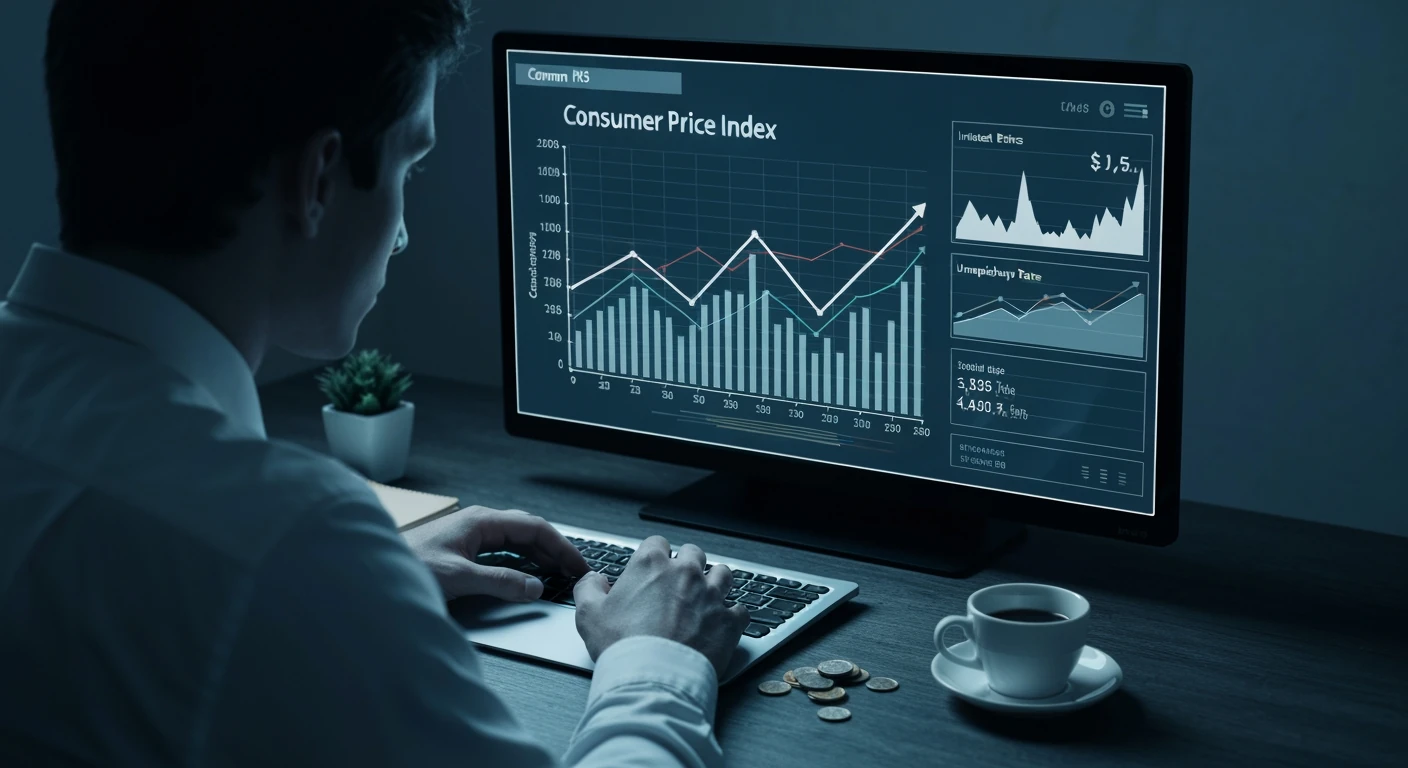
The health of the job market often acts as a direct reflection of the broader economy. When businesses are thriving, they hire more people, and wages tend to increase. Conversely, during an economic slowdown, hiring freezes and layoffs can become more common, creating a sense of uncertainty for many workers.
Recent data from the Bureau of Labor Statistics suggests a slight moderation, with wage growth slowing to 4.1% year-over-year while the unemployment rate remains historically low. But what does this mix of signals mean for your career? A cooling market doesn’t necessarily spell doom; instead, it signals a shift in power from employees back toward a more balanced center. This is where career agility becomes your most valuable asset.
Proactively managing your career path is necessary. It’s less about making drastic moves and more about consistent, small adjustments—like a sailor trimming the sails in response to a changing wind. Staying aware of which sectors are expanding versus contracting helps you understand where the opportunities lie. For many, this means focusing on upskilling in high-demand areas. Thinking about adapting to these economic realities is the first step toward building a more resilient career.
Understanding these shifts is part of a larger picture. Keeping an eye on these employment numbers is a core part of our consumer’s guide to current trends, helping you make informed decisions beyond just your job.
Building Resilience: Crafting a reliable Personal Financial Plan
Understanding the job market is one piece of the puzzle, but true financial security comes from building a personal plan that can absorb shocks. A resilient financial strategy isn’t about timing the market or finding a secret investment. It’s about creating a structure that protects you during downturns and allows you to grow during upturns. Think of it less like a rigid blueprint and more like a ship’s rudder, allowing you to steer through changing tides.
This process begins with an honest assessment of where you are right now. It is your starting point.
Establishing Your Financial Foundation
Before you even think about investing, you need a financial cushion. This is your emergency fund. A surprising number of people overlook this step; a report from the Federal Reserve found that nearly 37% of adults would have trouble covering an unexpected $400 expense. Your emergency fund acts as a buffer between you and high-interest debt when life happens, whether it’s a car repair or a sudden job loss.
But how much is enough? Financial planners typically recommend saving three to six months’ worth of required living expenses. This includes housing, utilities, food, and transportation. Store this money in a high-yield savings account where it’s accessible but separate from your daily checking account. This separation prevents you from accidentally spending your safety net on non-emergencies—a common and costly mistake.
Strategic Investment Diversification
Once your emergency fund is in place, you can focus on growing your wealth through investments. The key principle here is diversification. Simply put, don’t put all your eggs in one basket. A diversified portfolio spreads your money across different asset classes, such as stocks, bonds, and real estate. When one asset class performs poorly, another may perform well, smoothing out your overall returns.
This concept extends beyond just your stock portfolio. True diversification also means investing in yourself. As markets shift, having a versatile skill set is a form of financial protection. Thinking about future-proofing your career is an required part of a holistic financial plan, ensuring your income stream is as resilient as your investments.
Adapting Your Plan to Economic Realities
A financial plan is not a “set it and forget it” document. It must be a living guide that you regularly review and adjust. Economic conditions change, and your personal goals will evolve over time. What worked last year might not be the best approach today.
To keep your plan relevant, follow a structured review process. This discipline helps you stay on track and make informed changes instead of emotional ones. Consider these steps as a regular financial check-up:
- Review Your Budget Monthly: Track your income and expenses to ensure you’re staying within your means. Adjust spending categories as needed, especially when you see patterns emerge from navigating economic shifts as a consumer.
- Check Your Emergency Fund Quarterly: If you’ve had to use some of it, make a plan to replenish it. If your expenses have increased, recalculate your three-to-six-month target.
- Rebalance Your Investments Annually: Your portfolio’s asset allocation will drift over time as different investments grow at different rates. Rebalancing means selling some of your winners and buying more of your underperformers to return to your target allocation.
- Re-evaluate Long-Term Goals Yearly: Are you still on track for retirement? Have your goals for buying a home or funding education changed? Adjust your savings and investment strategy accordingly.
Scenario Planning for Downturns
The underrated factor here is actively preparing for the worst. This involves running “what if” scenarios for your finances. What if your income was cut by 30%? What if the stock market dropped by 25%? While these exercises can feel stressful (they’re like a fire drill for your money), they reveal weak spots in your plan before a real crisis hits. This proactive stress-testing allows you to build stronger defenses, such as increasing your cash reserves or identifying expenses you could cut quickly. It turns abstract fear into a concrete, manageable action plan.
Future Outlook: Preparing for Emerging Economic Landscapes
Looking ahead, economists are pointing toward several major shifts that will reshape our financial lives. One of the most discussed is the continued integration of automation and artificial intelligence into the workforce. According to a projection from the Forrester Group, AI could influence nearly 80% of jobs in some capacity, changing not just what jobs exist but the skills required to perform them. Preparing for this isn’t about predicting the future with a crystal ball; it’s more like packing for a trip with a variable forecast—you need layers and options.
This means your financial plan needs to be as flexible as your career path.
The key is proactive adaptation rather than reactive panic. What most people miss is that small, consistent efforts in education and financial literacy compound over time. Actively future-proofing your career by learning new, in-demand skills is no longer optional. But how do you align your budget with these larger forces? Staying informed is the first step, and our guide to navigating these economic shifts provides a practical starting point. The goal is to build a personal financial system that is resilient enough to absorb shocks and flexible enough to seize new opportunities as they arise.
From Signal to Strategy: Your Personal Economic Indicator
The ultimate goal isn’t just to react to economic news but to build a financial life that anticipates it. By understanding the interplay between inflation, interest rates, and the job market, you shift from a defensive crouch to a proactive stance. This knowledge transforms abstract headlines into a personal action plan, allowing you to see opportunities where others only see uncertainty.
Ultimately, the most important economic indicator isn’t one released by a government agency. It’s your own financial preparedness—the strength of your emergency fund, the diversity of your income, and the clarity of your long-term goals. The external economic climate will always change, but your internal financial structure is what determines whether you weather the storm or harness the wind. What is the one move you can make this week to strengthen that personal indicator?
Frequently Asked Questions
How do I know if the economy is heading into a recession?
Key warning signs include two consecutive quarters of negative GDP growth, a steadily rising unemployment rate, and a significant drop in consumer spending. Experts also watch for an inverted yield curve, a reliable, though not infallible, predictor of an economic downturn.
What are the best investments during high inflation?
During periods of high inflation, investors often turn to assets that hold their value. These can include real estate, Treasury Inflation-Protected Securities (TIPS), commodities, and stocks of companies with strong pricing power that can pass costs to consumers. Diversification remains the most critical strategy to manage risk.
Should I prioritize paying off debt or saving during economic uncertainty?
The best approach often involves a balance. Focus aggressively on paying down high-interest variable debt, like credit card balances, as their costs will likely rise. At the same time, ensure you have a solid emergency fund of 3-6 months of living expenses in a high-yield savings account.
How can I make my income more resilient to economic changes?
Diversifying your income is key to building resilience. Consider developing a side hustle or freelance work in your field. Continuously investing in high-demand skills makes you a more valuable employee, and building a strong professional network can provide a important safety net during downturns.
What role does government policy play in my personal finances?
Government and central bank policies have a direct impact. The Federal Reserve’s decisions on interest rates affect the cost of your mortgage, car loans, and credit cards, as well as the earnings on your savings. Fiscal policies like tax code changes or stimulus programs can also directly alter your disposable income and financial planning.