Unraveling Economic Shifts: A Comprehensive Guide for Savvy Consumers

Anúncios
The daily headlines about the economy often feel like a foreign language—a distant storm of percentages and policies that seems to have little to do with your actual life. But what if those abstract numbers about GDP, inflation, and interest rates are actually writing the story of your financial future? For most people, economic news is background noise, a force of nature to be weathered rather than understood. This passive approach is no longer a viable strategy; it’s a direct path to financial vulnerability in an era defined by rapid change.
The truth is, the economy isn’t an uncontrollable weather system. It’s a series of interconnected signals that, once decoded, can empower you to make proactive decisions instead of reactive ones. Understanding why your grocery bill is climbing, what a Federal Reserve announcement means for your mortgage, or how global events can dictate local job opportunities is the first step toward gaining agency over your financial well-being. This knowledge transforms you from a passenger into the driver of your own personal economy.
This guide is designed to be your translator. We will break down the required economic indicators that directly impact your wallet, from the Consumer Price Index to interest rate hikes. We’ll explore the shift in consumer behavior toward more conscious spending and detail practical budgeting frameworks like the 50/30/20 rule. we will examine the new dynamics of the job market and provide clear, actionable strategies for protecting and growing your assets, even when markets are volatile. It’s time to stop reacting to the news and start using it to your advantage.
Anúncios
The Current Economic Pulse: Key Indicators to Watch
Most people treat economic news like weather reports—interesting but ultimately out of their control. This is a profound mistake. The economy isn’t an abstract force; it’s a set of measurable signals that directly dictate the terms of your financial life. Understanding these signals is the first step toward exerting control. You only need to focus on a few key data points to get a clear picture.
The broadest measure is Gross Domestic Product (GDP), which reflects the total value of all goods and services produced. A recent report from the Bureau of Economic Analysis showing a 2.1% annual growth rate might seem boring, but it’s the foundational context for every financial decision made by institutions and individuals. It’s the pulse of the nation’s financial health.
Decoding Inflation: What It Means for Your Wallet
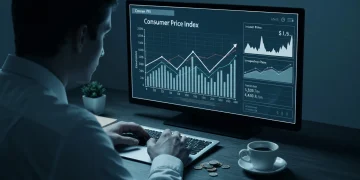
Inflation is the silent tax that erodes your purchasing power without ever sending you a bill. When the Bureau of Labor Statistics reports that the Consumer Price Index (CPI) rose 3.4% over the last year, it means the basket of goods you bought for $100 now costs $103.40. Your money is simply worth less. This isn’t theoretical; it’s the reason your grocery bill climbs even when your shopping list stays the same.
Anúncios
This single number shapes everything. It influences wage negotiations, business pricing strategies, and your personal budget. But are all price increases felt equally? Of course not. The data often shows energy and food prices are far more volatile — a fact that many official reports tend to gloss over by focusing on “core” inflation. The underrated factor here is how these global economic currents affect specific items on your local store shelves.
This erosion of value is why simply saving cash is a losing game over time. It’s like trying to fill a bucket with a slow leak.
Interest Rates: Impact on Borrowing and Savings
If inflation is the economic temperature, then interest rates are the thermostat, controlled primarily by the Federal Reserve. When the Fed raises its key interest rate, even by a seemingly small 0.25%, it’s intentionally applying the brakes to the economy to cool down spending and fight inflation. It’s a blunt instrument with sharp consequences for your wallet.
The most immediate effect is on borrowing. Higher interest rates translate directly to more expensive mortgages, car loans, and stubbornly high credit card debt. A homebuyer might find their potential monthly payment jumping by several hundred dollars based on a rate change that occurred weeks earlier. This is precisely why making smart money moves requires anticipating these shifts, not just reacting to them.
There’s another side to this coin. For savers, higher rates mean better returns on high-yield savings accounts and certificates of deposit (CDs). Suddenly, the money sitting in your bank account can start working for you in a more meaningful way. The challenge is balancing the high cost of debt against the improved opportunity for savings, a critical component of any strategic outlook on personal finance.
Consumer Spending Habits: Adapting to New Realities
The economic indicators discussed previously aren’t just abstract numbers on a screen; they are direct commands rewriting the rules of household finance. We are witnessing a core shift in consumer behavior, driven not by fleeting trends but by stark necessity. People are treating their dollars less like disposable tickets and more like soldiers being sent into a very uncertain battle. This isn’t just about cutting back. It’s a complete psychological rewiring.
This new era of financial caution has given birth to a more discerning, almost skeptical consumer. The data suggests this isn’t a temporary belt-tightening. According to a recent report from Deloitte, a staggering 68% of consumers now report researching product value and longevity before making a purchase over $50, a sharp increase from just a few years ago. The era of mindless swiping is over.
The Rise of Conscious Consumption
What most people miss is that this isn’t simply about saving money. It’s about control. In a world where large-scale economic forces feel uncontrollable, consumers are exercising authority where they can: at the checkout counter. This has led to a surge in conscious consumption, where purchasing decisions are filtered through a lens of ethics, sustainability, and personal value alignment, not just price.
This trend manifests in several ways. We see a decline in brand loyalty as shoppers prioritize utility and cost-effectiveness over legacy names. The second-hand market for everything from clothing to electronics is experiencing extraordinary growth. Why pay full price for a new item when a perfectly good alternative exists for 40% less? These micro-decisions reflect a broader understanding of how global economic currents impact your daily life, turning every purchase into a small economic statement.
Budgeting Strategies for Economic Uncertainty
With this new mindset, the old methods of budgeting are showing their age. The simple “save 10% and hope for the best” approach is like bringing a flip phone to a cybersecurity conference—it just doesn’t have the tools for the modern environment. Today’s effective budgeting is proactive, not reactive. It’s about deploying smart money moves for goal-oriented individuals who refuse to be passive victims of economic cycles.
The primary conflict is between rigid, old-school methods and flexible, modern frameworks. Traditional techniques often focused on meticulous tracking, which can be cumbersome. Newer strategies, prioritize aligning spending with personal goals and values, offering a more adaptable structure for volatile times. Let’s break down the most prominent examples.
Zero-Based Budgeting Explained
Zero-based budgeting (ZBB) operates on a simple but demanding principle: your income minus your expenses must equal zero at the end of each month. This doesn’t mean you spend every penny. It means every single dollar is assigned a job, whether that’s paying rent, buying groceries, investing for retirement, or going into savings. Nothing is left unallocated.
Think of it like a chef doing inventory before creating a menu. You don’t just guess what you have; you account for every single ingredient, ensuring nothing is wasted and every component serves a specific purpose. The primary benefit is total awareness of your cash flow. The downside? It is incredibly time-consuming and requires intense discipline—which, let’s be honest, often feels like a full-time job. It’s best for those who need a serious financial reset or thrive on meticulous detail.
The 50/30/20 Rule: A Modern Approach
For those who find ZBB too restrictive, the 50/30/20 rule offers a more streamlined framework. Popularized by Senator Elizabeth Warren, this approach divides your after-tax income into three categories:
- 50% for Needs: This covers necessary living expenses that you can’t avoid. Think housing, utilities, transportation, and basic groceries.
- 30% for Wants: This category includes lifestyle choices like dining out, hobbies, streaming subscriptions, and vacations. It’s the flexibility bucket.
- 20% for Savings & Debt Repayment: This portion is directed toward financial goals, such as building an emergency fund, investing, or paying down high-interest debt beyond the minimum payments.
The beauty of this method is its simplicity and focus on broader goals rather than every individual transaction. It encourages conscious trade-offs—do you want that expensive dinner out more than you want to hit your savings goal this month? By automating the 20% savings, it builds a foundation for long-term career and financial growth without the need for obsessive micromanagement.
Ultimately, the chosen method is less important than the act of choosing one. Ignoring your cash flow in the current economy isn’t just lazy; it’s a direct route to financial vulnerability. The new consumer is a strategic one, and their budget is their plan of action.
The half-life of a professional skill has shrunk to less than five years.
— Dr. Lena Petrov, labor market analyst at Stanford
| Feature | Zero-Based Budgeting (ZBB) | The 50/30/20 Rule |
|---|---|---|
| Key Principle | Assign a specific job to every dollar of income, ensuring Income – Expenses = 0. | Divide after-tax income into three categories: 50% for Needs, 30% for Wants, 20% for Savings. |
| Effort Level | High. Requires meticulous tracking of every transaction and monthly planning. | Low to Medium. Focuses on broad categories rather than individual purchases. |
| Best For | Individuals needing a financial reset, detail-oriented planners, or those with irregular income. | Beginners seeking simplicity, those who dislike micromanagement, and people looking for a balanced lifestyle. |
| Primary Benefit | Provides complete awareness and control over where every dollar goes. | Simple to implement, encourages consistent saving, and offers flexibility within categories. |
Job Market Dynamics: Navigating Career Opportunities
The concept of a stable, lifelong career is a relic. Economic shifts are not just tweaking the job market; they are completely rewriting the rules of professional relevance. What most people fail to grasp is that the skills that secured a job yesterday could be liabilities tomorrow. This isn’t about minor adjustments; it’s about a underlying overhaul in what employers value, driven by automation and new global pressures.
For those paying attention, these disruptions create immense opportunities. Industries like renewable energy, artificial intelligence, and personalized healthcare are expanding at a record pace. According to a recent analysis by the World Economic Forum, over 65% of children entering primary school will ultimately work in completely new job types that don’t yet exist. The critical question is, are you prepared to pivot? Treating your career like a static asset is like buying a house and never doing maintenance—it’s guaranteed to depreciate and eventually become unlivable. The only way to survive is by future-proofing your career through continuous learning.
This means reskilling is no longer optional.
Dr. Lena Petrov, a labor market analyst at Stanford, states, “The half-life of a professional skill has shrunk to less than five years.” This means a constant cycle of learning and unlearning is the new baseline for career stability. Your ability to adapt and acquire new competencies — from data analytics to emotional intelligence — is the single greatest predictor of long-term success. The key is to stop thinking about a single path and start mastering your career trajectory by building a portfolio of valuable skills. The economic currents will keep shifting, but a versatile skill set acts as your rudder.

Personal Finance in Flux: Protecting and Growing Your Assets
Forget everything you thought you knew about financial stability. The old rules of simply saving a little and avoiding debt are dangerously outdated in an economy that changes its mind every quarter. Your career trajectory is shifting, and your financial strategy must become just as agile. True financial resilience isn’t about hoarding cash; it’s about making your money work smarter and harder than the economic forces trying to devalue it.
This requires a radical shift in mindset. You are no longer just a saver; you are the active manager of your own personal economy. It’s a demanding job. The good news is that the tools for success are available to anyone willing to look beyond the headlines and make decisive moves. The first step is building a buffer against immediate shocks.
Building an Emergency Fund: Your Financial Safety Net
Most financial gurus preach the “three to six months of expenses” rule for an emergency fund. Let’s be blunt: that’s a baseline, not a goal. In an era of sudden industry layoffs and persistent inflation, six months can evaporate frighteningly fast. A report from the Consumer Financial Protection Bureau noted that 42% of households would struggle to cover a $1,000 emergency expense. That is a razor-thin margin for error.
Your new target should be closer to eight or even twelve months of required living costs, held in a high-yield savings account—not your standard checking account earning a pittance. Think of this fund as your personal business’s operating capital. It’s the money that keeps the lights on while you pivot, whether that means finding a new job, retraining for a new skill, or waiting out a market downturn without panic-selling your investments. Are you prepared for a prolonged disruption?
Investment Strategies for Volatile Markets
Watching the stock market swing wildly can feel like being a passenger in a car with a reckless driver. The temptation to grab the wheel—or jump out entirely—is immense. Yet, the most significant long-term losses often come from emotional decisions made during these periods of turbulence. A successful approach isn’t about timing the market, an impossible task, but about time in the market, guided by a clear strategy.
What most people miss is that volatility creates opportunity. Market dips are effectively sales on quality assets. This is where having a clear understanding of your personal smart money moves for goal-oriented individuals becomes a tactical advantage. Instead of seeing red in your portfolio and panicking, you can see a discount and act strategically.
Diversification Tactics
The phrase “don’t put all your eggs in one basket” is a cliché for a reason. It’s also profoundly misunderstood. Diversification isn’t just about owning a few different stocks; it’s about spreading your capital across non-correlated asset classes. When one zigs, the other should ideally zag.
- Geographic Spread: Don’t limit yourself to domestic markets. Allocating a portion of your portfolio to international index funds (both developed and emerging markets) can insulate you from country-specific downturns.
- Asset Class Variety: Your portfolio should be a mix. This includes stocks (equities), bonds (fixed income), real estate (through REITs, for example), and even a small allocation to commodities like gold, which often performs well when faith in currency is low.
- Sector Allocation: Within your stock holdings, ensure you aren’t over-exposed to a single industry. Tech might be flying high one moment and correcting the next, so having holdings in healthcare, consumer staples, and industrial sectors provides balance.
Long-Term vs. Short-Term Goals
Your investment strategy must be tailored to your timeline. Money you need in the next one to three years—for a down payment or a major purchase—has no business being in the volatile stock market. That capital belongs in safer instruments like high-yield savings accounts or short-term treasury bonds. Trying to squeeze a quick return out of short-term cash is gambling, not investing.
Conversely, money for retirement decades away can and should weather market storms. For these long-term goals, a downturn is just noise. Dr. Anya Sharma, a professor of behavioral finance at the University of Chicago, explains, “The power of compounding is overwhelmingly the most significant factor in wealth creation, but it requires an unwavering commitment to the long-term plan, especially during periods of fear.” This is where a strategic outlook on your career and financial growth pays dividends, ensuring your earning potential aligns with your investment horizon.
Smart Debt Management in a High-Interest Environment
In a period of rising interest rates, debt becomes an active threat to your financial health. What was once a manageable credit card balance can quickly spiral as APRs climb past 20% or even 25%. High-interest debt is like trying to run a race while wearing a weighted vest; it drains your energy (and your income) with every step.
Aggressively paying it down is non-negotiable. Create a list of all your debts, ordered by interest rate—this is often called the “avalanche method.” Throw every spare dollar at the highest-rate debt while making minimum payments on the others. Once the first is eliminated, roll that entire payment amount onto the next one. This creates a snowball of payment power that systematically dismantles your debt load. It’s a painful process, but reclaiming the hundreds or thousands of dollars lost to interest each year is one of the highest-return “investments” you can make.
Future Outlook: Preparing for What’s Next
Believing that tomorrow’s economy will resemble today’s is the most dangerous assumption you can make with your money. The convergence of artificial intelligence, geopolitical realignments, and the global push for decarbonization is creating a period of profound uncertainty. What most people miss is that this isn’t about a single storm, but a permanent change in the weather pattern. The data suggests—though not conclusively—that these shifts will create entirely new industries while rendering others obsolete.
Complacency is financial suicide.
Waiting for clear signals means you have already been left behind. According to a recent analysis from the World Economic Forum, continuous reskilling will be a non-negotiable requirement for career stability, impacting an estimated 1 billion workers globally. Are you actively building skills for a world that doesn’t exist yet, or are you just protecting the job you currently have? Building true economic resilience means moving from a defensive crouch to an offensive strategy, something detailed in a strategic outlook on personal finance.
Understanding how global economic currents impact your daily life is no longer optional. It’s the baseline for survival. Proactive preparation—whether it’s diversifying your income streams or investing in sectors poised for growth (a whole other can of worms)—is the only reliable hedge against volatility. The question isn’t whether major disruption is coming; it’s whether you’ll be a casualty of it or one of its architects.
From Spectator to Strategist: Your New Economic Reality
Moving forward, the most valuable asset you can cultivate is not a particular stock or a specific savings account, but a mindset of perpetual financial adaptation. The economic principles and strategies discussed are not a one-time fix; they are the tools for an ongoing practice. The forces of inflation, technological disruption, and global market shifts will not cease. your engagement with your own financial education cannot have an end date. The era of ‘set it and forget it’ is over, replaced by a need for constant vigilance and strategic adjustment.
The ultimate takeaway is this: financial literacy has evolved from a helpful skill into a core survival mechanism for the modern world. The gap between those who understand these systems and those who don’t will only widen. The critical question is no longer *if* you should become the active manager of your financial life, but what is the very first strategic move you will make tomorrow morning?
Frequently Asked Questions
How do global events influence local economic conditions?
Global events directly impact local economies by disrupting supply chains, which can raise prices on imported goods. They also affect global energy costs, leading to higher gas and utility prices for consumers. international political instability can cause market volatility that influences investment portfolios and retirement accounts worldwide.
What are the best strategies for saving money during high inflation?
During high inflation, prioritize placing savings in a high-yield savings account to earn interest that can partially offset the loss of purchasing power. Focus on reducing discretionary spending, such as dining out and subscriptions, which fall into the ‘Wants’ category. It’s also important to continue investing, as long-term market returns historically outpace inflation.
Is now a good time to invest, and if so, where?
Financial experts generally advise that ‘time in the market’ is more important than ‘timing the market.’ Instead of trying to predict peaks and valleys, focus on consistent, long-term investing. A well-diversified portfolio, spread across different asset classes like stocks, bonds, and international funds, remains a sound strategy regardless of short-term volatility.
How can I assess my financial health effectively?
To assess your financial health, start by creating a budget to understand your cash flow. Calculate your net worth by subtracting your liabilities (debts) from your assets (savings, investments). Finally, evaluate your emergency fund to ensure it can cover at least eight to twelve months of required living expenses, providing a strong safety net.
What impact do government policies have on my personal finances?
Government policies have a direct impact on your finances. Monetary policies, like the Federal Reserve adjusting interest rates, determine how expensive it is to borrow money for mortgages and loans, and how much you earn on savings. Fiscal policies, including changes to tax codes or stimulus programs, directly affect your disposable income and overall tax burden.