Medicaid Expansion 2025: Healthcare Coverage for Low-Income Individuals

Anúncios
Medicaid Expansion in 2025 is a critical program extending vital healthcare coverage to millions of low-income adults, significantly reducing the uninsured rate and improving health outcomes across participating states.
Understanding Medicaid Expansion in 2025: Impact on Healthcare Coverage for Low-Income Individuals is more crucial than ever. This initiative continues to shape the landscape of health access for millions, and its evolution directly affects the well-being of vulnerable populations across the United States. Let’s delve into what this means for you and your community.
Anúncios
The foundation of Medicaid expansion
Medicaid, a joint federal and state program, provides healthcare coverage to millions of Americans, including low-income adults, children, pregnant women, elderly adults, and people with disabilities. The Affordable Care Act (ACA) of 2010 introduced the option for states to expand their Medicaid programs, extending eligibility to nearly all non-elderly adults with incomes up to 138% of the federal poverty level (FPL).
This expansion was designed to fill a significant gap in healthcare coverage, particularly for adults who previously earned too much to qualify for traditional Medicaid but too little to afford private insurance or qualify for subsidies on the health insurance marketplaces. By 2025, the impact of this policy continues to be a central topic in healthcare discussions, with participating states seeing notable changes in their healthcare systems and public health.
Anúncios
Historical context and evolution
Initially, the ACA mandated Medicaid expansion for all states, but a 2012 Supreme Court ruling made it optional. This decision led to a bifurcated system where some states chose to expand and others did not, creating significant disparities in coverage across the nation. Over the years, more states have opted to expand, recognizing the economic and health benefits.
- Early adoption: States that expanded early saw immediate reductions in their uninsured rates.
- Gradual expansion: Other states have joined over time, often driven by public demand and federal incentives.
- Ongoing debates: Non-expansion states continue to debate the merits and costs of joining the program, especially as federal funding structures evolve.
The foundation of Medicaid expansion is rooted in the principle of ensuring basic healthcare access for those who need it most. Its evolution reflects a complex interplay of federal policy, state budgets, and public health imperatives, with each year bringing new insights into its long-term effects.
Eligibility criteria for low-income individuals in 2025
Understanding who qualifies for Medicaid Expansion in 2025 is essential for low-income individuals seeking healthcare coverage. The primary determinant for expanded Medicaid eligibility is income relative to the federal poverty level (FPL). In states that have adopted expansion, non-elderly adults (generally those aged 19-64) are eligible if their household income is at or below 138% of the FPL.
This threshold is higher than traditional Medicaid programs, which typically cover specific categories like pregnant women, children, and individuals with disabilities at lower income percentages. The 138% FPL includes a 5% income disregard, meaning the effective limit is actually 133% of the FPL. This allows for a slightly higher income to still qualify, providing a broader safety net.
Federal poverty levels and income calculations
The FPL is an annually updated measure used by the federal government to determine eligibility for various federal programs. For 2025, specific FPL figures will dictate the exact income thresholds. These figures vary based on household size, meaning a single individual will have a different income limit than a family of four. It’s crucial for applicants to check the most current FPL guidelines available from federal and state health agencies.
- Household income: All taxable income from all household members is usually counted.
- Modified adjusted gross income (MAGI): Medicaid eligibility is generally based on MAGI, which simplifies income calculations and aligns with marketplace subsidy determinations.
- Asset limits: For expanded Medicaid, asset limits are typically not a factor for non-disabled adults, unlike some traditional Medicaid categories.
Beyond income, applicants must also meet certain non-financial criteria, such as U.S. citizenship or qualified immigrant status, and residency in the state where they are applying. These criteria ensure that the program targets eligible populations effectively, providing coverage to those most in need within the specified parameters of the expansion.
Benefits and services offered under expanded Medicaid
For low-income individuals, the benefits and services offered under expanded Medicaid are comprehensive and crucial for maintaining health and well-being. Unlike some limited emergency-only programs, expanded Medicaid provides access to a wide array of essential health benefits, aligning closely with those required for private health plans under the Affordable Care Act.
This robust coverage ensures that beneficiaries can receive necessary medical care without facing prohibitive costs, which can often be a barrier for those with limited incomes. The scope of services aims to cover preventive care, acute needs, and chronic disease management, promoting overall public health within the covered population.
Key healthcare services included
The essential health benefits package covered by expanded Medicaid typically includes a broad range of services. This comprehensive approach helps to address various health needs, from routine check-ups to more specialized treatments. It reduces the financial burden on individuals and can prevent minor health issues from escalating into more serious and costly conditions.
- Ambulatory patient services: Outpatient care, including doctor visits and clinic services.
- Emergency services: Coverage for urgent medical situations.
- Hospitalization: Inpatient care when admitted to a hospital.
- Maternity and newborn care: Services related to pregnancy, childbirth, and postnatal care.
- Mental health and substance use disorder services: Counseling, therapy, and treatment for behavioral health conditions.
- Prescription drugs: Access to necessary medications.
- Rehabilitative and habilitative services: Therapies to help people recover or improve functioning.
- Laboratory services: Diagnostic tests and analyses.
- Preventive and wellness services: Screenings, immunizations, and chronic disease management.
- Pediatric services: Including oral and vision care for children.
The provision of these extensive benefits not only improves individual health outcomes but also reduces the strain on emergency rooms, as people can access primary and preventive care more readily. This holistic approach to healthcare is a cornerstone of the Medicaid expansion’s positive impact.
Impact on uninsured rates and health outcomes
The impact of Medicaid Expansion on uninsured rates and health outcomes has been profoundly significant, particularly for low-income individuals. States that adopted the expansion have consistently reported substantial reductions in their uninsured populations, providing millions with access to healthcare they previously lacked. This shift has far-reaching implications for individual well-being and public health systems.
Studies have shown that expanded coverage leads to improved access to care, earlier diagnosis of chronic conditions, and better management of existing health issues. This translates into tangible improvements in various health indicators, reducing preventable hospitalizations and mortality rates among the newly insured.
Statistical evidence and research findings
Numerous research studies and government reports have documented the positive effects of Medicaid expansion. These findings provide compelling evidence of the program’s effectiveness in achieving its core objectives. The data often highlights a clear contrast between expansion and non-expansion states.
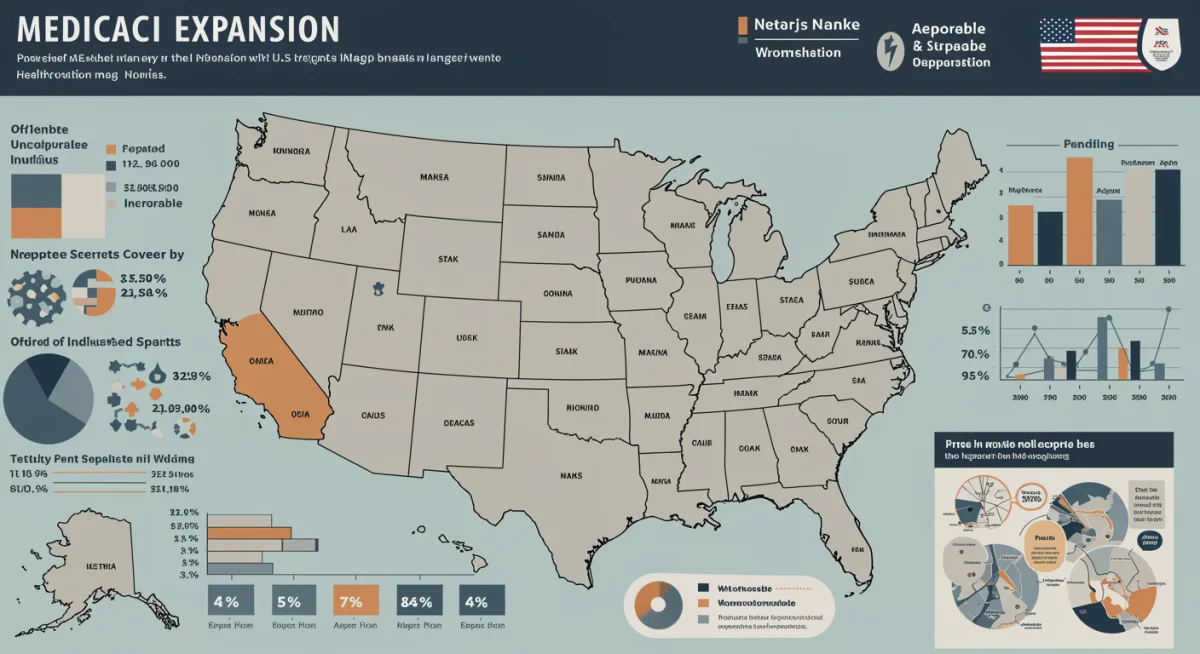
- Reduced uninsured rates: Expansion states saw an average 6.1 percentage point drop in uninsured rates for non-elderly adults, compared to a 2.4 percentage point drop in non-expansion states.
- Improved access to care: Individuals in expansion states reported better access to primary care, specialist visits, and prescription medications.
- Financial protection: Expanded Medicaid significantly reduced medical debt and bankruptcy filings among low-income individuals.
- Better health outcomes: Research indicates improvements in self-reported health status, reduced mortality for certain conditions, and increased rates of preventive screenings.
The evidence unequivocally points to Medicaid expansion as a powerful tool for extending healthcare access and improving health outcomes for low-income populations. These positive changes are not just statistical; they represent real improvements in the lives of millions of Americans, fostering a healthier and more productive society.
Challenges and ongoing debates in 2025
Despite its proven benefits, Medicaid Expansion in 2025 continues to face a range of challenges and ongoing debates. These issues often revolve around funding, state autonomy, and the efficiency of healthcare delivery within the expanded framework. Understanding these complexities is vital for a complete picture of the program’s future trajectory.
One of the primary challenges remains the political divide, with some states still resisting expansion due to philosophical objections or concerns about long-term financial commitments, even with substantial federal matching funds. These debates highlight the tension between federal mandates and state-level decision-making in healthcare policy.
Funding concerns and state budgets
While the federal government covers a significant portion of expansion costs (currently 90% for newly eligible enrollees), states are responsible for the remaining share. This state share, though smaller, can still represent a considerable amount in state budgets, leading to ongoing fiscal debates.
- Budgetary pressures: States must balance Medicaid costs with other essential services, leading to difficult allocation decisions.
- Federal funding stability: Concerns sometimes arise about the long-term stability of federal matching rates and potential changes in federal policy.
- Economic impact: While expansion brings federal dollars into state economies and can boost local healthcare sectors, some argue about the overall economic benefit versus direct state costs.
Beyond funding, other challenges include ensuring adequate healthcare provider networks to meet increased demand, addressing workforce shortages, and streamlining administrative processes to make enrollment and access as efficient as possible. These ongoing issues require continuous attention and innovative solutions to maximize the program’s effectiveness for low-income individuals.
Future outlook and potential policy changes
The future outlook for Medicaid Expansion in 2025 is dynamic, with potential policy changes on both federal and state levels that could further shape its reach and impact. As the healthcare landscape evolves, so too do the discussions surrounding Medicaid, aiming to enhance its efficacy and address existing gaps in coverage.
Federal policy shifts, such as changes in administration or legislative priorities, could influence funding structures, eligibility criteria, or the encouragement for non-expansion states to adopt the program. Simultaneously, states may explore new waivers or innovative approaches to service delivery to better serve their low-income populations.
Innovations and state-level initiatives
Many states are already implementing or considering innovations to improve their Medicaid programs. These initiatives often focus on improving health outcomes, increasing cost-efficiency, and addressing social determinants of health that impact beneficiaries.
- Value-based care models: Shifting from fee-for-service to models that reward quality and outcomes.
- Managed care expansion: Utilizing private health plans to manage Medicaid benefits, aiming for better coordination and cost control.
- Addressing social determinants: Programs that link beneficiaries to housing, food assistance, and transportation services to improve overall health.
- Telehealth integration: Expanding access to care through virtual health services, particularly important for rural or underserved areas.
The ongoing commitment to refining Medicaid expansion reflects a broader understanding of healthcare as a fundamental right and a critical component of a healthy society. While challenges persist, the drive to improve access and outcomes for low-income individuals remains a central focus for policymakers and healthcare advocates alike, ensuring its continued relevance in the years to come.
| Key Aspect | Brief Description |
|---|---|
| Eligibility Threshold | Non-elderly adults with income up to 138% of the Federal Poverty Level (FPL) in expansion states. |
| Covered Benefits | Comprehensive essential health benefits, including doctor visits, emergency care, prescriptions, and mental health services. |
| Impact on Uninsured | Significantly reduces uninsured rates and improves access to care for low-income populations. |
| Future Challenges | Ongoing debates around funding, state participation, and ensuring adequate provider networks. |
Frequently asked questions about Medicaid expansion
The primary goal of Medicaid expansion in 2025 is to extend affordable healthcare coverage to low-income adults who previously fell into a coverage gap, earning too much for traditional Medicaid but too little for marketplace subsidies. It aims to reduce uninsured rates and improve health outcomes.
States opting for Medicaid expansion receive significant federal funding, covering at least 90% of the costs for newly eligible enrollees. While states bear the remaining percentage, many analyses show overall economic benefits, including federal dollars injected into state economies and reduced uncompensated care costs.
Individuals gain access to comprehensive essential health benefits, including doctor visits, emergency services, hospitalization, prescription drugs, mental health services, and preventive care. This broad coverage helps manage chronic conditions, prevents serious illnesses, and improves overall health status.
No, not all U.S. states are participating in Medicaid expansion. While a majority have expanded, a significant number of states have not, leading to a coverage gap for low-income individuals in those non-expansion states. The decision often involves political and budgetary considerations.
You can apply for Medicaid through your state’s Medicaid agency, your state’s Health Insurance Marketplace website, or by calling the Marketplace call center. Eligibility is typically based on income, household size, and residency, with specific criteria varying by state.
Conclusion
The continued evolution of Medicaid Expansion in 2025 underscores its vital role in providing healthcare coverage for low-income individuals across the United States. By extending eligibility and offering comprehensive benefits, the program has demonstrably reduced uninsured rates and improved health outcomes for millions. While challenges related to funding and state participation persist, ongoing efforts to innovate and refine Medicaid aim to strengthen this essential safety net, ensuring more equitable access to care and fostering a healthier future for vulnerable populations nationwide.