Online vs. In-Person Professional Development: 2025 Efficacy & Outcomes

Anúncios
The efficacy of online versus in-person professional development courses in 2025 reveals nuanced differences in completion rates and career outcomes, influenced by individual learning styles, course design, and organizational support.
As we navigate 2025, the landscape of professional growth continues to evolve, prompting a critical look at the effectiveness of different learning modalities. The choice between online vs in-person professional development courses is more complex than ever, with both options presenting distinct advantages and challenges for individuals seeking to enhance their skills and advance their careers. Understanding which format truly delivers better completion rates and more favorable career outcomes is crucial for making informed decisions in today’s dynamic job market.
Anúncios
The evolving landscape of professional development in 2025
Professional development in 2025 is characterized by rapid technological advancements and shifting workforce demands. Organizations and individuals alike are constantly seeking efficient and impactful ways to upskill and reskill. This continuous need has fueled innovation in how learning is delivered, making the distinction between online and in-person formats more pronounced and worthy of detailed examination.
The global pandemic accelerated the adoption of online learning, pushing many traditional in-person programs into virtual spaces. While this shift initially addressed immediate needs, it has also provided a rich dataset for comparing the long-term efficacy of these two approaches. We are now in a position to analyze years of data to understand not just participation, but true impact on professional trajectories.
Technological integration and accessibility
Modern online platforms offer sophisticated features that mimic and sometimes surpass traditional classroom interactions. From virtual breakout rooms to interactive simulations, technology has significantly enhanced the remote learning experience. This integration has made professional development more accessible to a wider audience, breaking down geographical and time barriers.
Anúncios
- Global reach: Online courses allow participation from anywhere, enabling professionals in remote areas or those with demanding schedules to access top-tier education.
- Flexibility: Learners can often set their own pace, accommodating personal and professional commitments more easily than fixed in-person schedules.
- Resource availability: Digital resources, recordings, and supplementary materials are typically available on-demand, fostering a self-directed learning environment.
The enduring value of in-person interaction
Despite the rise of online options, in-person professional development retains a significant appeal. The value of face-to-face networking, immediate feedback, and immersive experiences cannot be fully replicated in a virtual setting. Many professionals still prefer the structure and direct engagement offered by traditional workshops and seminars.
The evolving landscape demands a balanced perspective, recognizing that neither format is universally superior. The ‘best’ choice often depends on the specific learning objectives, the subject matter, and the individual learner’s preferences and circumstances. This section lays the groundwork for a deeper dive into the specific metrics that define efficacy.
In conclusion, professional development in 2025 is a hybrid ecosystem where both online and in-person modalities play crucial roles. The ongoing challenge is to optimize each format to maximize learning outcomes and career advancement, moving beyond simple availability to actual effectiveness.
Analyzing completion rates: online versus in-person courses
Completion rates serve as a fundamental metric for evaluating the success of any educational program. In the context of online vs in-person professional development, these rates often tell a complex story, shaped by factors ranging from learner motivation to course design. Understanding these nuances is essential for both providers and participants.
Historically, online courses have faced challenges with lower completion rates compared to their in-person counterparts. This disparity has been attributed to various factors, including a lack of direct accountability, distractions in the home environment, and a perceived absence of immediate peer pressure or instructor presence. However, recent trends suggest a narrowing of this gap, particularly with improvements in online course design and learner support.
Factors influencing online course completion
Several elements significantly impact whether a professional finishes an online course. The initial enthusiasm often needs to be sustained through effective pedagogical strategies and robust support systems. Without these, even the most dedicated learners can falter.
- Engagement strategies: Interactive elements, regular assignments, and discussion forums are critical for keeping online learners invested.
- Instructor presence: Active instructors who provide timely feedback and foster a sense of community can dramatically improve retention.
- Technical support: Seamless access to platforms and prompt resolution of technical issues prevent frustration and disengagement.
- Self-discipline: While flexibility is a benefit, it also demands a high degree of self-motivation and time management from the learner.
The stability of in-person completion rates
In-person courses generally benefit from a structured environment that inherently promotes higher completion rates. The physical presence of instructors and peers creates a sense of commitment and accountability that is harder to replicate online. This structure often leads to fewer dropouts and more consistent progress.
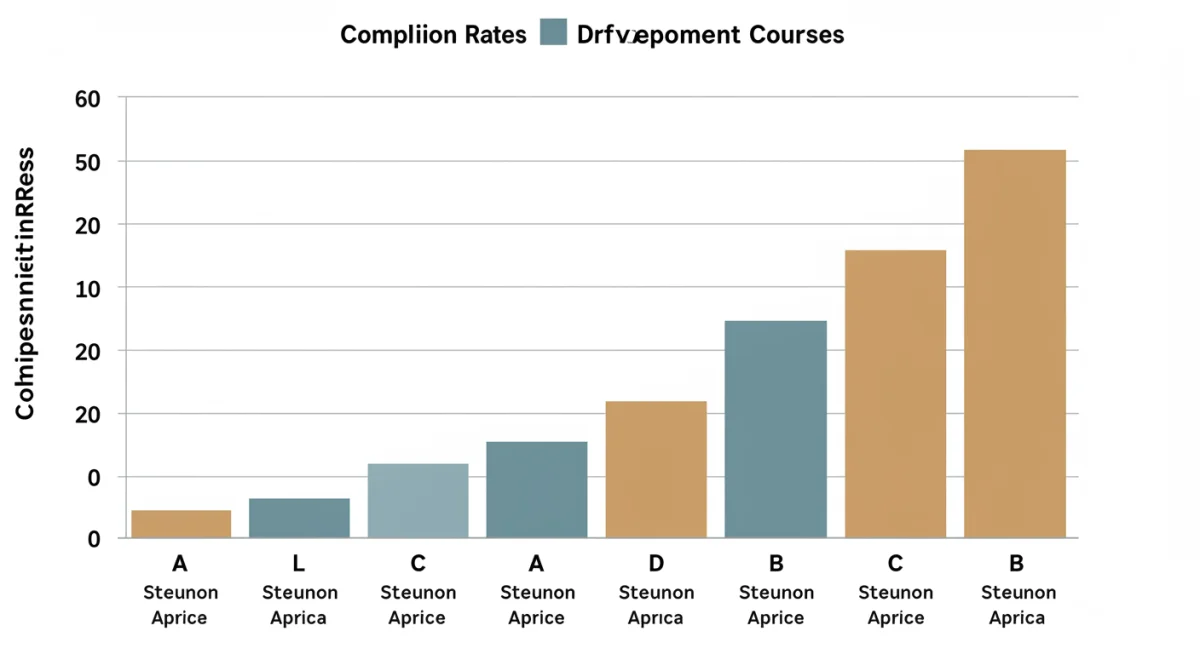
The fixed schedule and dedicated learning space minimize distractions, allowing participants to fully immerse themselves in the material. Furthermore, the immediate access to instructors for questions and clarifications can prevent learners from getting stuck or falling behind, which often leads to attrition in online settings.
While online platforms have made strides in boosting completion, in-person courses still hold an edge in providing an environment conducive to sustained engagement and follow-through. The choice between them often boils down to a trade-off between flexibility and structured accountability. Understanding these dynamics helps both individuals and organizations choose the most effective delivery method for their specific needs.
Impact on career outcomes: a 2025 perspective
Beyond mere completion, the ultimate measure of professional development efficacy lies in its impact on career outcomes. In 2025, evaluating how online vs in-person professional development translates into promotions, salary increases, and new job opportunities is paramount. The perception and reality of these impacts vary significantly between the two formats, influencing decisions made by both individuals and employers.
Initial research often suggested that employers might view in-person certifications more favorably, associating them with a higher level of rigor and commitment. However, as online learning has matured and gained widespread acceptance, this perception has largely shifted. Many employers now recognize the value of online credentials, especially those from reputable institutions or platforms, understanding that self-discipline and digital literacy are also valuable skills.
Tangible benefits from online learning
Online professional development can offer distinct advantages in career progression, particularly in fields that demand continuous learning and adaptability. The ability to quickly acquire new skills without interrupting one’s current employment is a major draw.
- Skill acquisition: Online courses often focus on niche, in-demand skills, allowing professionals to quickly fill gaps in their knowledge or pivot to new specializations.
- Global networking: Virtual platforms can connect learners with peers and instructors from diverse geographical locations, expanding professional networks beyond local boundaries.
- Portfolio development: Many online programs emphasize project-based learning, enabling participants to build tangible portfolios that showcase their new capabilities to potential employers.
The strategic edge of in-person programs
In-person programs, while less flexible, often provide unparalleled opportunities for deep engagement and relationship building. These aspects can be particularly beneficial for career outcomes that rely heavily on interpersonal connections and direct mentorship.
The immersive nature of in-person workshops fosters intensive learning experiences, often leading to a more profound understanding of complex topics. Direct interactions with industry leaders and experts can open doors to mentorship and sponsorship opportunities that are harder to cultivate in a virtual environment. These face-to-face interactions can be pivotal for certain career paths, especially those in leadership or highly collaborative roles.
Ultimately, the impact on career outcomes is less about the format itself and more about the quality of the program and the strategic application of the acquired knowledge. Both online and in-person professional development, when chosen wisely and diligently pursued, can be powerful catalysts for career advancement in 2025. The key is aligning the learning modality with individual career goals and industry expectations.
Course design and pedagogical approaches
The effectiveness of both online and in-person professional development hinges significantly on their underlying course design and pedagogical approaches. In 2025, merely delivering content is insufficient; how that content is structured, presented, and facilitated determines how well learners absorb and apply new knowledge. A well-designed course, regardless of its format, is the cornerstone of successful learning outcomes.
For online courses, effective design means more than just uploading videos and PDFs. It involves creating an engaging virtual environment that encourages interaction, provides clear learning pathways, and incorporates diverse assessment methods. Similarly, in-person courses must move beyond passive lectures, embracing active learning strategies that foster critical thinking and practical application.
Optimizing online learning experiences
Online course designers leverage various techniques to maximize engagement and learning retention. The goal is to overcome the inherent distance and create a sense of presence and community.
- Modular structure: Breaking down content into manageable modules helps prevent cognitive overload and allows for flexible pacing.
- Interactive elements: Quizzes, polls, simulations, and virtual labs keep learners actively involved rather than passively consuming information.
- Peer-to-peer learning: Discussion forums, group projects, and collaborative tools facilitate interaction among participants, enriching the learning experience.
- Personalized feedback: Automated and instructor-led feedback mechanisms are crucial for guiding learners and reinforcing understanding.
Enhancing in-person instructional methods
In-person professional development, while traditionally strong in direct interaction, also benefits from modern pedagogical innovations. The focus has shifted towards experiential learning and application-based training.
Workshops and seminars now frequently incorporate flipped classroom models, where participants review foundational material before the session, allowing in-person time to be dedicated to discussions, problem-solving, and practical exercises. This approach maximizes the value of face-to-face interaction, moving beyond simple information dissemination to deeper engagement and skill application. Case studies, role-playing, and hands-on projects are integral components, ensuring that learning is not just theoretical but immediately applicable to real-world scenarios.
In essence, the quality of course design and the pedagogical strategies employed are far more critical than the delivery format itself. Whether online or in-person, a thoughtfully constructed curriculum that prioritizes active learning, engagement, and practical application will yield the most effective professional development outcomes in 2025.
The role of learner autonomy and motivation
Learner autonomy and motivation are pivotal in determining the efficacy of both online vs in-person professional development. While course design and instructor quality are critical, the individual learner’s drive and ability to manage their own learning journey significantly influence completion rates and ultimately, career outcomes. This is particularly true in 2025, where self-directed learning is increasingly valued.
Online courses, with their inherent flexibility, demand a higher degree of self-discipline and intrinsic motivation. Learners must proactively set schedules, manage distractions, and seek out support when needed. In contrast, in-person courses often provide external motivators through structured environments and direct peer interaction, though personal motivation remains a key factor for deep learning.
Cultivating self-directed learning online
For online professional development to be truly effective, learners must possess or develop strong self-management skills. The absence of a physical classroom requires individuals to take greater ownership of their learning process.
- Goal setting: Clearly defined personal learning objectives help maintain focus and provide a sense of purpose throughout the course.
- Time management: Effective scheduling and consistent engagement are crucial for progressing through modules and completing assignments on time.
- Proactive engagement: Actively participating in forums, asking questions, and seeking additional resources demonstrates a high level of commitment.
Motivation in a structured in-person setting
While in-person settings provide more external structure, learner motivation is still crucial for maximizing the benefits. The presence of peers and instructors can be a powerful motivator, but genuine engagement comes from within.
The opportunity for immediate feedback and direct interaction can boost confidence and maintain enthusiasm. Group activities and collaborative projects in an in-person setting can foster a sense of shared purpose and healthy competition, driving individuals to perform at their best. Furthermore, the networking opportunities often inherent in in-person events can provide a strong extrinsic motivator, as learners connect with industry leaders and potential collaborators, seeing direct pathways to career advancement. Ultimately, irrespective of the format, a learner’s intrinsic desire to grow and apply new knowledge is the most powerful determinant of success.
In conclusion, while different formats may lean on different types of motivation, the active role of the learner is indispensable. Professional development programs, whether online or in-person, are most impactful when they align with and foster the autonomy and motivation of their participants. This synergy ensures that learning is not just consumed but truly integrated and utilized for career growth.
The role of organizational support and investment
The success of professional development initiatives, whether online vs in-person professional development, is significantly amplified by the level of organizational support and investment. In 2025, forward-thinking companies understand that merely offering courses is not enough; creating an ecosystem that encourages and facilitates learning is crucial for maximizing return on investment and fostering a skilled workforce.
Organizational support extends beyond financial sponsorship, encompassing factors like dedicated learning time, access to resources, and a culture that values continuous improvement. Without this comprehensive backing, even the most robust professional development programs can struggle to achieve their full potential in terms of completion and career impact.
Supporting online learners within organizations
For online professional development, organizational support is critical in mitigating common challenges such as isolation and lack of accountability. Companies can implement strategies to ensure their employees thrive in virtual learning environments.
- Allocated time: Designating specific work hours for learning signals its importance and helps employees integrate training into their demanding schedules.
- Mentorship programs: Pairing online learners with experienced mentors provides guidance, encouragement, and a point of contact for questions and challenges.
- Internal communities of practice: Creating internal forums or groups where employees can discuss course content, share insights, and collaborate reinforces learning.
Maximizing in-person training effectiveness
While in-person training often benefits from inherent structure, organizational support is still vital for ensuring its long-term impact. This includes preparing employees for the training and facilitating the application of new skills post-course.
Companies should ensure that the skills learned in professional development courses are relevant to current or future job roles, providing clear pathways for application. Post-training follow-ups, such as debrief sessions, project assignments, or peer reviews, help cement the knowledge and integrate new practices into daily operations. Furthermore, recognizing and rewarding employees who successfully complete professional development programs, regardless of format, reinforces a culture of continuous learning and motivates others to participate. This holistic approach to support ensures that the investment in professional development translates into tangible benefits for both the individual and the organization.
In conclusion, organizational support and investment are not merely supplementary but foundational to the efficacy of professional development. By actively supporting employees through dedicated time, resources, and a culture that champions learning, organizations in 2025 can significantly enhance completion rates and drive positive career outcomes, bridging the gap between learning and practical application.
Future trends and hybrid models in 2025
Looking ahead in 2025, the future of professional development is increasingly pointing towards hybrid models, blending the best aspects of online vs in-person professional development. This integrated approach seeks to leverage the flexibility and accessibility of online platforms while retaining the immersive and interactive benefits of face-to-face instruction. The goal is to create more dynamic, personalized, and effective learning experiences that cater to diverse learner needs and organizational demands.
The distinction between purely online and purely in-person is becoming less rigid. Many programs are now designed with modular flexibility, allowing participants to choose elements that best suit their learning style, schedule, and specific professional goals. This evolution reflects a growing understanding that one-size-fits-all solutions are rarely optimal in the complex world of adult learning.
The rise of blended learning programs
Blended learning combines self-paced online modules with live virtual or in-person sessions. This approach offers a powerful balance, enabling learners to absorb foundational knowledge at their own pace and then apply it in interactive, facilitated environments.
- Pre-course preparation: Online modules can be used to deliver preliminary content, ensuring all participants arrive at live sessions with a baseline understanding.
- Interactive workshops: In-person or live virtual sessions can then focus on discussions, case studies, and hands-on activities, maximizing collaborative learning.
- Post-course reinforcement: Online resources and community forums can provide ongoing support and opportunities for continued practice after live events.
Personalized learning pathways
Another significant trend is the move towards highly personalized learning pathways. AI-driven platforms are increasingly capable of assessing individual learning styles, knowledge gaps, and career aspirations to recommend tailored content and modalities.
This level of personalization ensures that professionals receive the most relevant and impactful training, whether it’s delivered online, in-person, or through a hybrid format. Adaptive learning technologies can adjust the pace and difficulty of content based on a learner’s progress, optimizing engagement and retention. Furthermore, micro-credentials and stackable certifications are gaining traction, allowing professionals to build customized skill sets through a series of shorter, focused programs. These can be pursued in either online or in-person formats, or a combination thereof, providing ultimate flexibility and relevance. The future of professional development in 2025 is thus characterized by adaptability, personalization, and a strategic integration of diverse learning modalities to meet the ever-changing demands of the modern workforce.
In conclusion, the future of professional development is not about choosing one format over another, but rather intelligently combining them. Hybrid models and personalized learning pathways represent the frontier, promising more effective and engaging experiences that drive both higher completion rates and superior career outcomes for professionals in 2025 and beyond.
| Key Aspect | Comparison Summary |
|---|---|
| Completion Rates | In-person often higher due to structure; online improving with better design and engagement. |
| Career Outcomes | Both formats can lead to positive outcomes; impact depends on course quality and application. |
| Flexibility & Accessibility | Online offers greater flexibility and global access; in-person provides immersive experience. |
| Future Trend | Hybrid models and personalized learning pathways are gaining prominence for optimal efficacy. |
Frequently asked questions about professional development
Historically, online courses have sometimes shown lower completion rates. However, with advancements in instructional design, interactive platforms, and stronger learner support, this gap is narrowing. Engaged instructors and well-structured content significantly boost online completion rates.
In-person courses generally offer more organic and immediate networking opportunities through direct interaction. While online platforms have improved virtual networking tools, face-to-face connections often foster deeper relationships and mentorships, which can be crucial for career advancement.
In 2025, employers increasingly recognize the value of online certifications, especially from reputable providers. The ability to complete online learning demonstrates self-discipline and adaptability. The key is the quality and relevance of the acquired skills, not solely the delivery format.
A hybrid model combines elements of both online and in-person learning. It might involve self-paced online modules for foundational knowledge, followed by live virtual or physical sessions for interactive discussions, practical application, or project work. This blend aims to maximize flexibility and engagement.
The ‘best’ format depends on individual learning style, career goals, and the specific skills being acquired. Both online and in-person courses can lead to excellent career outcomes when the program is high-quality, relevant, and supported by the organization and the learner’s motivation. Hybrid models are also proving highly effective.
Conclusion
In evaluating the efficacy of online vs. in-person professional development courses in 2025, it becomes clear that a nuanced perspective is essential. Neither format holds an absolute advantage across all metrics; rather, their effectiveness is shaped by a confluence of factors including course design, learner autonomy, and organizational support. While in-person programs often provide higher inherent accountability and richer networking, online courses offer unparalleled flexibility and accessibility, constantly improving their engagement and completion rates through technological innovation. The future, as indicated by emerging trends, points towards sophisticated hybrid models and personalized learning pathways that strategically blend the strengths of both worlds. Ultimately, the most impactful professional development is one that aligns with individual needs, fosters genuine engagement, and is actively supported by a forward-thinking organizational culture, ensuring that learning translates into tangible career growth and enhanced skill sets in an ever-evolving professional landscape.