Veterans’ Disability Compensation 2025: New Rates & Successful Claims
Anúncios
Understanding Veterans’ Disability Compensation 2025 is crucial for eligible service members to navigate new rates and successfully file claims for their service-connected disabilities.
Navigating the complexities of Veterans’ Disability Compensation 2025 can seem daunting, yet it’s a critical process for many who have selflessly served our nation. This comprehensive guide aims to demystify the upcoming changes, provide clarity on new rates, and offer actionable strategies for filing a successful claim, ensuring veterans receive the benefits they rightfully deserve.
Anúncios
Understanding Veterans’ Disability Compensation
Veterans’ Disability Compensation is a monetary benefit paid to veterans who have incurred an injury or illness during their military service, or whose existing condition was aggravated by service. This compensation is tax-free and varies based on the severity of the disability, determined by a rating percentage from 0% to 100%. The Department of Veterans Affairs (VA) annually adjusts these rates, and understanding these adjustments is key for effective financial planning and securing deserved support.
The purpose of this compensation is not merely to provide financial aid but to acknowledge the sacrifices made by service members. It helps alleviate the financial burden that often accompanies service-connected disabilities, allowing veterans to focus on their health and well-being. Eligibility hinges on several factors, including the nature of the disability and its direct link to military service. Without a clear understanding of these foundational principles, veterans might miss out on crucial benefits designed to support their post-service lives.
Eligibility Criteria Explained
To be eligible for Veterans’ Disability Compensation, a veteran must meet specific criteria. The primary requirement is that the disability must be service-connected. This means there must be a direct link, or nexus, between an event, injury, or disease that occurred or was aggravated during military service and the current disabling condition. This is often the most challenging aspect of a claim, requiring thorough documentation and medical evidence.
Anúncios
- Service-Connected Disability: Your disability must be directly linked to your military service.
- Honorable Discharge: Generally, you must have received an honorable discharge.
- Medical Evidence: Comprehensive medical records proving the disability and its connection to service.
Beyond the service connection, the VA also considers the severity of the disability. This is where the rating percentage comes into play, influencing the amount of compensation received. The VA uses a Schedule for Rating Disabilities to assign these percentages, which are based on the average impairment in earning capacity caused by similar conditions. Therefore, presenting a complete and accurate picture of your condition is paramount.
Ultimately, grasping the nuances of eligibility criteria is the first step toward a successful claim. It requires diligence in gathering documentation and a clear understanding of what the VA looks for. This initial preparation can significantly impact the outcome of your application, setting a strong foundation for the entire process.
Anticipating Veterans’ Disability Compensation 2025 Rates
Each year, the Department of Veterans Affairs (VA) adjusts the disability compensation rates based on the Cost of Living Adjustment (COLA). This adjustment is tied to the Social Security Administration’s COLA, ensuring that veterans’ benefits keep pace with inflation. While the exact 2025 rates are not finalized until later in the year, understanding how COLA impacts these rates can help veterans anticipate potential changes and plan accordingly.
The COLA is typically announced in October, with new rates going into effect in December, impacting payments received in January of the following year. This annual adjustment is vital for maintaining the purchasing power of benefits, especially with fluctuating economic conditions. Veterans should monitor official VA announcements and reliable news sources for the most up-to-date information regarding the 2025 COLA and its implications for their compensation.
Factors Influencing COLA and Rate Adjustments
Several economic indicators influence the COLA, making it a dynamic figure. Inflation, measured by the Consumer Price Index for Urban Wage Earners and Clerical Workers (CPI-W), is the primary driver. When the CPI-W increases, COLA typically follows suit, leading to higher disability compensation rates. However, a low or negative CPI-W can result in minimal or no COLA increase.
- Inflation Rates: Directly impacts the CPI-W, which determines COLA.
- Economic Forecasts: Broader economic trends can influence governmental decisions on benefit adjustments.
- Legislative Changes: Although less common for COLA, legislative action can sometimes modify benefit structures.
Beyond COLA, legislative actions can also introduce specific changes to veterans’ benefits, though these are usually separate from the annual inflation adjustment. Keeping an eye on proposed legislation that could affect disability compensation is another critical step for veterans to remain informed. These legislative changes, while not directly related to COLA, can significantly alter the landscape of veterans’ benefits.
In essence, staying informed about economic forecasts and governmental announcements is crucial for veterans to accurately anticipate their 2025 disability compensation rates. This proactive approach allows for better financial planning and ensures veterans are prepared for any adjustments to their benefits. Being aware of these factors empowers veterans to advocate for themselves and understand the value of their compensation.
Gathering Essential Documentation for Your Claim
Filing a successful disability claim with the VA is heavily reliant on comprehensive and accurate documentation. The VA requires concrete evidence to establish a service connection and determine the severity of a disability. Without proper documentation, even the most legitimate claims can face delays or denials. Understanding what documents are essential and how to obtain them is a cornerstone of a successful application.
The array of documents needed can seem overwhelming, but breaking it down into categories can simplify the process. Medical records, service records, and personal statements are typically the core components. Each piece of documentation plays a vital role in painting a complete picture for the VA, substantiating the claim with verifiable facts. Therefore, meticulous organization and thoroughness are paramount.
Key Documents to Assemble
The cornerstone of any disability claim is robust medical evidence. This includes all medical records from your time in service, as well as any post-service medical treatments related to your claimed condition. The more detailed and continuous these records are, the stronger your claim will be.
- Service Medical Records: All medical documentation from your time in service.
- Post-Service Medical Records: Records from private doctors, hospitals, or VA facilities detailing your current condition.
- Service Records (DD214): Your discharge papers proving honorable service and service dates.
- Lay Statements/Buddy Statements: Testimonies from friends, family, or fellow service members corroborating your disability and its impact.
- Personal Statement: Your own written account detailing your condition, its onset, and its impact on your life.
Beyond medical and service records, personal and lay statements provide crucial context. These statements offer a firsthand account of how your disability affects your daily life and can help bridge gaps in formal medical documentation. They add a human element to your claim, illustrating the real-world impact of your service-connected condition.
Starting the documentation gathering process early is highly advisable. Some records may take time to retrieve, especially older military medical files. Utilizing resources like the National Archives for service records and working closely with your healthcare providers for medical documentation will streamline this critical phase. A well-prepared file significantly increases the likelihood of a swift and favorable decision.
The Step-by-Step VA Claims Process
Navigating the VA claims process can be complex, but breaking it down into manageable steps can make it less daunting. Understanding each stage, from initiation to decision, empowers veterans to participate actively and effectively. The process is designed to be thorough, ensuring that all aspects of a veteran’s claim are properly evaluated.
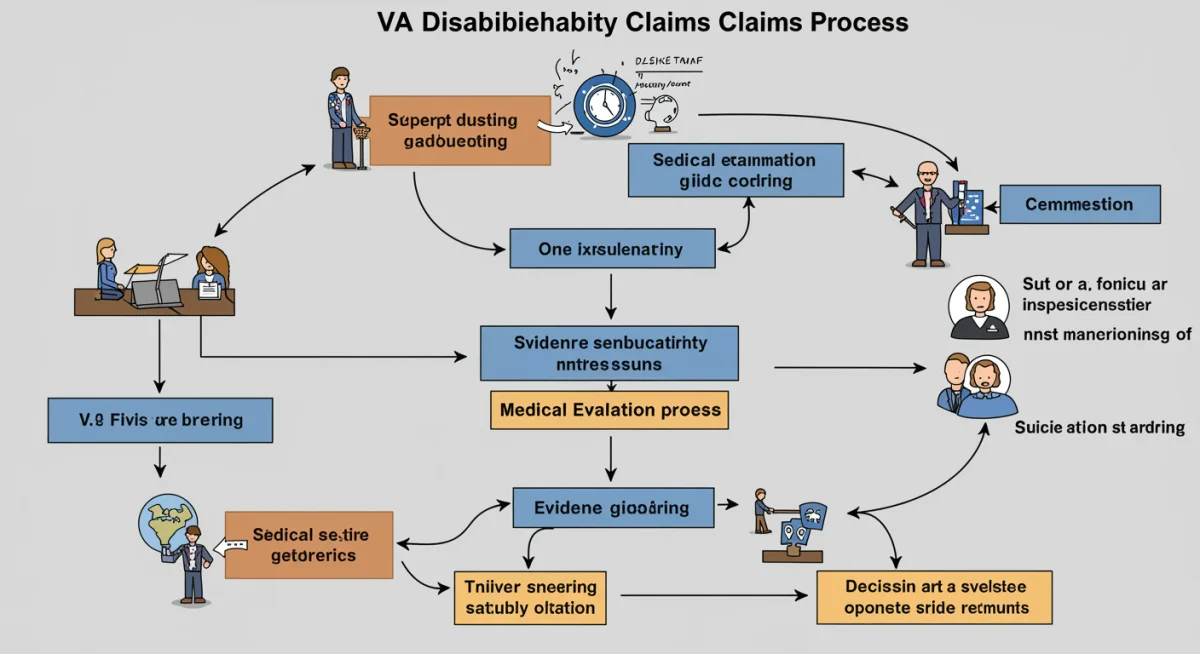
The journey typically begins with submitting an initial claim, followed by evidence gathering, medical examinations, and eventually, a decision from the VA. Each step has its own requirements and timelines, and being prepared for what comes next is crucial for a smooth progression. Patience and persistence are often necessary, as the process can take several months or even longer, depending on the complexity of the claim.

Key Stages of Filing Your Claim
The first step is to submit your claim, typically done online through the VA’s eBenefits portal, by mail, or with the help of a Veterans Service Officer (VSO). It’s crucial to file an “Intent to File” first, as this locks in your effective date for benefits, meaning you could receive retroactive payments from that date if your claim is approved.
- Intent to File: Submit this to lock in your effective date for potential retroactive benefits.
- Claim Submission: Complete and submit VA Form 21-526EZ, Application for Disability Compensation and Related Compensation Benefits.
- Evidence Gathering: The VA will collect evidence, and you should submit all supporting documents.
- Medical Examinations (C&P Exams): You may be required to attend Compensation & Pension (C&P) exams.
- Decision: The VA reviews all evidence and issues a decision.
After submission, the VA will begin gathering evidence, which includes requesting your service medical records and potentially scheduling you for Compensation & Pension (C&P) exams. These exams are critical; they provide the VA with up-to-date medical information directly related to your claimed conditions. It is imperative to attend all scheduled C&P exams and be honest and thorough in your responses.
Once all evidence is collected, a VA rater will review your case and issue a decision. This decision will include your disability rating and the effective date of your benefits. If you disagree with the decision, you have the right to appeal. Understanding these stages and being proactive at each one can significantly improve the efficiency and outcome of your claim.
Maximizing Your Disability Rating and Benefits
Achieving the highest possible disability rating is crucial for maximizing your Veterans’ Disability Compensation. Your rating directly correlates with the amount of monthly benefits you receive. This isn’t just about the initial filing; it’s also about understanding how to present your case effectively and what to do if your condition worsens or if you believe your initial rating is too low.
Many veterans are unaware of the various avenues available to them for increasing their disability rating or accessing additional benefits. This includes understanding secondary conditions, special monthly compensation (SMC), and the process for appealing unfavorable decisions. Being proactive and informed about these options can lead to a substantial difference in the support you receive.
Strategies for a Higher Rating
One of the most effective ways to maximize your disability rating is by thoroughly documenting all your service-connected conditions, including any secondary conditions. Secondary conditions are those that are caused or aggravated by an existing service-connected disability. For example, if a service-connected knee injury leads to chronic back pain due to altered gait, the back pain could be considered a secondary service-connected condition.
- Document Secondary Conditions: Ensure all conditions, including those caused by primary service-connected disabilities, are claimed.
- Provide Ongoing Medical Evidence: Regularly update the VA with current medical records reflecting the severity and progression of your conditions.
- Seek Expert Opinions: Obtain independent medical opinions (IMOs) if your VA C&P exam does not accurately reflect your condition.
Another key strategy involves providing comprehensive and current medical evidence. Disabilities can worsen over time, and your initial rating might not reflect your current level of impairment. Regularly submitting updated medical records, including diagnostic tests, treatment plans, and doctor’s notes, can prompt the VA to re-evaluate your rating. Furthermore, personal statements and lay statements that detail the current impact of your disability on your daily life are invaluable.
If you believe your rating is too low or your claim was unfairly denied, pursuing an appeal is a viable option. The VA appeals process allows veterans to present new evidence or argue against the VA’s initial decision. Consulting with a Veterans Service Officer (VSO) or an accredited representative can provide expert guidance through this complex process, significantly increasing your chances of a successful outcome and ensuring you receive the full compensation you are entitled to.
Appealing a VA Disability Decision
Receiving an unfavorable decision from the VA regarding your disability claim can be disheartening, but it is not the end of the road. The VA provides a robust appeals process, allowing veterans to challenge decisions they believe are incorrect. Understanding the different avenues for appeal and how to effectively navigate them is crucial for securing the benefits you deserve.
The appeals process was reformed by the Appeals Modernization Act (AMA) in 2019, creating three distinct lanes for review. Each lane offers unique advantages and requires specific strategies. Choosing the right lane for your particular situation can significantly impact the speed and success of your appeal. This flexibility aims to provide veterans with more control and clearer pathways to resolution.
The Three Lanes of Appeal
Under the AMA, veterans have three main options for appealing a VA decision. The Supplemental Claim lane is ideal if you have new and relevant evidence to submit. This lane allows you to add information that was not part of your original claim, which the VA will then review alongside existing evidence.
- Supplemental Claim: Best if you have new and relevant evidence to submit.
- Higher-Level Review: Request a senior claims adjudicator to review your existing evidence for potential errors.
- Board of Veterans’ Appeals: For more complex cases, you can appeal directly to the Board, with options for evidence submission, a hearing, or direct review.
The Higher-Level Review lane is suitable if you believe the VA made an error based on the evidence already submitted. In this lane, a more experienced claims adjudicator reviews your case without new evidence, looking for errors in the previous decision. This can be a quicker option if you are confident that the existing evidence supports a different outcome.
Finally, appealing to the Board of Veterans’ Appeals is an option for cases that require a more formal review. Within this lane, you have three choices: submitting additional evidence, requesting a hearing with a Veterans Law Judge, or opting for a direct review of your existing appeal record. Each choice caters to different needs and complexities, offering a tailored approach to resolving your claim. Consulting with a VSO is highly recommended to determine the most appropriate appeal lane for your specific circumstances.
Resources and Support for Veterans
Navigating the complexities of Veterans’ Disability Compensation and the VA claims process can be challenging, but veterans are not alone. A wealth of resources and support systems are available to assist at every step of the journey. These resources provide invaluable guidance, advocacy, and information, helping veterans secure the benefits they have earned through their service.
From government agencies to non-profit organizations, the support network for veterans is extensive and diverse. Tapping into these resources can make a significant difference in the success of a claim, offering everything from legal advice to emotional support. Knowing where to turn for help is just as important as understanding the claims process itself.
Key Support Organizations and Services
Veterans Service Organizations (VSOs) are perhaps one of the most critical resources available. Organizations like the American Legion, Veterans of Foreign Wars (VFW), and Disabled American Veterans (DAV) offer free assistance to veterans in preparing and filing their claims. Their accredited representatives are experts in VA law and procedures, providing invaluable advocacy.
- Veterans Service Organizations (VSOs): Provide free, expert assistance with claims and appeals.
- VA Regional Offices: Offer direct assistance and information on benefits.
- Legal Aid Services: Some organizations offer pro bono legal representation for complex cases.
- Online VA Resources: The VA website (VA.gov) and eBenefits portal provide comprehensive information and tools.
The VA itself offers numerous resources, including its regional offices where veterans can receive in-person assistance. The VA.gov website and the eBenefits portal are comprehensive online hubs for information, application submission, and tracking claim status. These platforms are designed to be user-friendly, though personal assistance is often preferred for complex issues.
Beyond direct claims assistance, many organizations offer support for other aspects of a veteran’s life affected by disability, such as employment assistance, mental health services, and housing aid. Utilizing this holistic support network ensures that veterans receive not only financial compensation but also the comprehensive care needed for a fulfilling post-service life. Connecting with these resources is a proactive step towards well-being and successful navigation of the benefits system.
| Key Aspect | Brief Description |
|---|---|
| 2025 Rate Adjustments | Anticipated to reflect the Cost of Living Adjustment (COLA), announced in October 2024, effective January 2025. |
| Eligibility | Primarily requires a service-connected disability and honorable discharge, supported by comprehensive medical evidence. |
| Filing Process | Submit an ‘Intent to File,’ gather documentation, attend C&P exams, and await VA decision. Appeals available. |
| Maximizing Benefits | Claim all conditions (primary & secondary), provide updated medical evidence, and utilize VSO assistance. |
Frequently Asked Questions About VA Disability Compensation
The Department of Veterans Affairs typically announces the new disability compensation rates for the upcoming year in October. These rates, based on the Cost of Living Adjustment (COLA), usually go into effect in December, with payments reflecting the new amounts starting in January 2025.
Proving a service connection requires comprehensive medical evidence, including your service medical records and post-service treatment records. Additionally, personal statements and ‘buddy statements’ from fellow service members can help establish a direct link between your military service and your current disability, providing essential corroboration for your claim.
An “Intent to File” is a formal notification to the VA that you plan to submit a disability claim. It is crucial because it locks in your effective date for benefits. If your claim is approved, any retroactive payments will be calculated from the date your “Intent to File” was received, potentially increasing your overall compensation.
Yes, you have the right to appeal a VA disability decision. Under the Appeals Modernization Act, there are three lanes for appeal: Supplemental Claim, Higher-Level Review, and Board of Veterans’ Appeals. Each lane offers different options for review, depending on whether you have new evidence or believe an error was made on existing evidence.
Numerous resources are available to assist veterans, including Veterans Service Organizations (VSOs) like the American Legion, VFW, and DAV, which offer free, accredited assistance. Additionally, VA regional offices and the official VA.gov website provide extensive information and support for filing and managing your disability claim.
Conclusion
Understanding and navigating the landscape of Veterans’ Disability Compensation, particularly with the anticipated 2025 rate adjustments, is a critical endeavor for those who have served. This guide has aimed to illuminate the complexities, from eligibility criteria and essential documentation to the step-by-step claims process and strategies for maximizing benefits. By staying informed, meticulously preparing claims, and leveraging the extensive support networks available, veterans can significantly increase their chances of filing a successful claim and securing the financial stability and care they rightfully deserve. The journey may require patience and persistence, but the resources and pathways exist to ensure that every veteran receives the recognition and compensation for their sacrifices.