Federal Reserve’s 2025 Interest Rate Outlook: Impact on Borrowing Costs
Anúncios
The Federal Reserve’s 2025 interest rate decisions will significantly shape borrowing costs for mortgages, loans, and business credit, influenced by inflation, employment, and economic growth data, impacting financial planning across the US.
The Federal Reserve Interest Rates outlook for 2025 is a critical topic for anyone involved in the U.S. economy, from individual consumers planning a mortgage to large corporations considering expansion. The decisions made by the Federal Reserve (the Fed) regarding the federal funds rate directly influence nearly every other interest rate in the country, affecting everything from credit card APRs to car loans and business lines of credit. Understanding the factors that drive these decisions, and how they might unfold over the next three months, is essential for informed financial planning.
Anúncios
Understanding the Federal Reserve’s Mandate and Tools
To truly grasp the future of interest rates, one must first understand the Federal Reserve’s dual mandate: maximizing employment and maintaining price stability. These two objectives often pull in different directions, forcing the Fed to make delicate balancing acts. Their primary tool for influencing the economy is the federal funds rate, which is the target rate for overnight lending between banks.
When the Fed raises this target rate, it generally makes borrowing more expensive across the economy, slowing down inflation but potentially cooling economic growth. Conversely, lowering the rate aims to stimulate borrowing and spending, boosting economic activity but risking higher inflation. The ripple effect of these decisions is profound, touching every corner of the financial landscape.
Key Economic Indicators Guiding Fed Policy
- Inflation Data: The Consumer Price Index (CPI) and Personal Consumption Expenditures (PCE) are closely watched. The Fed typically targets 2% inflation.
- Employment Figures: Non-farm payrolls, unemployment rate, and wage growth provide insights into labor market health.
- GDP Growth: Gross Domestic Product indicates the overall health and expansion of the economy.
- Consumer Spending: Retail sales and consumer confidence surveys reflect household economic behavior.
The Fed’s decisions are not made in a vacuum; they are a response to a complex interplay of these and many other economic signals. A robust understanding of these indicators is crucial for anticipating future rate movements. The next three months will see a continuous stream of fresh data, each piece potentially shifting the Fed’s perspective and, consequently, the market’s expectations.
Anúncios
In conclusion, the Federal Reserve’s role as the central bank is pivotal in steering the nation’s economic course. Its commitment to its dual mandate, coupled with a reliance on a broad spectrum of economic data, forms the bedrock of its interest rate decisions. These decisions, in turn, cascade through the economy, influencing borrowing costs for all participants.
Current Economic Landscape and Fed’s Recent Stance
As we approach 2025, the economic landscape presents a mixed bag of signals for the Federal Reserve. Inflation, while having cooled from its peaks, remains a persistent concern for some Fed officials, while others emphasize the need to avoid overtightening that could trigger a recession. The labor market has shown remarkable resilience, but cracks have begun to appear in certain sectors, raising questions about its long-term strength.
The Fed’s recent communications have often highlighted a data-dependent approach, meaning that future rate adjustments are not predetermined but will hinge on incoming economic reports. This creates an environment of cautious anticipation for markets, as each new piece of economic data is scrutinized for its potential impact on monetary policy.
Recent Inflation Trends and Their Implications
Inflation has been a dominant theme in recent years. While the headline CPI numbers have moderated, core inflation (excluding volatile food and energy prices) has proven stickier. This stickiness is a key concern for the Fed, as it suggests underlying inflationary pressures that may be harder to dislodge. The Fed’s preferred measure, the PCE price index, also remains above its 2% target, albeit moving in the right direction.
- Services Inflation: Particularly challenging due to wage growth and strong demand.
- Goods Deflation: Supply chain improvements have helped bring down goods prices.
- Geopolitical Factors: Global events continue to pose risks to energy and food prices.
The path of inflation over the next three months will be a primary driver of Fed policy. If inflation continues its downward trajectory towards the 2% target, it could open the door for potential rate cuts. Conversely, a resurgence in inflationary pressures would likely solidify a hawkish stance from the Fed, keeping rates higher for longer.
In summary, the current economic environment is characterized by persistent inflation concerns alongside a relatively strong, though potentially softening, labor market. The Fed’s data-dependent approach means that market participants must remain vigilant, interpreting each economic report through the lens of its impact on the central bank’s dual mandate.
Projected Federal Funds Rate Trajectory for Early 2025
Forecasting the Federal Funds Rate is an exercise fraught with uncertainty, yet crucial for financial planning. Most analysts anticipate a period of stability or gradual easing in early 2025, provided inflation continues its downward trend and the labor market remains robust but doesn’t overheat. The Fed’s ‘dot plot’ projections, which illustrate individual committee members’ expectations for future rate levels, offer a glimpse into their thinking, though these are subject to change.
Over the next three months, the market will be closely watching for any signals from Fed officials regarding the timing and magnitude of potential rate adjustments. Speeches, meeting minutes, and economic projections will all be scoured for clues. The consensus leans towards a cautious approach, with any cuts likely being incremental.
Scenarios for Interest Rate Movements
Several scenarios could play out in early 2025, each with different implications for borrowing costs:
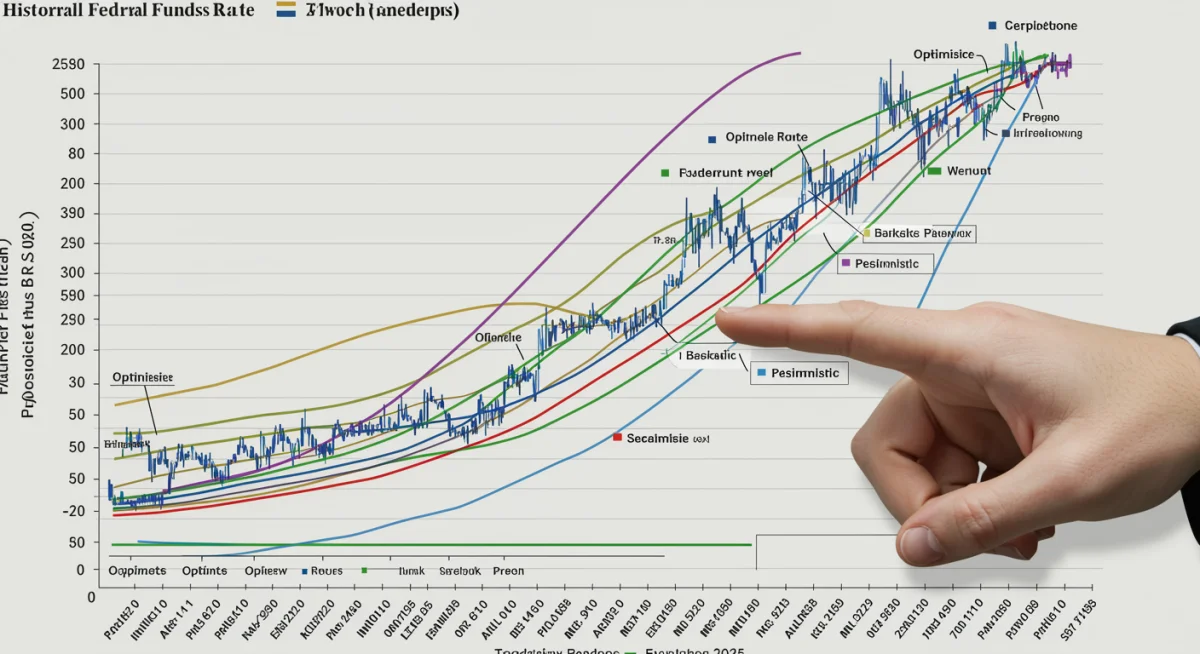
- Baseline Scenario (Most Likely): Gradual cuts of 25-50 basis points, assuming inflation cools and economic growth stabilizes.
- Hawkish Scenario (Less Likely): Rates remain elevated or even see a small hike if inflation proves stubborn or the economy unexpectedly re-accelerates.
- Dovish Scenario (Possible if Recession Fears Grow): More aggressive cuts if economic growth falters significantly or unemployment rises sharply.
The Fed’s communication strategy will be paramount in managing market expectations. Clear and consistent messaging can help prevent undue volatility, while ambiguity can lead to market jitters. The balance between fighting inflation and supporting economic growth will define the policy decisions in the coming months.
Ultimately, the trajectory of the federal funds rate in early 2025 will be a function of incoming economic data and the Fed’s interpretation of that data within its dual mandate framework. While a gradual easing is the most widely anticipated outcome, significant shifts in economic conditions could alter this path considerably.
Impact on Mortgage Rates and Housing Market
The Federal Reserve’s interest rate decisions have a direct and significant impact on mortgage rates, which in turn affect the broader housing market. When the Fed raises its target rate, it generally leads to higher rates for mortgages, making homeownership less affordable. Conversely, rate cuts can stimulate the housing market by reducing borrowing costs.
For early 2025, if the Fed begins to ease monetary policy, even gradually, we could see a modest decline in mortgage rates. This would be a welcome development for prospective homebuyers who have faced elevated costs in recent years. However, other factors like housing supply, demand, and local economic conditions also play a crucial role.
Mortgage Rate Dynamics and Homebuyer Affordability
Mortgage rates are primarily influenced by the yield on 10-year Treasury bonds, which tend to move in anticipation of Fed actions and inflation expectations. A stable or declining federal funds rate could lead to lower Treasury yields, translating into more favorable mortgage rates.
- Fixed-Rate Mortgages: Directly affected by long-term bond yields, which respond to Fed policy and inflation outlook.
- Adjustable-Rate Mortgages (ARMs): More directly tied to short-term rates, and thus, more immediately sensitive to Fed changes.
- Affordability: Lower rates improve affordability, potentially boosting sales and tempering price growth.
The housing market’s response to potential rate changes will also depend on the supply of homes. Even with lower rates, a severe lack of inventory could keep prices elevated. However, any reduction in borrowing costs would undoubtedly provide some relief to a market that has been under pressure.
In conclusion, the Fed’s actions in early 2025 are poised to influence mortgage rates, potentially offering some relief to the housing market. While other factors are at play, a downward trend in interest rates could improve affordability and stimulate buyer activity, albeit modestly.
Impact on Consumer and Business Borrowing Costs
Beyond mortgages, the Federal Reserve’s interest rate decisions permeate nearly all forms of borrowing for both consumers and businesses. Changes in the federal funds rate influence the prime rate, which banks use as a benchmark for many of their lending products. This means that personal loans, credit card rates, auto loans, and business lines of credit are all sensitive to the Fed’s monetary policy.
For consumers, a period of stable or declining rates in early 2025 could translate into lower monthly payments on variable-rate loans and more attractive terms for new borrowing. Businesses, particularly small and medium-sized enterprises (SMEs), would also benefit from reduced capital costs, potentially encouraging investment and expansion.
Specific Lending Categories Affected
The impact will vary across different types of loans:
- Credit Cards: Typically have variable rates directly tied to the prime rate, meaning changes are felt quickly.
- Auto Loans: While often fixed, new loan rates will reflect the prevailing interest rate environment.
- Personal Loans: Both fixed and variable personal loan rates will see adjustments based on the Fed’s decisions.
- Business Loans: Lines of credit, working capital loans, and term loans will all be subject to interest rate fluctuations, influencing business profitability and investment decisions.
Lower borrowing costs can stimulate consumer spending and business investment, acting as a tailwind for economic growth. Conversely, higher rates can dampen demand and slow economic activity. The Fed’s delicate balancing act aims to achieve an optimal level of borrowing costs that supports sustainable growth without igniting inflation.
In essence, the Federal Reserve’s interest rate policy for early 2025 holds significant sway over the financial decisions of millions of Americans and thousands of businesses. A favorable rate environment could unlock new opportunities for growth and financial flexibility, while sustained high rates would continue to exert pressure on budgets.
Strategies for Navigating the 2025 Interest Rate Environment
Given the anticipated interest rate outlook for early 2025, both consumers and businesses can adopt proactive strategies to mitigate risks and capitalize on potential opportunities. Understanding the likely direction of rates, even with inherent uncertainties, allows for more informed financial planning and decision-making.
For individuals, this might involve re-evaluating existing debt, considering new borrowing, or optimizing savings. Businesses, on the other hand, might focus on capital expenditure planning, debt restructuring, or cash flow management in anticipation of changing borrowing costs. Preparedness is key to navigating any economic cycle successfully.
For Consumers: Optimizing Personal Finances
- Review Variable-Rate Debt: Consider consolidating or refinancing high-interest credit card debt or personal loans if rates begin to fall.
- Mortgage Planning: If considering a home purchase or refinancing, monitor rates closely. A slight dip could provide significant savings over the loan’s lifetime.
- Savings and Investments: While rate cuts might reduce savings account yields, explore alternative investment opportunities that offer better returns in a lower-rate environment, or lock in current higher rates if possible.
For Businesses: Strategic Financial Management
- Debt Management: Evaluate existing variable-rate loans. Consider converting to fixed-rate debt if a period of stability or decline is anticipated to lock in lower payments.
- Capital Expenditure: If borrowing costs are expected to decrease, this could be an opportune time to plan for expansion or significant investments.
- Cash Flow Forecasting: Adjust financial models to account for potential changes in interest expenses and revenues, ensuring robust liquidity.
The next three months will offer a clearer picture of the Fed’s stance and the broader economic trajectory. Staying informed and agile in financial planning will be paramount. Those who proactively adapt their strategies will be better positioned to thrive in the evolving interest rate landscape.
To conclude, navigating the 2025 interest rate environment requires a blend of vigilance and strategic planning. Both consumers and businesses have a range of options to consider, from debt optimization to investment strategies, all aimed at leveraging anticipated rate movements for financial benefit.
Potential Risks and Unforeseen Economic Shifts
While forecasts provide a valuable framework, the global economy is inherently unpredictable, and several risks could significantly alter the Federal Reserve’s interest rate outlook for early 2025. Unforeseen events, whether domestic or international, can quickly shift economic priorities and necessitate a different monetary policy response. A comprehensive analysis must always account for these potential deviations from the baseline.
Geopolitical tensions, commodity price shocks, and unexpected shifts in consumer or business sentiment are just a few examples of factors that could derail current projections. The Fed’s data-dependent approach means it remains flexible, ready to adjust its course based on evolving circumstances. This adaptability is both a strength and a source of uncertainty for markets.
Key Risks to the Current Outlook
- Persistent Inflation: If inflation proves more stubborn than anticipated, forcing the Fed to maintain higher rates or even resume tightening.
- Economic Downturn: A sharper-than-expected slowdown or recession could prompt more aggressive rate cuts, potentially signaling deeper economic issues.
- Geopolitical Instability: Escalation of conflicts or new global crises could disrupt supply chains, impact energy prices, and create inflationary pressures or economic uncertainty.
- Financial Market Volatility: Significant instability in financial markets could influence the Fed’s decisions, as it seeks to maintain financial stability.
The Federal Reserve’s primary challenge will be to balance these risks while adhering to its dual mandate. The next three months will be critical in observing how these potential headwinds evolve and how the Fed responds. Market participants should remain agile and prepared for various outcomes, rather than banking solely on a single forecast.
In summary, while a baseline interest rate outlook for early 2025 exists, it is crucial to acknowledge the significant risks and potential unforeseen economic shifts that could alter this trajectory. The Fed’s responsiveness to these challenges will ultimately determine the path of borrowing costs.
| Key Aspect | Brief Description |
|---|---|
| Fed’s Dual Mandate | Maximize employment and maintain price stability (2% inflation target). |
| Expected Rate Trend (Early 2025) | Cautious, gradual easing (25-50 basis points) if inflation cools. |
| Impact on Mortgages | Potential for modest rate declines, improving affordability. |
| Key Risks | Persistent inflation, economic downturn, geopolitical instability. |
Frequently Asked Questions About 2025 Interest Rates
The Federal Open Market Committee (FOMC) typically meets eight times a year, approximately every six weeks, to assess economic conditions and determine monetary policy, including adjustments to the federal funds rate. Emergency meetings can also occur if economic circumstances warrant immediate action.
The ‘dot plot’ is a chart released periodically by the Fed, showing each FOMC member’s projection for the federal funds rate at the end of the current year and for the next few years. It’s important because it offers insight into the committee’s collective rate expectations, though it’s not a commitment.
Not necessarily. While the federal funds rate influences mortgage rates, they are not directly tied. Fixed-rate mortgages are more closely linked to 10-year Treasury yields, which react to broader economic expectations and inflation, though Fed policy is a strong underlying factor.
The Fed’s decisions are data-dependent, based on its dual mandate of maximizing employment and maintaining price stability. They analyze a wide range of economic indicators, including inflation, employment figures, GDP growth, and consumer spending, to inform their policy adjustments.
If you have variable-rate debt, such as credit cards or adjustable-rate mortgages, it’s wise to monitor the Fed’s actions closely. If rates are expected to fall, you might consider accelerating payments or exploring refinancing options to potentially secure a lower fixed rate or reduce overall interest costs.
Conclusion
The Federal Reserve Interest Rates outlook for early 2025 remains a focal point for economic stability and growth. While a cautious, data-dependent approach to potential rate cuts is widely anticipated, the path ahead is not without its uncertainties. Both consumers and businesses must stay informed about economic indicators and the Fed’s communications to make sound financial decisions. Proactive planning, whether for personal debt management or corporate investment strategies, will be crucial in navigating the evolving landscape of borrowing costs and maximizing opportunities in the coming months.