Emergency Fund Essentials 2025: Build 6 Months in a Year

Anúncios
Building a substantial emergency fund, specifically 6 months of living expenses, is crucial for financial stability in 2025, and achievable within a year through strategic planning, diligent saving, and smart financial adjustments.
In today’s unpredictable economic climate, the importance of having a financial safety net cannot be overstated. Mastering emergency fund essentials for 2025 means not just having some savings, but strategically building enough to cover six months of living expenses in under a year. This guide offers practical, time-sensitive solutions to help you achieve this vital financial goal.
Anúncios
Understanding the ‘Why’ Behind Your Emergency Fund
Before diving into the ‘how,’ it is critical to grasp the fundamental ‘why’ of an emergency fund. This isn’t just about having extra cash; it’s about creating a robust financial shield against life’s inevitable curveballs. Job loss, unexpected medical bills, car repairs, or home emergencies can derail even the most carefully laid financial plans if you’re unprepared.
Anúncios
An emergency fund provides peace of mind, preventing you from accumulating high-interest debt or liquidating long-term investments when crises strike. It allows you to navigate difficult periods with a clear head, making sound decisions rather than reactive ones driven by panic.
The 6-Month Target: A Realistic Benchmark
While some financial experts recommend three months’ worth of expenses, a six-month fund offers a more comprehensive buffer, especially in a dynamic economy. This extended period provides ample time to find new employment, recover from an illness, or address significant unexpected costs without compromising your financial future.
- Job Security: Six months gives you breathing room to search for the right job, not just any job.
- Health Crises: Covers deductibles, co-pays, and potential loss of income during recovery.
- Economic Downturns: Provides stability during periods of market volatility or recession.
- Major Repairs: Funds unexpected home or vehicle repairs without going into debt.
Setting a clear, achievable target like six months of living expenses within a year transforms an abstract goal into a concrete action plan. It breaks down a seemingly daunting task into manageable monthly contributions, empowering you to take control of your financial destiny.
Calculating Your True Living Expenses
The first practical step in building your emergency fund is accurately determining how much money you actually need. This isn’t just guesswork; it requires a thorough audit of your monthly spending. Many people underestimate their true costs, leading to an insufficient fund.
Start by tracking every dollar you spend for at least one month, or ideally, three. Categorize your expenses into essential and non-essential. Essential expenses are those you cannot live without: housing, utilities, groceries, transportation, insurance, and minimum debt payments. Non-essential expenses include dining out, entertainment, subscriptions, and discretionary spending.
Essential vs. Non-Essential Spending
Understanding this distinction is paramount. Your emergency fund should primarily cover your essential living expenses. In a true emergency, you would likely cut back significantly on non-essential items. Therefore, your six-month target should reflect your bare-bones survival budget, not your typical spending habits.
Gather statements from your bank accounts, credit cards, and utility providers. Use a spreadsheet or a budgeting app to meticulously list each expense. This process can be eye-opening, revealing areas where your money is truly going.
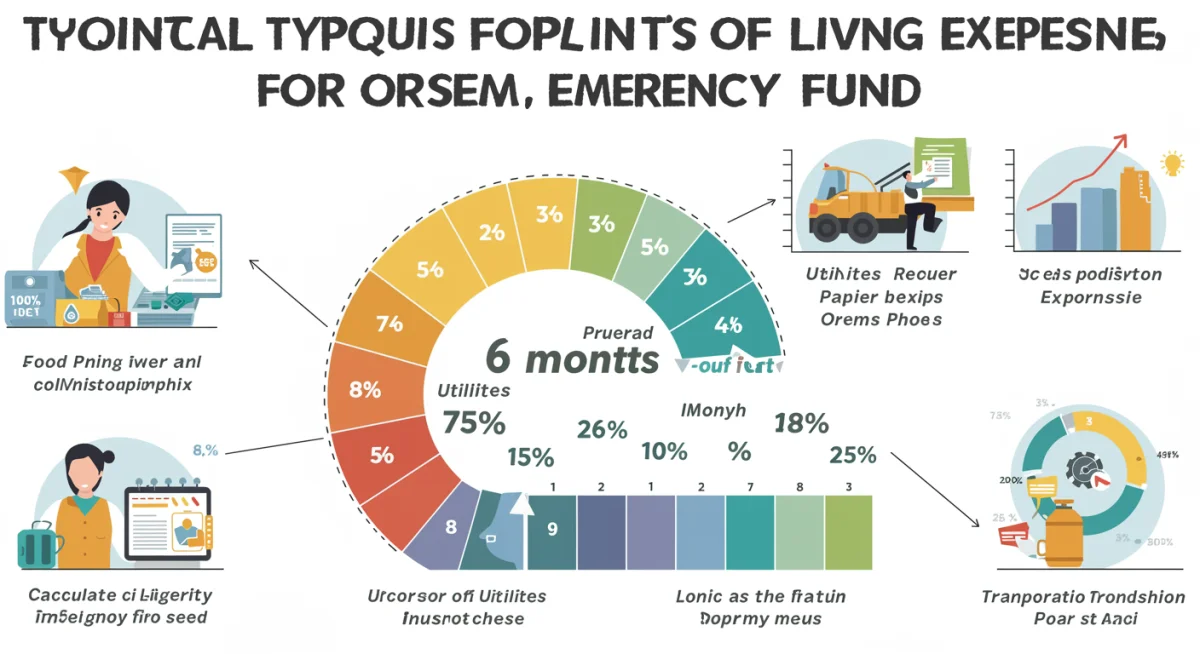
Once you have a clear picture of your essential monthly expenses, multiply that number by six. This is your ultimate target. For example, if your essential expenses total $3,000 per month, your emergency fund goal is $18,000. This calculation provides the concrete figure you need to work towards, making the goal tangible and actionable.
Aggressive Saving Strategies for Rapid Growth
Achieving a six-month emergency fund in under a year requires more than just passive saving; it demands an aggressive, focused approach. This means identifying and implementing strategies that maximize your savings rate quickly. It’s about making conscious choices to prioritize your financial security over immediate gratification.
One of the most effective methods is to treat your emergency fund contribution as a non-negotiable bill. Set up an automatic transfer from your checking account to a dedicated savings account each payday. This ‘pay yourself first’ approach ensures that your savings grow consistently without relying on willpower.
Cutting Expenses and Boosting Income
Review your non-essential spending with a critical eye. Can you temporarily pause subscriptions you rarely use? Reduce dining out or impulse purchases? Every dollar saved from these areas can be redirected to your emergency fund. Consider a ‘no-spend’ challenge for a week or a month to identify areas for significant cuts.
- Budget Audit: Scrutinize every recurring expense and eliminate what isn’t essential.
- Temporary Sacrifices: Opt for home-cooked meals, free entertainment, and reduced shopping.
- Side Hustles: Explore opportunities to earn extra income through freelancing, gig work, or selling unused items.
- Automate Savings: Set up recurring transfers to your emergency fund account immediately after payday.
Boosting your income is another powerful lever. Can you pick up extra shifts, take on freelance work, or sell items you no longer need? Even small amounts of extra income, when consistently directed towards your fund, can make a significant difference over a year. Remember, this is a temporary sprint towards financial security, and the sacrifices will be worth the peace of mind.
Optimizing Your Emergency Fund Location
Where you keep your emergency fund is almost as important as how much you save. The ideal location balances accessibility, security, and growth potential. Your emergency fund should be easily accessible in a crisis but separate enough from your daily spending accounts to prevent accidental or impulsive use.
A high-yield savings account (HYSA) is generally the best option. These accounts offer better interest rates than traditional savings accounts, allowing your money to grow, albeit modestly, while remaining liquid. Look for HYSAs that are FDIC-insured, ensuring your deposits are protected up to $250,000 per depositor.
Avoid These Common Mistakes
While the goal is growth, the primary purpose of an emergency fund is liquidity and safety, not aggressive investment. Therefore, avoid putting your emergency fund in volatile investments like the stock market. While stocks offer higher potential returns, they also carry the risk of losing value precisely when you need the money most.
Similarly, resist the temptation to keep your entire fund in your checking account. This makes it too easy to spend for non-emergencies. A dedicated, separate HYSA acts as a psychological barrier, reinforcing its purpose as an untouchable safety net.
- High-Yield Savings Accounts: Prioritize HYSAs for better interest rates and FDIC insurance.
- Separate Accounts: Keep your emergency fund distinct from your everyday checking account.
- Avoid Volatile Investments: Do not invest your emergency fund in stocks or other high-risk assets.
- Accessibility: Ensure funds can be accessed quickly without penalties.
By consciously choosing the right vehicle for your emergency fund, you ensure it’s both safe and working for you, ready to be deployed when genuine emergencies arise, without compromising your financial integrity.
Strategic Debt Management and Emergency Fund Synergy
Building an emergency fund and managing debt are often seen as separate financial goals, but they are intrinsically linked. For many, high-interest debt, such as credit card balances, can significantly impede rapid emergency fund growth. A strategic approach involves balancing both.
While conventional wisdom often suggests paying off all high-interest debt before saving, a small starter emergency fund (e.g., $1,000) should be established first. This initial buffer prevents new debt accumulation during minor setbacks. Once this foundation is laid, you can aggressively tackle high-interest debt while simultaneously contributing to your larger emergency fund.
Balance Debt Repayment with Savings
Consider the ‘debt snowball’ or ‘debt avalanche’ methods for accelerated debt repayment. The debt snowball focuses on paying off the smallest debts first for motivational wins, while the debt avalanche targets debts with the highest interest rates to save money. Whichever method you choose, ensure a portion of your monthly budget is still allocated to your emergency fund.
The synergy lies in the fact that reducing debt frees up more disposable income, which can then be channeled directly into your emergency fund. As your debt decreases, your capacity to save increases exponentially, accelerating your progress towards the six-month goal.
- Starter Fund First: Establish a small emergency fund before aggressively tackling debt.
- Prioritize High-Interest Debt: Focus on eliminating credit card debt to free up cash flow.
- Allocate Simultaneously: Dedicate a portion of income to both debt repayment and savings.
- Prevent New Debt: Your emergency fund protects you from incurring new debt during minor crises.
By integrating debt management with your emergency fund strategy, you create a powerful financial engine that not only protects you from future shocks but also strengthens your overall financial health, making it easier to achieve your 2025 goals.
Maintaining and Replenishing Your Fund
Reaching your emergency fund goal is a significant achievement, but the journey doesn’t end there. An emergency fund is a dynamic asset that needs ongoing maintenance and, occasionally, replenishment. Life happens, and you might need to tap into your fund for a genuine emergency. When this occurs, the immediate priority shifts to rebuilding it.
Treat any withdrawal from your emergency fund as a temporary loan that needs to be repaid to yourself. Just as you would pay back a bank, commit to replenishing the fund as quickly as possible. This might involve temporarily re-implementing some of the aggressive saving strategies you used to build it initially.
Regular Review and Adjustment
Your living expenses can change over time due to inflation, lifestyle adjustments, or family growth. It’s crucial to review your emergency fund target annually to ensure it still adequately covers six months of your current essential expenses. What was sufficient a year ago might not be enough today.
Make it a habit to check your fund’s balance regularly. If your income increases, consider increasing your automatic contributions to grow your fund further or to replenish it faster after a withdrawal. This proactive approach ensures your financial safety net remains strong and relevant to your evolving needs.
- Rebuild Immediately: Prioritize replenishing any withdrawn funds as quickly as possible.
- Annual Review: Re-evaluate your six-month expense calculation at least once a year.
- Adjust Contributions: Increase savings contributions if income rises or expenses change.
- Stay Disciplined: Avoid using the fund for non-emergencies, preserving its core purpose.
By diligently maintaining and, when necessary, replenishing your emergency fund, you ensure its long-term effectiveness as a cornerstone of your financial stability. This ongoing commitment is what truly solidifies your financial resilience for 2025 and beyond.
| Key Point | Brief Description |
|---|---|
| Define Your Target | Calculate 6 months of essential living expenses to set a clear savings goal. |
| Aggressive Saving | Implement strict budgeting, cut non-essentials, and boost income to save rapidly. |
| Optimal Location | Store funds in a high-yield, FDIC-insured savings account for safety and growth. |
| Maintain & Replenish | Regularly review fund adequacy and immediately rebuild after any withdrawals. |
Frequently Asked Questions About Emergency Funds
A 6-month emergency fund provides a robust financial cushion, offering ample time to recover from major setbacks like job loss or significant medical issues without incurring debt. It offers superior peace of mind compared to smaller funds.
Yes, it’s advisable to build a small starter emergency fund ($1,000) first to prevent new debt. Then, you can balance aggressive debt repayment with continued contributions to your larger emergency fund, prioritizing high-interest debts.
A high-yield savings account (HYSA) is ideal. It offers better interest rates than traditional savings accounts, keeps your money liquid and accessible, and is typically FDIC-insured, ensuring the safety of your funds.
If you use your emergency fund for a genuine crisis, your top priority should be to replenish it as quickly as possible. Treat it like a loan to yourself, re-implementing aggressive saving strategies until it’s fully restored.
You should review your emergency fund goal at least annually. This ensures that the amount still covers 6 months of your current essential living expenses, accounting for inflation and any changes in your financial situation or lifestyle.
Conclusion
Building a robust emergency fund of six months’ living expenses in under a year is an ambitious yet entirely achievable goal for 2025. By meticulously calculating your essential expenses, implementing aggressive saving and income-boosting strategies, wisely choosing where to store your funds, and integrating debt management into your plan, you can establish a powerful financial safety net. This foundation provides invaluable peace of mind and resilience against life’s uncertainties, empowering you to navigate challenges with confidence and secure your financial future.