HSAs in 2025: Unlocking Triple Tax Advantages for Medical Expenses

Anúncios
Health Savings Accounts (HSAs) in 2025 offer a unique blend of tax benefits for medical expenses, serving as a critical financial tool for those eligible for high-deductible health plans.
Are you looking for a smarter way to manage your healthcare costs while building significant long-term savings? Health Savings Accounts (HSAs) in 2025: Unlocking Triple Tax Advantages for Medical Expenses (INSIDER KNOWLEDGE, FINANCIAL IMPACT) represent one of the most powerful financial tools available today. This comprehensive guide will delve into how these accounts work, their unparalleled tax benefits, and why they should be a cornerstone of your financial strategy, especially given the evolving landscape of healthcare costs.
Anúncios
Understanding Health Savings Accounts (HSAs) in 2025
Health Savings Accounts (HSAs) are specialized savings accounts designed to help individuals save for current and future medical expenses on a tax-advantaged basis. To be eligible for an HSA, you must be covered by a high-deductible health plan (HDHP) and not be enrolled in Medicare, among other requirements. These accounts are not just for saving; they are an investment vehicle with significant financial implications.
The core concept behind an HSA is to empower individuals to take more control over their healthcare spending. By pairing an HDHP with an HSA, consumers often face lower monthly premiums, and the money saved can then be contributed to their HSA, growing tax-free over time. This dual approach encourages more mindful healthcare consumption while providing a robust safety net for unexpected medical costs.
Eligibility Criteria and Contribution Limits
Understanding who qualifies for an HSA and how much they can contribute is crucial for maximizing its benefits. Eligibility is primarily tied to enrollment in an HDHP, which has specific annual deductible and out-of-pocket maximum thresholds set by the IRS.
Anúncios
- High-Deductible Health Plan (HDHP) Coverage: For 2025, the IRS will likely adjust the minimum deductible and maximum out-of-pocket limits for HDHPs. Typically, these plans have a higher deductible than traditional insurance plans.
- No Other Health Coverage: You generally cannot have other health coverage, such as a spouse’s non-HDHP plan, Medicare, or TRICARE.
- Not Claimed as a Dependent: You cannot be claimed as a dependent on someone else’s tax return.
Contribution limits for HSAs are also subject to annual adjustments by the IRS. For 2025, these limits are expected to increase slightly from previous years, allowing individuals and families to save even more. There are also catch-up contributions allowed for those aged 55 and over, providing an additional incentive for pre-retirees to boost their medical savings.
In conclusion, HSAs in 2025 remain a vital tool for healthcare savings, contingent on meeting specific eligibility and contribution guidelines. By staying informed about these criteria, individuals can effectively leverage HSAs to manage medical costs and build a strong financial future.
The Unbeatable Triple Tax Advantage Explained
The allure of Health Savings Accounts primarily stems from their unique “triple tax advantage,” a feature almost unparalleled in the financial world. This combination of tax benefits makes HSAs an incredibly powerful vehicle for both healthcare savings and long-term wealth accumulation.
Understanding each component of this triple advantage is key to appreciating the full financial impact an HSA can have. It’s not just about saving on taxes now, but also about creating a tax-efficient fund for future medical needs, especially during retirement when healthcare costs tend to rise significantly.
Tax-Deductible Contributions
The first pillar of the triple tax advantage is the tax deductibility of contributions. Money you contribute to your HSA is tax-deductible, meaning it reduces your taxable income for the year. This is an immediate benefit that lowers your current tax liability.
- Pre-tax Payroll Deductions: If you contribute through payroll deductions via your employer, the money is taken out before taxes, effectively reducing your gross income. This means you don’t pay federal income tax, and often state income tax, on those contributions.
- Direct Contributions: If you contribute directly to your HSA, you can deduct those contributions on your tax return, even if you don’t itemize. This above-the-line deduction is a significant benefit for all taxpayers.
This upfront tax break is a powerful incentive, allowing you to save for healthcare while simultaneously reducing your tax burden. It’s like getting a discount on your savings from day one.
Tax-Free Growth
The second advantage is the tax-free growth of your HSA funds. Once money is in your HSA, it can be invested, much like a 401(k) or IRA. Any earnings from these investments—whether from interest, dividends, or capital gains—grow tax-free.
This compounding growth, unhindered by annual taxation, can significantly boost the value of your account over time. Imagine decades of investment growth without paying a dime in taxes on those gains. This feature truly transforms an HSA from a simple savings account into a robust investment vehicle, particularly for those with a long-term horizon.
Tax-Free Withdrawals for Qualified Medical Expenses
Perhaps the most compelling aspect of the triple tax advantage is the ability to make tax-free withdrawals for qualified medical expenses. This means that when you use your HSA funds to pay for eligible healthcare costs, you don’t pay any taxes on the money you withdraw.
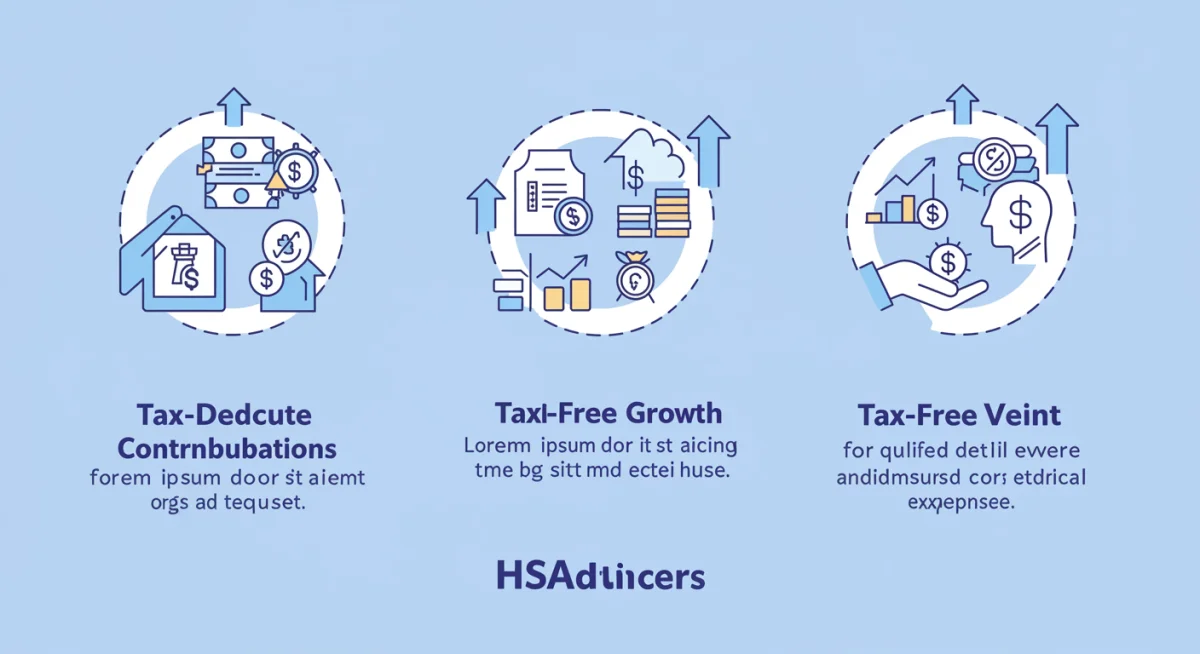
This includes a wide range of expenses, from doctor visits and prescription medications to dental care, vision care, and even certain long-term care insurance premiums. The tax-free nature of these withdrawals completes the triple crown, making HSAs an incredibly efficient way to manage healthcare costs.
In summary, the triple tax advantage of HSAs – tax-deductible contributions, tax-free growth, and tax-free withdrawals for qualified medical expenses – creates an unparalleled financial opportunity. This makes HSAs a cornerstone for savvy financial planning in 2025, offering both immediate tax relief and substantial long-term wealth building for healthcare.
Strategic Financial Impact and Insider Knowledge
Beyond the immediate tax benefits, HSAs offer profound strategic financial implications that savvy individuals can leverage for long-term wealth building and retirement planning. Thinking of an HSA as merely a savings account for medical bills misses its true potential as a powerful investment tool.
The insider knowledge lies in understanding how to maximize these accounts not just for current expenses, but as a supplementary retirement fund. This requires a shift in perspective from spending HSA funds quickly to allowing them to grow for as long as possible.
HSAs as a Retirement Savings Vehicle
One of the most powerful, yet often overlooked, aspects of an HSA is its potential as a retirement savings vehicle. Unlike a 401(k) or IRA, where withdrawals in retirement are typically taxed (unless it’s a Roth), HSA withdrawals for qualified medical expenses remain tax-free at any age.
- Longevity of Funds: By paying for current medical expenses out-of-pocket and letting HSA funds grow, you effectively create a tax-free reservoir for future healthcare costs, which are notoriously high in retirement.
- Flexibility Post-65: After age 65, HSA funds can be withdrawn for any purpose without penalty, though non-medical withdrawals will be taxed as ordinary income, similar to a traditional IRA. This flexibility makes it a versatile retirement account.
- Reduced Healthcare Costs in Retirement: With increasing medical costs in retirement, having a dedicated tax-free fund can significantly alleviate financial pressure, allowing other retirement savings to be used for living expenses.
This strategic approach to HSAs can provide a significant bolster to your retirement portfolio, ensuring you are prepared for both planned and unexpected healthcare expenditures in your later years.
Maximizing Your HSA: Advanced Strategies
To truly unlock the full financial impact of your HSA, consider these advanced strategies that go beyond basic contributions:
- Invest Early and Aggressively: If you have a long time horizon, consider investing your HSA funds in growth-oriented assets. The tax-free growth means more money compounding over time.
- Pay Out-of-Pocket for Current Medical Expenses: If your budget allows, pay for current medical costs from your regular checking account and let your HSA balance grow. Keep meticulous records, as you can reimburse yourself tax-free years later for those past qualified expenses.
- Understand Qualified Expenses: Familiarize yourself with the extensive list of qualified medical expenses. This includes vision, dental, and even certain over-the-counter medications, ensuring you maximize tax-free withdrawals.
These insider strategies transform an HSA from a simple healthcare account into a dynamic financial planning tool. By treating your HSA as a long-term investment rather than a checking account for medical bills, you can significantly enhance your financial security in 2025 and beyond.
Ultimately, the strategic financial impact of HSAs in 2025 extends far beyond immediate tax savings. By adopting an insider’s perspective and leveraging advanced strategies, individuals can transform their HSA into a powerful asset for both current medical expenses and future retirement planning, making it an indispensable part of a robust financial portfolio.
Navigating Eligibility and Enrollment in 2025
Successfully utilizing an HSA begins with a clear understanding of its eligibility requirements and the enrollment process. While the core rules remain consistent, minor adjustments and nuances in 2025 necessitate a close look to ensure you qualify and can maximize your benefits.
Eligibility is not just about having an HDHP; it encompasses several other factors that can impact your ability to contribute and benefit from an HSA. Being proactive in confirming your eligibility can prevent potential tax complications down the line.
Common Eligibility Pitfalls to Avoid
Even with an HDHP, certain situations can disqualify you from contributing to an HSA. Awareness of these common pitfalls is crucial:
- Other Health Coverage: Having any other non-HDHP health insurance, even if it’s a spouse’s plan that covers you, can make you ineligible. This includes Medicare enrollment.
- Dependent Status: If you are claimed as a dependent on someone else’s tax return, you cannot contribute to an HSA.
- VA Benefits: Receiving VA medical benefits within the past three months can affect eligibility, though there are specific exceptions for preventive care.
It’s important to review your entire health coverage situation annually, especially during open enrollment periods, to ensure continuous eligibility for HSA contributions. Any change in your health insurance or dependent status could impact your ability to contribute.
Enrollment Process and Choosing an HSA Provider
Once you’ve confirmed your eligibility, the next step is to enroll in an HSA and choose a suitable provider. Many employers offer HSAs as part of their benefits package, often integrating them with the chosen HDHP.
- Employer-Sponsored HSAs: These are often the easiest way to enroll, as contributions can be made directly through payroll deductions, offering an immediate tax advantage. Employers might also contribute to your HSA.
- Individual HSAs: If your employer doesn’t offer an HSA, or if you prefer a different provider, you can open an individual HSA with a bank, credit union, or investment firm. Researching different providers is key, as fees, investment options, and interest rates can vary significantly.
- Investment Options: Look for providers that offer a range of investment choices beyond just a basic savings account. This is where the tax-free growth truly comes into play, allowing you to invest your funds for long-term growth.
Choosing the right HSA provider is as important as choosing the right HDHP. A provider with low fees and diverse investment options can significantly impact the long-term value of your HSA. Don’t hesitate to compare several options before making a decision.
In conclusion, navigating HSA eligibility and enrollment in 2025 requires careful attention to detail. By understanding the criteria, avoiding common pitfalls, and thoughtfully selecting a provider, you can ensure your HSA is set up for maximum financial benefit and long-term success.
HSAs vs. Other Savings Vehicles: A Comparative Analysis
While HSAs stand out for their triple tax advantage, it’s beneficial to compare them with other common savings and investment vehicles to fully appreciate their unique position in a comprehensive financial plan. Understanding these distinctions helps in allocating funds optimally.
Each account type serves a different purpose, and a well-rounded financial strategy often involves utilizing several of them. However, for healthcare-related savings, HSAs often emerge as the superior choice due to their unique tax benefits.
HSA vs. Flexible Spending Account (FSA)
Flexible Spending Accounts (FSAs) are another common option for healthcare savings, often offered by employers. While they share some similarities with HSAs, crucial differences make them distinct:
- “Use It or Lose It” Rule: FSAs are typically subject to a “use it or lose it” rule, meaning funds not used by the end of the plan year (with some minor carryover exceptions) are forfeited. HSAs, conversely, roll over year after year.
- Employer Ownership: FSAs are employer-owned, so if you leave your job, you typically lose access to the funds. HSAs are individual accounts that you own and take with you, regardless of employment changes.
- Investment Options: FSAs generally do not offer investment options; they are purely spending accounts. HSAs allow for investment growth, enhancing their long-term value.
While FSAs can be useful for predictable, annual medical expenses, HSAs offer far greater flexibility, portability, and growth potential, making them a more robust long-term solution.
HSA vs. 401(k) and IRA
Comparing HSAs to traditional retirement accounts like 401(k)s and IRAs highlights the HSA’s unique tax-free withdrawal feature for medical expenses:
- Tax Treatment: Both 401(k)s and traditional IRAs offer tax-deductible contributions and tax-deferred growth. However, withdrawals in retirement are generally taxed as ordinary income. HSA withdrawals for qualified medical expenses are tax-free.
- Purpose: 401(k)s and IRAs are primarily designed for general retirement savings. HSAs are specifically for healthcare expenses, though they can serve as a secondary retirement fund after age 65.
- Contribution Limits: Contribution limits for 401(k)s and IRAs are typically higher than HSAs, reflecting their broader retirement savings purpose.
For individuals able to maximize contributions to both their 401(k)/IRA and HSA, the HSA provides an invaluable layer of tax-free financial security for healthcare, complementing general retirement savings beautifully.
In conclusion, while FSAs, 401(k)s, and IRAs all have their place in a sound financial plan, HSAs offer a distinct advantage for managing healthcare costs with unparalleled tax efficiency. Their unique combination of tax-deductible contributions, tax-free growth, and tax-free withdrawals sets them apart as a critical component of financial well-being in 2025.
Common Misconceptions and Best Practices for HSAs in 2025
Despite their significant benefits, HSAs are often misunderstood, leading many to underutilize or even overlook them entirely. Dispelling these myths and adopting best practices will ensure you maximize the potential of your Health Savings Account in 2025.
One prevalent misconception is that HSAs are only for the wealthy or those with chronic medical conditions. In reality, anyone eligible for an HDHP can benefit, regardless of their current health status or income level. The long-term savings potential is universal.
Addressing HSA Misconceptions
Let’s clarify some common misunderstandings about HSAs:
- Myth: HSAs are only for people who are always sick.
Reality: HSAs are beneficial for everyone, healthy or not. If you’re healthy, your funds can grow untouched for years, serving as a powerful retirement healthcare fund. If you have medical needs, the tax-free withdrawals are invaluable. - Myth: HSA funds are difficult to access.
Reality: Most HSA providers offer debit cards or checks, making it easy to pay for qualified medical expenses directly. Reimbursement for out-of-pocket payments is also straightforward. - Myth: HSAs are too complicated to manage.
Reality: While there’s an initial learning curve, managing an HSA is similar to managing any investment account. Many providers offer user-friendly online platforms and educational resources.
Overcoming these misconceptions is the first step toward embracing the full financial power of an HSA. The benefits far outweigh any perceived complexities.
Best Practices for Maximizing Your HSA
To truly leverage your HSA in 2025, consider these best practices:
- Automate Contributions: Set up automatic contributions through payroll deductions or direct transfers. Consistency is key to building a substantial balance over time.
- Maintain Detailed Records: Keep all receipts for qualified medical expenses, even if you pay out-of-pocket. This allows you to reimburse yourself tax-free from your HSA at any point in the future.
- Review Investment Options Regularly: As your balance grows, ensure your funds are invested appropriately for your risk tolerance and time horizon. Don’t let large sums sit in a low-interest savings account.
- Educate Yourself: Stay informed about changes in IRS rules, contribution limits, and qualified medical expenses. Knowledge is power when it comes to tax-advantaged accounts.
By debunking common myths and implementing these best practices, you can transform your HSA into one of the most effective financial tools in your arsenal for 2025. It’s an investment in your health and your financial future.
In conclusion, understanding and adopting best practices for HSAs in 2025 is vital for maximizing their potential. By debunking common misconceptions and strategically managing your account, you can unlock significant financial advantages for both current and future medical expenses, making your HSA a cornerstone of your personal finance strategy.
The Future of HSAs: Trends and Outlook for 2025 and Beyond
As we look to 2025 and beyond, the role of Health Savings Accounts is poised to become even more prominent in personal finance and healthcare planning. Evolving healthcare landscapes and economic shifts continue to highlight the importance of tax-advantaged savings for medical expenses.
Several trends suggest that HSAs will not only maintain their relevance but potentially expand in scope and popularity. Understanding these future dynamics can help individuals plan more effectively for their long-term financial health.
Legislative and Regulatory Landscape
The legislative and regulatory environment plays a crucial role in shaping the future of HSAs. While major overhauls are less frequent, incremental changes can significantly impact how these accounts are used and their benefits.
- Potential for Expanded Qualified Expenses: There’s ongoing discussion about expanding the list of qualified medical expenses to include more wellness-related services or even certain health insurance premiums in specific scenarios.
- Contribution Limit Adjustments: The IRS regularly adjusts contribution limits for inflation, and this trend is expected to continue, allowing individuals to save more each year.
- Focus on Preventive Care: There’s a growing emphasis on preventive care within HDHPs, which could lead to more flexibility in what services can be covered pre-deductible, making HDHPs, and thus HSAs, more attractive.
Staying informed about these potential legislative developments is essential for maximizing your HSA strategy. These changes could unlock even greater flexibility and financial benefits.
Growing Adoption and Integration
The trend towards higher deductible health plans is likely to continue, driving greater adoption of HSAs. As employers seek ways to manage rising healthcare costs, HDHPs paired with HSAs offer a viable solution.
- Increased Employer Contributions: More employers may begin contributing to employee HSAs as a way to enhance benefits packages and encourage employee participation in HDHPs.
- Technological Integration: HSA providers are increasingly integrating with digital health platforms and financial planning tools, making it easier for users to manage their accounts, track expenses, and access investment options.
- Financial Wellness Programs: HSAs are becoming a core component of broader financial wellness programs offered by employers, recognizing their dual role in both healthcare and retirement savings.
This growing integration and adoption suggest that HSAs will become a more seamless and intuitive part of individuals’ financial lives, further solidifying their position as a key financial tool.
In conclusion, the future of HSAs in 2025 and beyond appears bright, marked by potential legislative enhancements, increased adoption, and improved technological integration. These trends underscore the enduring value of HSAs as a triple tax-advantaged solution for managing medical expenses and building long-term financial security.
Implementing Your HSA Strategy for Maximum Benefit
Developing an effective HSA strategy goes beyond merely opening an account; it involves a thoughtful approach to contributions, investments, and withdrawals. A well-executed strategy ensures you fully capitalize on the triple tax advantages available in 2025.
The goal is not just to save money, but to optimize how that money works for you, both in the short term for immediate medical needs and in the long term for retirement healthcare expenses.
Crafting Your Contribution Plan
Your contribution strategy should align with your financial goals and current medical needs. Aim to contribute as much as you can, up to the annual IRS limits.
- Max Out Contributions: If financially feasible, always aim to contribute the maximum allowable amount each year. This maximizes your tax deductions and allows more funds to grow tax-free.
- Catch-Up Contributions: If you are 55 or older, take advantage of the additional catch-up contribution. This is a critical opportunity to boost your savings before retirement.
- Employer Contributions: Don’t overlook any employer contributions. These are essentially free money that further enhances your HSA balance without impacting your own contribution limits.
Consistent and maximized contributions are the bedrock of a powerful HSA. Treat it like a priority savings vehicle, similar to your 401(k) or IRA.
Optimizing Investments and Withdrawals
Once your contributions are in, the next step is to ensure your funds are working efficiently. This involves smart investing and strategic withdrawal planning.
- Diversified Investment Portfolio: Choose investment options within your HSA that match your risk tolerance and time horizon. A diversified portfolio can help mitigate risk while seeking growth.
- Long-Term Growth Focus: For those who can afford to pay current medical expenses out-of-pocket, prioritize long-term growth by investing your HSA funds and letting them compound over decades.
- Strategic Reimbursement: Keep a meticulous record of all qualified medical expenses you pay out-of-pocket. You can then reimburse yourself tax-free from your HSA at any time in the future, providing a flexible source of tax-free cash when needed.
This strategic management of investments and withdrawals transforms your HSA from a simple savings account into a dynamic tool for wealth accumulation and tax-free expense management.
Ultimately, implementing a robust HSA strategy in 2025 is key to unlocking its full potential. By thoughtfully planning your contributions, optimizing investments, and making strategic withdrawals, you can leverage the triple tax advantages to build significant financial security for all your healthcare needs, both now and in retirement.
| Key Point | Brief Description |
|---|---|
| Triple Tax Advantage | Contributions are tax-deductible, funds grow tax-free, and withdrawals for qualified medical expenses are tax-free. |
| Eligibility | Requires enrollment in a High-Deductible Health Plan (HDHP) and no other disqualifying health coverage. |
| Investment Vehicle | HSAs can be invested, allowing tax-free growth, making them a powerful retirement savings tool for healthcare. |
| Strategic Use | Pay current medical expenses out-of-pocket to allow HSA funds to grow for future, potentially larger, expenses. |
Frequently Asked Questions About HSAs in 2025
To be eligible for an HSA in 2025, you must be covered by a high-deductible health plan (HDHP). Additionally, you cannot be enrolled in Medicare, have other disqualifying health coverage, or be claimed as a dependent on someone else’s tax return. Meeting these criteria is crucial for contributing to an HSA.
Yes, HSA funds can be invested, similar to a 401(k) or IRA. The significant benefit is that any earnings from these investments grow tax-free. This allows your money to compound over time without being taxed annually, significantly boosting your long-term savings for future medical expenses or retirement.
Your HSA is a portable account that you own, not your employer. This means if you change jobs or retire, your HSA funds remain yours. You can continue to use them for qualified medical expenses, and they will continue to grow tax-free, providing ongoing financial flexibility.
If you use HSA funds for non-medical expenses before age 65, the withdrawal will be subject to ordinary income tax and a 20% penalty. After age 65, non-medical withdrawals are taxed as ordinary income but are not subject to the penalty, offering more flexibility in retirement.
Paying current medical expenses out-of-pocket allows your HSA funds to remain invested and grow tax-free for a longer period. You can save your receipts and reimburse yourself tax-free from your HSA at any point in the future. This strategy maximizes the long-term compounding power of your HSA.
Conclusion
In conclusion, Health Savings Accounts in 2025 stand out as an indispensable tool for personal finance, offering unparalleled triple tax advantages for managing medical expenses and building long-term wealth. By providing tax-deductible contributions, tax-free growth, and tax-free withdrawals for qualified medical costs, HSAs empower individuals to take proactive control of their healthcare finances. Understanding the eligibility criteria, leveraging advanced strategies, and dispelling common misconceptions are crucial steps toward maximizing these benefits. As healthcare costs continue to evolve, the strategic use of an HSA can significantly impact your financial well-being, solidifying its position as a cornerstone of smart financial planning for the future.