2025 Tax Law Changes: Personal Finance Adjustments for Maximum Savings

Anúncios
Understanding the upcoming 2025 tax law changes is essential for making timely personal finance adjustments to maximize savings and ensure financial well-being.
As we approach 2025, individuals and families across the United States are looking closely at the evolving tax landscape. The impending
Anúncios
Understanding the Looming Tax Horizon for 2025
The tax code is a dynamic entity, constantly being shaped by legislative actions and economic realities. For 2025, several provisions from the Tax Cuts and Jobs Act (TCJA) of 2017 are set to expire, potentially reverting to pre-TCJA rules unless new legislation is passed. This expiration impacts a broad spectrum of taxpayers, from individual income tax rates to specific deductions and credits.
It’s not just the expiration of TCJA provisions that warrants attention; new legislative initiatives or adjustments to existing tax frameworks driven by economic conditions or political priorities could also emerge. Staying informed about these potential shifts is the first step in effective financial planning.
Anúncios
Key areas of potential change
- Individual income tax rates and brackets could revert, affecting everyone’s take-home pay.
- Standard deductions might decrease, making itemizing deductions more attractive for some.
- Child tax credit amounts and eligibility rules could be modified, impacting families directly.
- Estate and gift tax exemptions are also on the table for potential adjustments, affecting wealth transfer strategies.
The cumulative effect of these changes could be substantial. For instance, a return to higher marginal tax rates could mean a larger portion of your income goes to taxes, necessitating a review of your investment and savings strategies. Similarly, changes to deductions could alter the tax efficiency of charitable giving or mortgage interest payments. Therefore, a comprehensive understanding of these potential shifts is paramount for any forward-looking financial plan.
Strategic Review of Your Income and Deductions
With potential changes to tax rates and deductions on the horizon, reviewing your current income streams and deduction strategies becomes a top priority. This proactive approach allows you to identify opportunities for tax optimization before the new laws fully take effect.
Many individuals might find that their previous strategies, which were effective under the TCJA, may no longer yield the same benefits. For example, if the standard deduction decreases, itemizing might once again become more advantageous for a larger segment of taxpayers. This calls for a detailed assessment of all potential itemized deductions you might be eligible for.
Maximizing pre-tax contributions
One of the most effective ways to reduce your taxable income, regardless of specific tax rate changes, is to maximize contributions to pre-tax retirement accounts. This includes 401(k)s, 403(b)s, and traditional IRAs. These contributions not only reduce your current taxable income but also help build your retirement nest egg.
- Increase 401(k) contributions to the maximum allowed by the IRS.
- Contribute to a traditional IRA, especially if you anticipate being in a lower tax bracket in retirement.
- Explore Health Savings Accounts (HSAs) for their triple tax advantage: tax-deductible contributions, tax-free growth, and tax-free withdrawals for qualified medical expenses.
Beyond retirement accounts, consider other deductions that might gain prominence. For those with significant medical expenses, state and local taxes (SALT), or charitable contributions, understanding the nuances of the 2025 tax code will be crucial. Keeping meticulous records of all eligible expenses throughout the year can significantly impact your tax outcome.
Revisiting Investment and Retirement Strategies
The potential for changes in capital gains taxes, dividend taxes, and retirement account rules makes revisiting your investment and retirement strategies an urgent task. What was tax-efficient yesterday might not be tomorrow, requiring adjustments to your portfolio and savings vehicles.
A key aspect of this review involves understanding the tax implications of different investment types. For instance, if long-term capital gains rates increase, you might want to re-evaluate your asset allocation or consider tax-loss harvesting strategies more aggressively. Similarly, changes to required minimum distributions (RMDs) or Roth conversion rules could alter your retirement income planning.
Optimizing your portfolio for tax efficiency
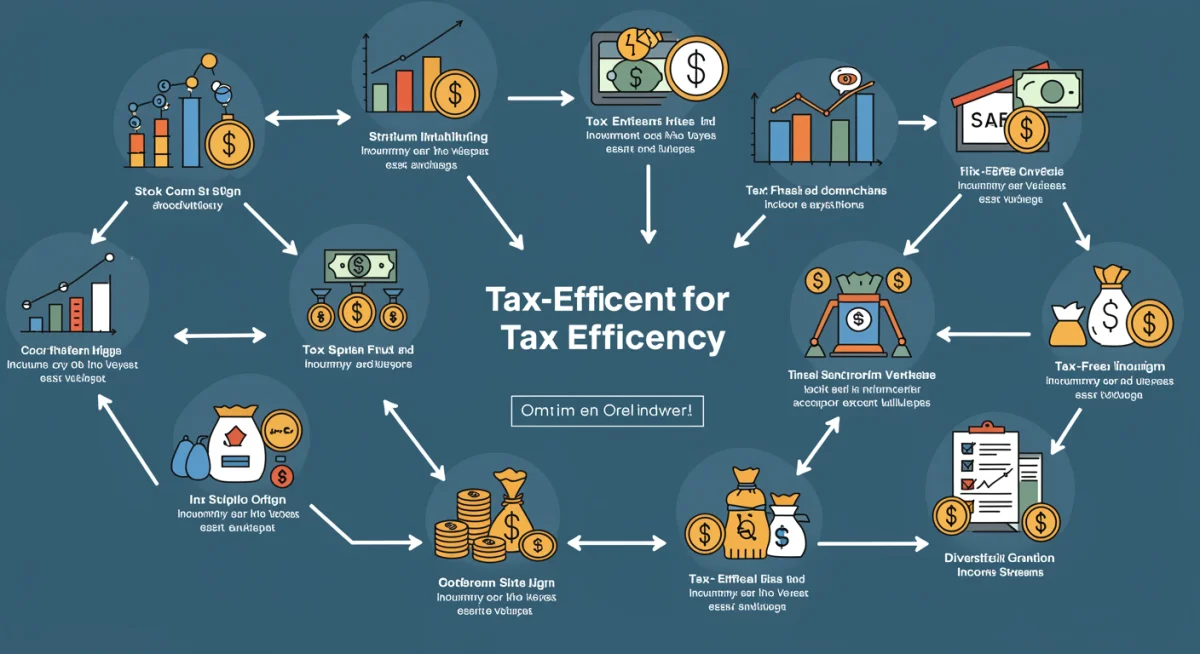
Diversifying your investments across various account types can offer significant tax advantages. This includes taxable brokerage accounts, tax-deferred accounts (like traditional IRAs and 401(k)s), and tax-free accounts (like Roth IRAs and HSAs). Each serves a different purpose in a tax-efficient investment strategy.
- Consider Roth conversions if you anticipate being in a higher tax bracket in the future.
- Utilize municipal bonds for tax-exempt interest income, especially if you are in a high tax bracket.
- Employ tax-loss harvesting to offset capital gains and potentially a limited amount of ordinary income.
Engaging with a financial advisor who specializes in tax planning can provide invaluable insights tailored to your specific situation. They can help you model different scenarios under the anticipated 2025 tax laws and adjust your investment strategy accordingly, ensuring your portfolio remains optimized for growth and tax efficiency.
Leveraging Tax-Advantaged Accounts and Benefits
In an environment of changing tax laws, maximizing contributions to and utilizing tax-advantaged accounts becomes even more critical. These accounts offer benefits that can shield your income and growth from taxes, providing a significant advantage regardless of the broader tax code shifts.
Beyond traditional retirement accounts, there are other powerful tools available. Health Savings Accounts (HSAs) stand out for their unique triple tax advantage, while 529 plans offer tax-free growth for educational expenses. Understanding the full spectrum of these benefits and how they might be impacted by 2025 changes is essential for comprehensive financial planning.
Exploring HSAs and 529 plans
HSAs are often overlooked but are incredibly powerful for those with high-deductible health plans. Contributions are tax-deductible, earnings grow tax-free, and qualified withdrawals are tax-free. If tax rates rise, the value of these tax benefits only increases.
- Contribute the maximum allowed to your HSA, treating it as a long-term investment vehicle.
- Use 529 plans for college savings, benefiting from tax-free growth and withdrawals for qualified educational expenses.
- Investigate other benefits like Dependent Care Flexible Spending Accounts (DCFSAs) or Flexible Spending Accounts (FSAs) for current year expenses.
Even if specific rules surrounding these accounts see minor adjustments, their fundamental tax advantages are likely to remain. Therefore, prioritizing contributions to these vehicles offers a robust defense against potential increases in your overall tax burden. Reviewing your eligibility for these accounts and increasing your contributions where possible should be a key part of your 2025 tax planning.
Estate Planning and Gifting Strategies for 2025
The potential expiration of the higher estate and gift tax exemptions from the TCJA poses a significant consideration for wealth transfer and estate planning. If these exemptions revert to lower levels, more estates could become subject to federal estate tax, making proactive planning indispensable.
For individuals with substantial assets, understanding the current exemption limits and anticipating future changes is crucial. This is not just about minimizing taxes but also about ensuring your wishes for your legacy are met efficiently and effectively. Waiting until the last minute could mean missed opportunities or higher tax liabilities for your heirs.
Reviewing your will and trust documents
Estate planning is not a one-time event; it requires periodic review, especially when major tax law changes are on the horizon. Your existing will, trusts, and other estate documents might need to be updated to reflect the new tax environment and your current financial goals.
- Consult with an estate planning attorney to understand the impact of potential exemption changes on your estate.
- Consider making gifts under the current, higher annual and lifetime exemption limits before they potentially decrease.
- Explore strategies like irrevocable trusts to remove assets from your taxable estate, if appropriate for your situation.
The goal is to ensure a smooth and tax-efficient transfer of wealth to your beneficiaries. This involves not only understanding the tax implications but also clearly articulating your intentions and having legally sound documents in place to execute them. Proactive engagement with estate planning professionals can help navigate these complex waters and secure your legacy.
Adapting to State and Local Tax (SALT) Changes
While federal tax laws often grab the headlines, changes at the state and local level can also significantly impact your personal finances. The interaction between federal and state tax codes, particularly concerning the SALT deduction, requires careful attention as we approach 2025.
The $10,000 cap on the state and local tax (SALT) deduction, introduced by the TCJA, has been a contentious issue. While federal changes are the primary focus of the TCJA expirations, any modifications to this cap or other federal deductions could have ripple effects on how state and local taxes are calculated and deducted. Furthermore, states themselves may implement new taxes or adjust existing ones to address their own budgetary needs or policy goals.
Monitoring state-specific tax legislation
It’s not enough to just keep an eye on Washington D.C.; understanding your state’s legislative agenda regarding taxation is equally important. Some states might introduce new taxes on certain income types, adjust property tax rates, or offer new credits that could benefit or burden taxpayers.
- Stay informed about proposed state tax legislation that could affect your income, property, or sales taxes.
- If you work remotely across state lines, understand the implications for state income tax nexus.
- Consider opportunities for state-specific tax credits or deductions, such as those for energy efficiency or education.
For individuals who live in one state and work in another, or those with rental properties in different jurisdictions, the complexities multiply. Consulting with a tax professional who has expertise in multi-state taxation can help you navigate these nuances and ensure you are optimizing your state and local tax liabilities in light of both federal and state-specific changes.
| Key Adjustment | Brief Description |
|---|---|
| Income & Deductions | Review income streams and deduction eligibility; maximize pre-tax contributions to 401(k)s, IRAs, and HSAs. |
| Investment & Retirement | Adjust portfolios for potential capital gains changes; consider Roth conversions and tax-loss harvesting. |
| Estate Planning | Update wills and trusts; consider gifting before potential estate tax exemption changes. |
| State & Local Taxes | Monitor state-specific tax legislation and the federal SALT deduction cap for impacts on your local tax burden. |
Frequently asked questions about 2025 tax changes
The most significant potential changes for 2025 stem from the expiration of several provisions of the Tax Cuts and Jobs Act of 2017 (TCJA). These could include reverts to higher individual income tax rates, lower standard deductions, and adjustments to the child tax credit and estate tax exemptions. Staying informed is key to understanding their impact.
Proactive preparation involves reviewing your income and deduction strategies, potentially maximizing pre-tax contributions to retirement accounts, and re-evaluating your investment portfolio for tax efficiency. Consulting a financial advisor is highly recommended to tailor these adjustments to your specific financial situation and goals.
It’s highly possible. Under the TCJA, standard deductions were significantly increased. If these provisions expire as scheduled, the standard deduction amounts could revert to lower levels, making itemizing deductions a more viable option for many taxpayers once again. This depends on new legislative actions.
Considering a Roth conversion before 2025 could be a strategic move, especially if you anticipate being in a higher tax bracket in future years. Converting funds from a traditional IRA to a Roth IRA means paying taxes on the conversion now, but future qualified withdrawals in retirement will be tax-free.
The federal $10,000 SALT deduction cap is set to expire, which could impact how much state and local taxes you can deduct on your federal return. Additionally, states may implement their own tax changes. Monitoring both federal and state legislative updates is crucial for comprehensive tax planning.
Conclusion
The landscape of tax laws is rarely static, and 2025 promises to be a year of significant adjustments. By proactively reviewing your income, deduction strategies, investment portfolios, and estate plans, individuals can navigate these changes effectively. Engaging with financial and tax professionals will be invaluable in tailoring these adjustments to your unique circumstances, ensuring you maximize savings and maintain financial stability. The time to prepare for 2025 tax law changes is now, allowing for informed decisions that can lead to substantial financial benefits.