Adult Education US 2026: Enrollment Trends & Future Insights

Anúncios
The landscape of education in the United States is in a constant state of flux, driven by technological advancements, economic shifts, and evolving societal needs. While traditional K-12 and higher education often capture the spotlight, the realm of adult education is undergoing a profound transformation, becoming increasingly vital for individual career progression and national economic competitiveness. As we approach 2026, understanding the prevailing Adult Education Trends in enrollment is crucial for policymakers, educational institutions, employers, and adult learners themselves.
This comprehensive analysis delves into data-driven insights to project and interpret the trajectory of adult education enrollment in the US for 2026. We will explore the key demographic shifts, economic imperatives, and technological innovations that are shaping this sector, offering a forward-looking perspective on where lifelong learning is headed.
The Shifting Paradigm of Lifelong Learning
For decades, education was largely viewed as a linear progression: K-12, followed by a college degree, leading to a career. However, the rapid pace of change in the 21st-century economy has rendered this model increasingly insufficient. The concept of ‘lifelong learning’ is no longer a niche idea but a fundamental necessity. Adults are returning to classrooms, both virtual and physical, to acquire new skills, reskill for different industries, advance in their current roles, or simply pursue personal enrichment. This fundamental shift is a primary driver behind the evolving Adult Education Trends.
Anúncios
Defining Adult Education in the Modern Context
Before diving into the data, it’s essential to define what we mean by ‘adult education.’ It encompasses a broad spectrum of learning activities undertaken by adults beyond traditional schooling. This includes:
- Postsecondary Vocational and Technical Training: Programs leading to certifications, licenses, or associate degrees in specific trades or technical fields.
- Degree Completion Programs: Adults returning to college to finish a bachelor’s or graduate degree.
- Professional Development and Continuing Education: Courses and workshops designed to enhance skills for current employment or maintain professional licenses.
- Basic Skills and English Language Acquisition (ELA): Programs for adults seeking to improve literacy, numeracy, or learn English.
- Personal Enrichment: Courses taken for personal interest, hobbies, or cultural understanding.
The diversity within adult education makes tracking its trends complex but also highlights its widespread impact across various facets of society. The demand for these varied programs is a significant contributor to the overall Adult Education Trends we observe.
Key Demographic Drivers Influencing Enrollment
Several demographic factors are poised to significantly influence adult education enrollment leading up to 2026. Understanding these population shifts is critical for anticipating future demand and tailoring educational offerings.
Anúncios
Aging Workforce and Retirement Trends
The US population is aging, and the retirement age is becoming more flexible. Many older adults are choosing to work longer, either out of necessity or a desire to remain engaged. This demographic often seeks:
- Reskilling for less physically demanding roles: As they age, some may transition from physically intensive jobs to administrative or consulting roles, requiring new digital or soft skills.
- Upskilling to remain competitive: Older workers need to continuously update their skills to keep pace with younger colleagues and technological changes.
- Entrepreneurship: Many retirees or near-retirees embark on second careers or start their own businesses, necessitating training in business management, marketing, or specific technical skills.
The sheer volume of baby boomers and early Gen Xers remaining in or re-entering the workforce will undoubtedly contribute to a sustained demand for adult education, influencing Adult Education Trends significantly.
Millennials and Gen Z: The Continuous Learners
Unlike previous generations, Millennials and Gen Z have grown up in an era of rapid technological change and economic instability. They understand that a single degree is often not enough to secure a stable, long-term career. This fosters a mindset of continuous learning, driving them to:
- Seek micro-credentials and certifications: To quickly acquire in-demand skills and boost their employability.
- Pursue higher degrees: To specialize or pivot careers in a competitive job market.
- Engage in professional development: To stay relevant in their chosen fields and advance their careers.
Their comfort with digital learning platforms also makes them ideal candidates for online adult education programs, further shaping the Adult Education Trends for 2026.
Immigration and English Language Learners (ELLs)
Immigration continues to be a significant demographic force in the US. New immigrants often require basic skills education, including English language acquisition, to integrate into the workforce and society. Programs catering to ELLs and those needing foundational literacy and numeracy skills will see continued demand. This often overlooked segment is a consistent driver of specific Adult Education Trends.
Economic Imperatives Driving Enrollment Growth
Beyond demographics, the economic landscape plays a pivotal role in shaping adult education enrollment. The need for a skilled workforce, coupled with economic uncertainties, pushes individuals and employers towards continuous learning.
The Skills Gap and Workforce Development
A persistent ‘skills gap’ exists across various industries, where employers struggle to find candidates with the necessary qualifications for available jobs. This gap is particularly pronounced in high-growth sectors like technology, healthcare, and advanced manufacturing. Adult education programs are uniquely positioned to bridge this gap by offering targeted training and reskilling initiatives. This direct link to workforce needs is a powerful force behind the Adult Education Trends we are seeing.
- Industry-specific certifications: Demand for programs that offer credentials recognized by specific industries will likely surge.
- Partnerships with employers: Educational institutions collaborating directly with businesses to design curricula that meet specific labor market needs will thrive.
- Apprenticeships and on-the-job training: Blended learning models that combine classroom instruction with practical experience are becoming increasingly popular.
Economic Downturns and Career Transitions
Historically, economic downturns have led to an increase in adult education enrollment as individuals seek to retool or upskill for new career paths. While the US economy has shown resilience, the threat of economic fluctuations or industry-specific disruptions (e.g., automation displacing certain jobs) means that adults will continue to seek educational opportunities to enhance their employability and adapt to changing job markets. This reactive enrollment also contributes to the overall Adult Education Trends.
Technological Innovations and Their Impact
Technology is not just changing what adults need to learn; it’s also transforming how they learn. Digital platforms, artificial intelligence, and virtual reality are revolutionizing the delivery and accessibility of adult education.
The Rise of Online and Hybrid Learning
The COVID-19 pandemic significantly accelerated the adoption of online learning, proving its efficacy and flexibility. For adult learners, who often juggle work, family, and other commitments, online and hybrid models offer unparalleled accessibility. This trend is set to continue and even intensify by 2026.
- Flexibility: Online courses allow adults to learn at their own pace and on their own schedule, removing geographical barriers.
- Cost-effectiveness: Often, online programs are more affordable than their in-person counterparts, appealing to budget-conscious learners.
- Variety of offerings: The online space allows for a wider array of specialized courses and certifications that might not be available locally.
The expansion of online learning is a dominant factor in current and projected Adult Education Trends.
Micro-credentials and Stackable Learning Pathways
In a fast-paced economy, traditional multi-year degree programs can sometimes feel too slow or too broad. Micro-credentials (e.g., badges, certificates for specific skills) offer a more agile solution. They allow adults to acquire targeted skills quickly and demonstrate competency to employers. The concept of ‘stackable’ credentials, where multiple micro-credentials can accumulate towards a larger degree or certification, is gaining traction.
This approach caters to the immediate needs of the workforce and the desire for continuous, incremental learning. It is a critical component of the evolving Adult Education Trends, particularly among younger adult learners.
AI and Personalized Learning
Artificial intelligence (AI) is beginning to revolutionize personalized learning experiences. AI-powered platforms can adapt to an individual’s learning style, pace, and existing knowledge, offering customized content and feedback. This can be particularly beneficial for adult learners who come with diverse educational backgrounds and learning needs. By 2026, AI’s role in creating more engaging and effective adult education programs is expected to grow, further enhancing Adult Education Trends.
Projected Adult Education Trends for 2026: Data-Driven Insights
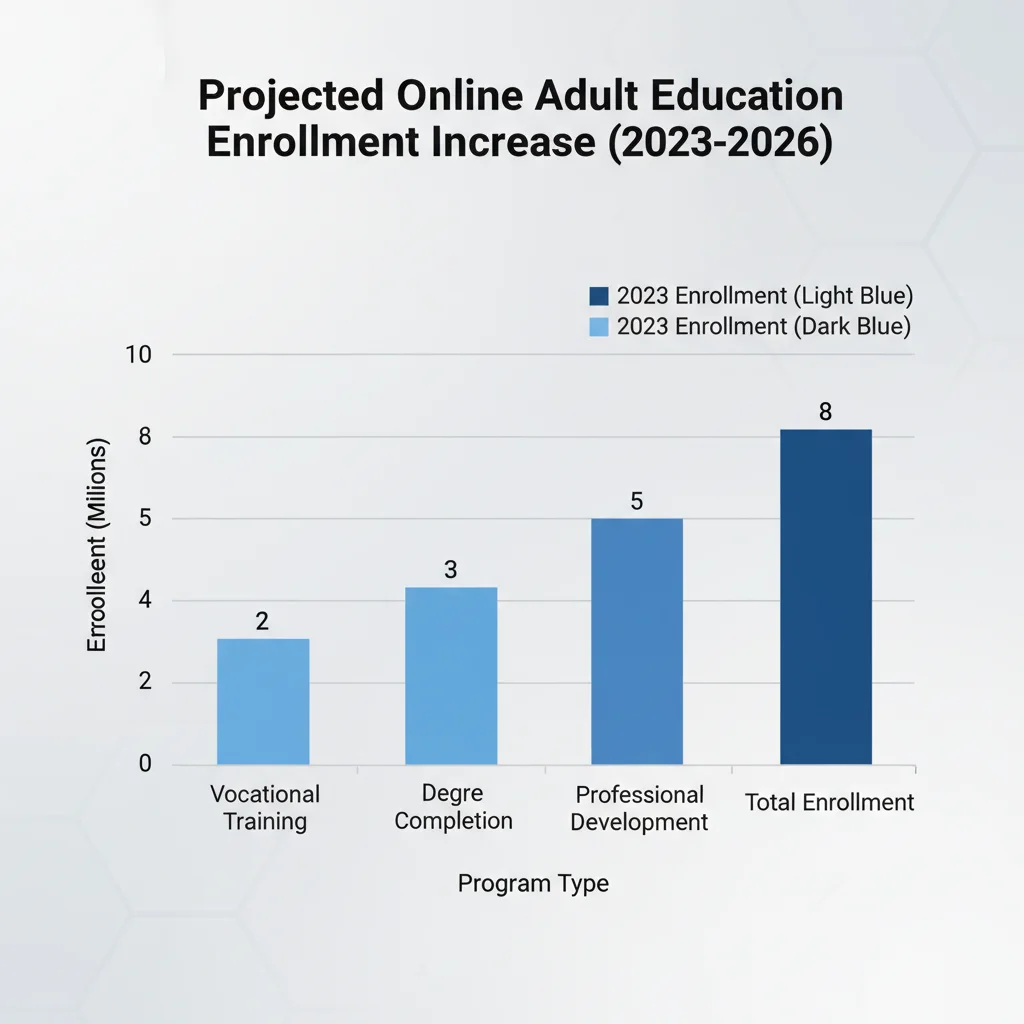
Based on the demographic, economic, and technological factors discussed, we can project several key Adult Education Trends for enrollment in the US by 2026:
1. Continued Growth in Online and Hybrid Programs
Enrollment in online and hybrid adult education programs is expected to continue its robust growth. The convenience and flexibility offered by these formats will remain highly attractive to working adults. Institutions that invest in high-quality online pedagogy and support services will likely see the most significant increases.
2. Increased Demand for Workforce-Aligned Skills and Certifications
The focus will increasingly shift from general education to highly specialized, workforce-relevant skills. Programs leading to industry-recognized certifications, particularly in technology (e.g., cybersecurity, data analytics, AI), healthcare, and green energy sectors, will experience heightened demand. This directly addresses the skills gap and is a major driver of Adult Education Trends.
3. Expansion of Employer-Sponsored Training and Partnerships
As employers recognize the critical need for upskilling their existing workforce, more companies will invest in employer-sponsored training programs or form partnerships with educational providers. This could manifest as tuition reimbursement, custom training programs, or apprenticeships, contributing significantly to enrollment figures.
4. Greater Emphasis on Soft Skills and Digital Literacy
While technical skills are crucial, the demand for ‘soft skills’ such as critical thinking, problem-solving, communication, collaboration, and adaptability will also intensify. Furthermore, digital literacy will become a foundational expectation across almost all job roles, driving enrollment in basic and advanced digital skills training. These foundational skills are interlinked with all Adult Education Trends.
5. Diversification of Learning Providers
Beyond traditional colleges and universities, a broader ecosystem of learning providers will emerge. This includes:
- Bootcamps: Intensive, short-term training programs for specific technical skills.
- Corporate Universities: Companies developing their in-house training academies.
- Non-profit organizations: Offering community-based adult education, often focused on basic skills or specific vocational training.
- Ed-tech companies: Providing subscription-based learning platforms and specialized courses.
This diversification offers more choices for adult learners but also intensifies competition among providers, influencing Adult Education Trends in terms of market share.
6. Continued Focus on Equity and Access
Efforts to make adult education more accessible and equitable for underserved populations will remain a priority. This includes initiatives to reduce cost barriers, provide flexible scheduling, offer childcare support, and address digital divides. Policies aimed at increasing access for low-income individuals, racial and ethnic minorities, and rural populations will shape specific Adult Education Trends.
Challenges and Opportunities in Adult Education by 2026
While the outlook for adult education enrollment is largely positive, several challenges and opportunities will shape its trajectory.
Challenges:
- Funding: Securing adequate and sustainable funding for adult education programs remains a perennial challenge, particularly for publicly funded initiatives.
- Quality Assurance: With the proliferation of online programs and diverse providers, ensuring the quality and accreditation of adult education offerings is crucial.
- Digital Divide: Despite the growth of online learning, disparities in internet access and digital literacy can exclude certain populations.
- Learner Engagement and Retention: Adult learners often face competing demands, making engagement and retention a significant challenge for educators.
Opportunities:
- Policy Support: Growing recognition of adult education’s economic importance could lead to increased government support and incentives.
- Technological Advancements: Further innovations in AI, VR/AR, and adaptive learning can create more immersive and effective learning experiences.
- Industry Collaboration: Stronger partnerships between educational institutions and industries can create highly relevant and responsive programs.
- Global Demand: As the US workforce competes globally, offering world-class adult education can attract international learners and enhance national competitiveness.

The Role of Policy and Investment
Government policies and strategic investments will play a critical role in shaping the future of adult education. By 2026, we anticipate a greater emphasis on policies that:
- Incentivize Lifelong Learning: Tax credits, subsidies, or grants for adult learners to pursue further education and training.
- Support Workforce Development: Funding for programs that directly address labor market needs and skills gaps.
- Promote Digital Inclusion: Initiatives to expand broadband access and provide digital literacy training, especially in underserved communities.
- Facilitate Data Collection and Analysis: Improved data systems to track adult learner outcomes, program effectiveness, and labor market alignment.
Such policies are essential to foster an environment where the positive Adult Education Trends can be fully realized and leveraged for societal benefit.
Conclusion: A Dynamic Future for Adult Education
The trajectory of adult education in the US towards 2026 is one of dynamic growth and adaptation. Driven by an aging workforce, the continuous learning imperative of younger generations, persistent skills gaps, and transformative technologies, enrollment is poised to increase across a diverse range of programs. Online and hybrid learning models will solidify their dominance, micro-credentials will gain further traction, and personalized learning experiences will become more sophisticated.
Stakeholders across the educational, governmental, and corporate sectors must collaborate to address the challenges of funding, quality, and equitable access. By doing so, they can fully harness the potential of adult education to empower individuals, strengthen the workforce, and ensure the continued economic vitality and social mobility of the United States. The evolving Adult Education Trends are not just statistics; they represent a fundamental shift in how we approach learning and career development in the modern age, promising a future where education is truly a lifelong journey for all.