Consumer Confidence Q1 2026: Index Drop & Retail Impact Analysis

Anúncios
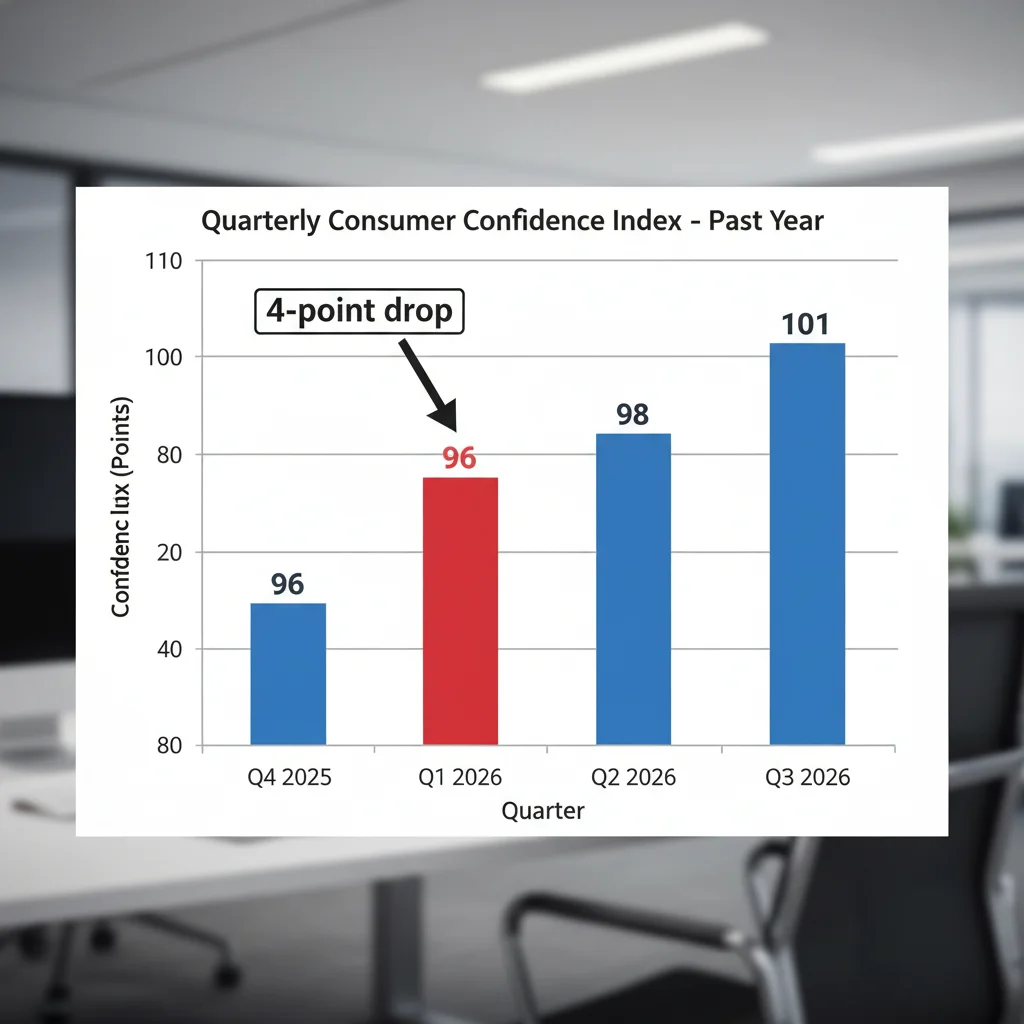
The economic landscape is a complex tapestry woven from various threads, none more crucial than the sentiment of its consumers. Consumer confidence, a pivotal economic indicator, reflects the optimism or pessimism of individuals regarding the state of the economy, their personal financial situations, and their spending intentions. When this confidence wavers, the ripple effects can be felt across every sector, particularly national retail sales. The first quarter of 2026 has presented a significant cause for concern, with the consumer confidence index registering a notable 4-point drop. This decline is not merely a statistical blip; it signals potential shifts in consumer behavior that could have profound implications for businesses and the broader economy.
Understanding the nuances of this decline requires a deep dive into its potential drivers, historical parallels, and the mechanisms through which it translates into real-world economic consequences. This article aims to dissect the 4-point drop in consumer confidence during Q1 2026, examining the factors contributing to this downturn and projecting its likely impact on national retail sales. By exploring these facets, we can gain a clearer picture of the challenges and opportunities that lie ahead for consumers and businesses alike.
Anúncios
Unpacking the Consumer Confidence Decline in Q1 2026
The consumer confidence decline of 4 points in Q1 2026 is a metric that demands immediate attention. Consumer confidence indices, typically compiled through surveys, gauge how optimistic consumers are about the future of the economy. A higher index generally correlates with increased spending, while a lower index suggests a contraction in consumer expenditures. This 4-point dip, while seemingly modest, can represent a significant shift in collective sentiment, potentially impacting billions in retail transactions.
Several factors could be at play in driving this particular downturn. Economic indicators such as inflation rates, unemployment figures, interest rate movements, and even geopolitical events can all influence how consumers perceive their financial future. For instance, persistent inflationary pressures, even if moderating, can erode purchasing power, making consumers more hesitant to spend on non-essential items. Similarly, a slight uptick in unemployment or concerns about job security can lead individuals to save more and spend less, further exacerbating the consumer confidence decline.
Anúncios
Moreover, the media narrative surrounding the economy often plays a crucial role. Negative news cycles, even if exaggerated, can dampen public spirits and contribute to a pessimistic outlook. This psychological aspect of consumer confidence is often overlooked but is incredibly powerful. When consumers feel uncertain about the future, they tend to adopt a more conservative approach to their finances, which directly translates into reduced spending across various retail sectors.
The specific context of Q1 2026 is also important. Were there any major policy announcements, market corrections, or global events that could have spooked consumers? Analyzing these concurrent events alongside the confidence data provides a more holistic understanding of the decline. For example, if there were unexpected interest rate hikes or a significant downturn in a major global market, these could easily contribute to a cautious outlook among domestic consumers.
Historical Context: Lessons from Past Confidence Drops
To fully appreciate the significance of the Q1 2026 consumer confidence decline, it is beneficial to look at historical precedents. The economy has experienced numerous periods of fluctuating consumer sentiment, each offering valuable insights into how such declines typically play out. For instance, during the 2008 financial crisis, consumer confidence plummeted, leading to a severe contraction in retail sales as consumers drastically cut back on discretionary spending. While the current 4-point drop is not on the same scale as a major recessionary period, understanding the mechanisms of past downturns can help us anticipate future trends.
Smaller, more contained drops in consumer confidence have also occurred, often in response to specific economic headwinds such as energy price spikes, regional economic slowdowns, or periods of political uncertainty. In many of these cases, the impact on retail sales was noticeable but typically recovered once the underlying issues were resolved or perceived to be improving. The duration and depth of the consumer confidence decline are critical factors in determining the severity and longevity of its impact on the retail sector.
One key lesson from history is that consumer confidence is often a leading indicator. A downturn in confidence frequently precedes a slowdown in consumer spending and, subsequently, economic growth. This makes the Q1 2026 data particularly important for businesses and policymakers, as it provides an early warning signal that proactive measures might be necessary to mitigate potential negative outcomes. Ignoring such signals can lead to larger, more entrenched economic challenges down the line.
Another crucial historical observation is the differential impact across various retail segments. During periods of reduced confidence, consumers tend to prioritize essential goods and services, while discretionary spending on luxury items, travel, and big-ticket purchases often takes the biggest hit. This means that not all retailers will be affected equally by a widespread consumer confidence decline; those catering to essential needs may fare better than those reliant on optional purchases.
The Direct Impact on National Retail Sales
The most immediate and tangible consequence of a consumer confidence decline is its effect on national retail sales. When consumers feel less secure about their financial future, they tend to reduce their spending, leading to a slowdown in sales across a wide array of retail categories. This phenomenon is often driven by a combination of reduced disposable income (due to inflation or wage stagnation), increased savings rates (as a precautionary measure), and a general reluctance to make large purchases.
For national retail sales, a 4-point drop in consumer confidence can translate into significant revenue shortfalls. While the exact correlation varies depending on the overall economic context, econometric models often link changes in consumer sentiment to predictable shifts in retail spending. Even a small percentage decrease in overall consumer spending can amount to billions of dollars in lost sales for the retail sector, affecting everything from small businesses to large national chains.
The impact is rarely uniform. Certain sectors are more sensitive to changes in consumer confidence than others. For example:
- Automotive Sales: Big-ticket items like cars are often deferred during periods of low confidence, as consumers hesitate to commit to large financing agreements.
- Housing and Home Goods: Similarly, furniture, appliances, and home improvement projects may see reduced demand.
- Luxury Goods: Non-essential luxury items are among the first to be cut from budgets when consumers feel financially constrained.
- Apparel and Footwear: While necessities, consumers may opt for cheaper alternatives or delay purchases of new clothing.
- Travel and Leisure: Vacations, dining out, and entertainment often experience a downturn as households tighten their belts.
Conversely, discount retailers and stores focusing on essential goods (groceries, basic household items) might see a relatively smaller impact, or even a slight increase in traffic as consumers seek value. This divergence highlights the need for retailers to understand their specific market segment and adapt their strategies accordingly in response to a consumer confidence decline.
Underlying Factors Contributing to the Q1 2026 Dip
A closer examination of the Q1 2026 period reveals several potential underlying factors that may have contributed to the consumer confidence decline. These factors often interact in complex ways, amplifying each other’s effects and creating a challenging environment for consumer spending.
Persistent Inflationary Pressures
While inflation may have shown signs of cooling from its peak, persistent elevated prices for everyday goods, particularly food, fuel, and housing, can continue to erode consumers’ purchasing power. Even if wage growth is present, if it doesn’t keep pace with the cost of living, consumers will feel poorer and less optimistic about their financial future. This ‘inflation fatigue’ can significantly contribute to a pessimistic outlook, leading to a consumer confidence decline.
Interest Rate Environment
Central banks’ monetary policies, particularly interest rate decisions, play a crucial role. If interest rates remained high or saw further increases in late 2025 or early Q1 2026, it would directly impact borrowing costs for mortgages, car loans, and credit cards. Higher debt servicing costs leave less disposable income for other purchases, thereby dampening consumer enthusiasm and contributing to the consumer confidence decline.
Labor Market Dynamics
The health of the labor market is a strong determinant of consumer confidence. While unemployment figures might still be relatively low, any signs of weakening – such as an increase in layoffs, a slowdown in hiring, or a reduction in average working hours – can quickly lead to anxieties about job security. Even if these are localized or sectoral issues, widespread media coverage can create a broader sense of unease, fueling the consumer confidence decline.
Geopolitical Instability and Global Economic Outlook
Global events, from international conflicts to economic slowdowns in major trading partners, can have a spillover effect on domestic consumer sentiment. Uncertainty on the global stage often translates into domestic economic uncertainty, as consumers worry about potential disruptions to supply chains, energy prices, or overall economic stability. A heightened sense of geopolitical risk can be a significant contributor to a cautious consumer mindset.
Stock Market Performance
For a segment of the population, particularly those with investments, the performance of the stock market can significantly influence their perception of wealth and financial security. A downturn or prolonged period of stagnation in equity markets can lead to a ‘wealth effect’ in reverse, where consumers feel less affluent and therefore less inclined to spend, contributing to the consumer confidence decline.
Strategies for Retailers in a Low-Confidence Environment
In the face of a consumer confidence decline, retailers must adapt their strategies to navigate the challenging economic climate. Proactive measures can help mitigate the negative impact on sales and even create opportunities for growth.
Focus on Value and Affordability
When consumers are cautious, value becomes paramount. Retailers should emphasize affordability, offer promotions, and highlight the long-term value of their products. This might involve bundling products, introducing budget-friendly options, or clearly communicating savings to customers. Positioning products as essential or offering flexible payment options can also appeal to hesitant buyers.
Strengthening Customer Loyalty
During tough times, retaining existing customers is often more cost-effective than acquiring new ones. Loyalty programs, personalized offers, and exceptional customer service can foster stronger relationships, encouraging repeat business even when overall spending is down. Building trust and demonstrating empathy for customers’ financial concerns can go a long way.
Optimizing Inventory and Supply Chains
Accurate demand forecasting becomes even more critical during a consumer confidence decline. Retailers need to optimize their inventory to avoid overstocking slow-moving items and ensure they have sufficient stock of in-demand essentials. Agile supply chains that can quickly adapt to changing consumer preferences are also vital to minimize waste and maximize efficiency.
Investing in Digital Channels and E-commerce
E-commerce continues to be a growth driver, and a cautious consumer might prefer the convenience and comparative shopping opportunities offered by online platforms. Retailers should ensure their online presence is robust, user-friendly, and offers seamless shopping experiences. Digital marketing efforts can be tailored to highlight value and connect with consumers where they are most active.
Diversifying Product Offerings
For some retailers, diversifying into product categories that are less sensitive to economic downturns can provide a buffer. This could involve introducing more essential goods, expanding into services, or exploring new market segments that remain resilient during periods of consumer confidence decline.

The Road Ahead: Q2 2026 and Beyond
The 4-point consumer confidence decline in Q1 2026 serves as a critical indicator for the economic trajectory of the subsequent quarters. While one quarter’s data does not define an entire year, it certainly sets a tone and provides valuable insights into consumer sentiment. The crucial question now revolves around whether this dip is a temporary blip or the beginning of a more sustained downturn.
Monitoring key economic indicators in Q2 2026 will be paramount. Any signs of stabilization or improvement in inflation, a strengthening labor market, or a more favorable interest rate outlook could help restore consumer confidence. Conversely, further deterioration in these areas could deepen the consumer confidence decline, leading to more significant impacts on national retail sales.
Policymakers will likely be watching this trend closely. Governments might consider fiscal policies aimed at stimulating consumer spending, such as tax breaks or direct aid, if the situation warrants it. Central banks might also adjust their monetary policy stance if economic growth appears to be significantly threatened by reduced consumer activity.
For consumers, the advice remains largely consistent: prudent financial planning, building an emergency fund, and making informed spending decisions are always wise, especially during periods of economic uncertainty. While a consumer confidence decline can be unsettling, it also presents an opportunity for individuals to reassess their financial habits and priorities.
Businesses, particularly those in the retail sector, must remain agile and responsive. This means continuously analyzing market data, understanding customer behavior shifts, and being prepared to pivot strategies quickly. Those who can effectively adapt to the changing economic tides, perhaps by focusing on value, enhancing customer experience, or innovating their product offerings, will be better positioned to weather the storm and emerge stronger.
Conclusion
The 4-point consumer confidence decline in Q1 2026 is a significant development that demands attention from economists, businesses, and consumers alike. It underscores the fragility of economic sentiment and its profound influence on national retail sales. While the full extent of its impact will unfold in the coming quarters, the signals are clear: consumers are feeling more cautious, and this shift in sentiment is likely to translate into more conservative spending habits.
Understanding the underlying drivers – from persistent inflation to labor market dynamics and geopolitical concerns – is crucial for anticipating future trends. For retailers, this period calls for strategic adaptation, focusing on value, customer loyalty, and efficient operations. For policymakers, it highlights the need for careful consideration of economic interventions that can stabilize sentiment and support growth.
Ultimately, the economy is a dynamic system, and consumer confidence is its beating heart. While the Q1 2026 dip presents challenges, it also offers an opportunity for reflection, strategic recalibration, and a renewed focus on building a resilient and responsive economic environment. The road ahead requires vigilance, adaptability, and a concerted effort to foster an environment where consumer confidence can not only recover but thrive.