Maximize FAFSA Aid 2026: Key Changes & Strategies for College Applicants

Anúncios
Navigating the New FAFSA Changes: 7 Critical Updates for 2026 College Applicants to Maximize Financial Aid by Up to 15%
The landscape of college financial aid is constantly evolving, and for students planning to attend college in 2026, understanding the upcoming FAFSA (Free Application for Federal Student Aid) changes is not just beneficial—it’s essential. These modifications, part of the FAFSA Simplification Act, aim to streamline the application process and expand eligibility for federal student aid. However, with simplification often comes new complexities that require careful attention from applicants and their families. Our goal in this comprehensive guide is to break down the critical updates, provide actionable strategies, and help you, the 2026 college applicant, maximize your financial aid by an impressive margin, potentially up to 15%.
The FAFSA is the gateway to billions of dollars in federal grants, scholarships, work-study funds, and low-interest federal student loans. Missing out on understanding these changes could mean leaving significant aid on the table. Whether you’re a student, parent, or high school counselor, this article will serve as your definitive resource for navigating the FAFSA 2026 Changes.
Anúncios
We’ll delve into seven pivotal updates that will directly impact your financial aid eligibility and award amounts. From the introduction of the Student Aid Index (SAI) to revised asset reporting, each section will offer clear explanations and practical advice. By the end of this article, you will be equipped with the knowledge to strategically approach your FAFSA application, ensuring you secure the maximum possible financial assistance for your college education.
Understanding the Core Philosophy Behind the FAFSA Simplification Act
Before we dive into the specific FAFSA 2026 Changes, it’s crucial to grasp the underlying philosophy driving these reforms. The FAFSA Simplification Act, passed in late 2020, represents the most significant overhaul of federal student aid in decades. Its primary objectives are threefold: to make the FAFSA process easier for families, to expand federal Pell Grant eligibility, and to provide a more transparent and equitable assessment of a family’s ability to pay for college.
Anúncios
For too long, the FAFSA was criticized for its length, complexity, and often confusing terminology. Many eligible students, particularly those from low-income backgrounds, either didn’t apply or made errors that cost them aid. The new FAFSA aims to reduce the number of questions, integrate more directly with IRS data, and simplify the methodology used to determine aid eligibility. This shift is designed to be a net positive for most applicants, potentially increasing Pell Grant access for over 1.7 million additional students, and offering more aid to hundreds of thousands more.
However, ‘simplification’ doesn’t always mean ‘easier’ for everyone. Some families, particularly those with multiple children in college or specific financial circumstances, might find certain aspects require new strategies. Our deep dive into the critical FAFSA 2026 Changes will highlight these nuances, ensuring you’re prepared for every eventuality.
Critical FAFSA 2026 Changes: What You Need to Know Now
Let’s get down to the specifics. These seven updates are the most impactful changes coming to the FAFSA for the 2026-2027 academic year. Familiarizing yourself with each of these will be vital for maximizing your financial aid.
1. The Introduction of the Student Aid Index (SAI) Replacing the EFC
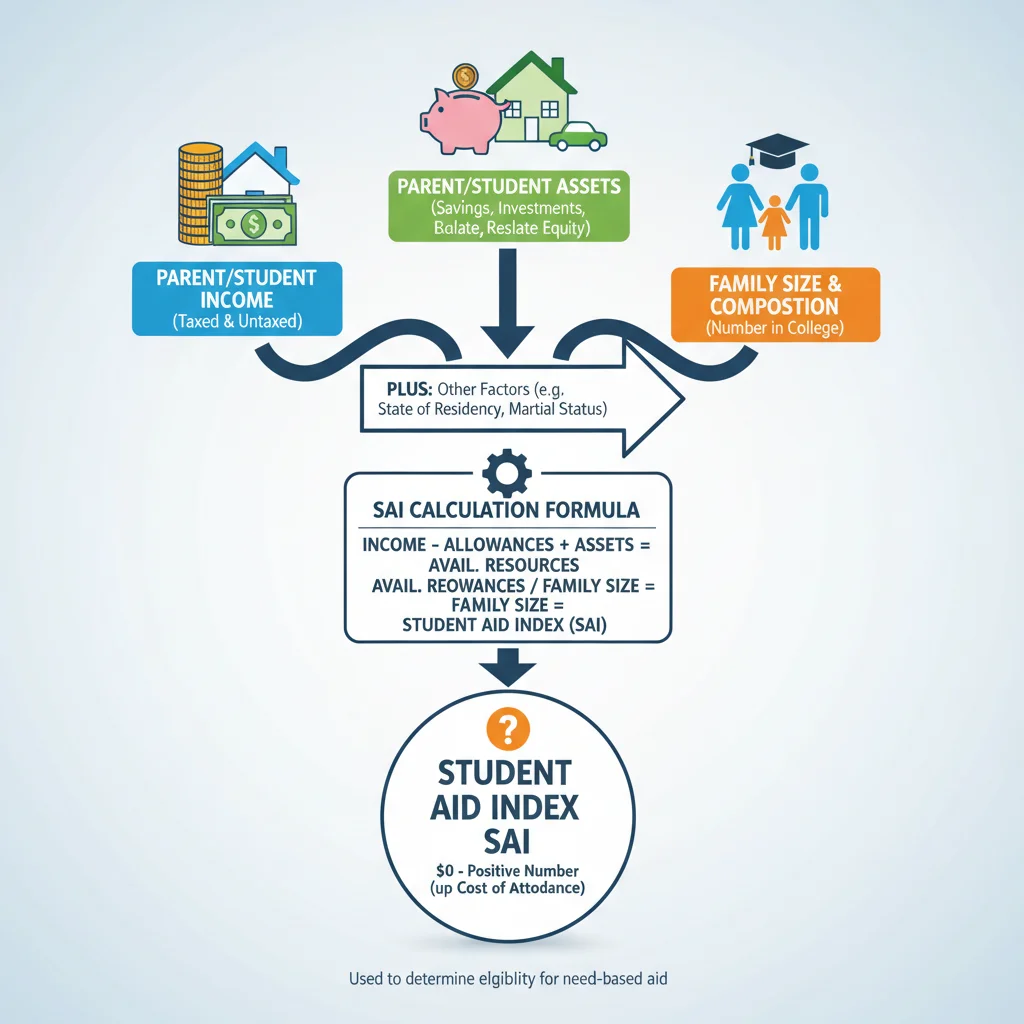
Perhaps the most significant change is the replacement of the Expected Family Contribution (EFC) with the Student Aid Index (SAI. While both are indices used to determine aid eligibility, the SAI is calculated using a new methodology. The EFC was never an amount a family was expected to pay; it was an eligibility index. The SAI is designed to be a more accurate reflection of a student’s financial need, and crucially, it can be a negative number, indicating a higher level of need and potentially qualifying students for more aid.
Key Differences:
- Negative SAI Possible: Unlike the EFC, the SAI can go below zero (down to -1500), which will identify students with the greatest financial need.
- New Calculation Formula: The formula for calculating SAI differs significantly from the old EFC formula, impacting how income and assets are weighed.
- No. of Students in College: This is a major change. The new SAI formula no longer considers the number of children in college simultaneously when calculating aid eligibility. Previously, the EFC was divided by the number of children attending college, significantly lowering the EFC for families with multiple students. This change could negatively impact middle and upper-middle-income families with more than one child in college.
Strategy for Maximizing Aid: Understand that while the SAI aims for greater equity, the removal of the multiple-in-college discount means families with multiple students will need to explore other avenues of aid, such as institutional scholarships, or plan for higher out-of-pocket costs or loan burdens for subsequent children. For families with one child in college, the SAI might be more favorable.
2. Streamlined Application Process and Fewer Questions
The FAFSA form itself is getting a facelift. The number of questions has been significantly reduced, from over 100 to approximately 36. This reduction is primarily due to the direct integration with IRS data, making the process much smoother for most applicants.
Key Changes:
- Direct Data Exchange (DDX): This is the new name for the IRS Data Retrieval Tool (DRT). Nearly all applicants will be required to use the DDX to securely transfer their federal tax information directly from the IRS into their FAFSA. This mandatory data exchange aims to reduce errors and simplify the income reporting process.
- Less Manual Entry: With more data pulled directly, families will spend less time manually entering financial figures, reducing the potential for mistakes.
Strategy for Maximizing Aid: While simpler, it’s crucial that all contributors (students and parents/spouses) have an FSA ID and consent to the DDX. Without this consent, even if you don’t file taxes, the student will not be eligible for federal student aid. Ensure your tax returns are filed accurately and on time, as this data will be directly used.
3. Expanded Pell Grant Eligibility and Award Amounts
One of the most celebrated aspects of the FAFSA Simplification Act is the expansion of Pell Grant eligibility. More students from low-income backgrounds will qualify for Pell Grants, and some existing recipients may see an increase in their award amounts.
Key Changes:
- Minimum and Maximum Pell Grant Eligibility: Eligibility for the maximum Pell Grant will be linked to the federal poverty level, and eligibility for a minimum Pell Grant will be guaranteed for students whose SAI is below a certain threshold.
- Increased Aid for Low-Income Families: The new SAI calculation and revised Pell Grant eligibility criteria are expected to benefit over 1.7 million additional students by making them Pell Grant eligible.
Strategy for Maximizing Aid: Even if you didn’t qualify for a Pell Grant in previous years, or if you thought your family income was too high, it’s imperative to complete the FAFSA for 2026. The new methodology could change your eligibility significantly. Don’t self-select out; let the FAFSA determine your eligibility.
4. Changes to Asset Reporting: Business and Farm Values
The way certain assets are reported has also been updated, particularly regarding small businesses and family farms. Previously, small businesses with fewer than 100 full-time employees and family farms were often excluded from asset calculations. This is no longer the case.
Key Changes:
- Inclusion of Small Business and Farm Value: The net worth of small businesses and family farms must now be reported as assets on the FAFSA, regardless of the number of employees. This could increase the SAI for families who own such assets.
- Cash and Savings: These remain important assets to report accurately.
Strategy for Maximizing Aid: If your family owns a small business or farm, you will need to accurately assess its net worth. This might involve obtaining a professional valuation. Understand that this inclusion could increase your SAI. Families with significant business or farm assets may need to explore strategies such as investing in retirement accounts (which are generally not counted as assets) or considering college savings plans that offer tax advantages.
5. Child Support as Income for the Recipient
Another notable change involves how child support payments are treated. Under the old FAFSA, child support received was counted as untaxed income. The new FAFSA reverses this.
Key Changes:
- Child Support Received as an Asset: Child support received will now be reported as an asset for the recipient, rather than as income. This is generally a more favorable treatment for aid eligibility.
- Child Support Paid: Child support paid will continue to be reported as an exclusion from income.
Strategy for Maximizing Aid: For families receiving child support, this change is likely beneficial, as assets typically have less impact on aid eligibility than income. Ensure you accurately report the total amount of child support received and held as an asset as of the FAFSA filing date. Consult with a financial aid advisor if you have complex child support arrangements.
6. New Rules for Divorced or Separated Parents
The FAFSA has historically used the parent with whom the student lived more during the past 12 months to determine which parent’s financial information should be reported. The new FAFSA changes this criterion.
Key Changes:
- Parent Providing the Most Financial Support: For divorced or separated parents, the FAFSA will now require financial information from the parent who provides the most financial support to the student, regardless of where the student lives.
- Impact on SAI: This change could significantly impact the SAI for students whose parents have disparate incomes, as the parent providing the most financial support might not be the lower-income parent.
Strategy for Maximizing Aid: This is a critical change for students with divorced or separated parents. Families will need to carefully assess which parent provides the majority of financial support. If financial support is split relatively evenly, or if there are disputes, it’s essential to seek clarification from the financial aid office of your prospective colleges. Strategic financial planning around this rule, such as adjusting support arrangements (if possible and legally permissible), could influence aid eligibility.

7. Consent Requirement for Direct Data Exchange (DDX)
As mentioned earlier, the Direct Data Exchange (DDX) is now mandatory. This isn’t just a technical change; it comes with a crucial consent requirement.
Key Changes:
- Mandatory Consent for All Contributors: Every individual listed as a ‘contributor’ on the FAFSA (student, parent(s), spouse) must provide consent for the Department of Education to retrieve their federal tax information directly from the IRS. This applies even if they didn’t file taxes or filed a foreign tax return.
- Impact on Aid Eligibility: If any required contributor does not provide consent, the student will not be eligible for federal student aid.
Strategy for Maximizing Aid: Ensure all required contributors have an FSA ID well in advance of applying. Discuss the consent requirement with your family members and emphasize its importance. Without this consent, federal aid is off the table, regardless of financial need. This is a non-negotiable step.
Strategic Approaches to Maximize Your Financial Aid by Up to 15%
Understanding the FAFSA 2026 Changes is the first step; applying that knowledge strategically is how you unlock maximum aid. Here are actionable strategies to potentially increase your financial aid by up to 15% or more:
1. Early and Accurate FAFSA Submission
The FAFSA typically opens in October (though the 2024-2025 FAFSA was delayed). For 2026 applicants, aim to submit your FAFSA as close to the opening date as possible. Many states and colleges award aid on a first-come, first-served basis, especially for institutional grants and scholarships. Accuracy is also paramount; errors can cause delays and reduce aid.
Actionable Tip: Gather all necessary documents (tax returns, W-2s, bank statements, investment records) well in advance. Create your FSA ID and ensure all contributors have theirs ready.
2. Understand Your SAI and How to Influence It
Since the SAI is replacing the EFC, familiarize yourself with its calculation. While you can’t magically change your income, understanding how assets are weighed can inform financial decisions. For instance, assets in qualified retirement plans (401k, 403b, IRAs) are generally not counted in the SAI calculation, unlike non-retirement investment accounts.
Actionable Tip: If possible, consider shifting funds from non-protected assets (e.g., savings accounts, taxable brokerage accounts) into retirement accounts or using them to pay down consumer debt before the base year (the tax year used for FAFSA, typically two years prior to the academic year). This requires long-term planning.
3. Leverage Professional Judgement and Special Circumstances
The FAFSA process, even with its simplification, cannot capture every unique financial situation. If your family has experienced a significant change in income or assets since the tax year used for the FAFSA (e.g., job loss, medical expenses, divorce, death of a parent), you can appeal your financial aid award through a process called ‘Professional Judgement.’
Actionable Tip: Contact the financial aid office at each college you apply to. Explain your special circumstances and provide documentation. Colleges have the discretion to adjust your SAI and potentially offer more aid. This can be a powerful tool for increasing aid, especially with the FAFSA 2026 Changes.
4. Explore Institutional and Private Scholarships
Federal aid is just one piece of the puzzle. Colleges themselves offer significant aid, often based on merit, need, or specific talents. Additionally, countless private scholarships are available from various organizations.
Actionable Tip: Research colleges’ specific financial aid policies and scholarship deadlines. Many institutional scholarships have earlier deadlines than the FAFSA. Use scholarship search engines (e.g., Fastweb, Scholarship.com) and consult your high school counselor for local opportunities. Tailor your applications to highlight your unique achievements and experiences.
5. Understand the Impact of Income Protection Allowances
The FAFSA includes income protection allowances, which shield a portion of your income from being counted in the SAI calculation. These allowances vary based on family size and the number of students in college. While the FAFSA 2026 Changes remove the multiple-in-college discount from the SAI, understanding these allowances can still be beneficial.
Actionable Tip: Be aware that the income protection allowance for the student themselves is relatively low. If a student earns significant income, a large portion of it will be counted towards their SAI. Encourage students to save a portion of their earnings for college, but also understand the FAFSA implications.
6. The Importance of an FSA ID for All Contributors
The FSA ID is your digital signature and identity for federal student aid. With the new mandatory consent for DDX, every contributor (student, parent(s), spouse) must have one. Without it, the FAFSA cannot be completed, and aid cannot be awarded.
Actionable Tip: Create FSA IDs well in advance. It can take several days for an FSA ID to become active after creation. Don’t wait until the last minute, as this could delay your FAFSA submission.
7. Don’t Overlook State Aid Programs
Many states offer their own financial aid programs, often with specific application deadlines and eligibility criteria that may or may not align exactly with federal FAFSA rules. These can be a significant source of funding.
Actionable Tip: Research your state’s higher education agency website for information on state grants and scholarships. Often, completing the FAFSA is the first step to applying for state aid, but some states might have supplemental forms or specific deadlines to meet.
The Long-Term Impact of FAFSA 2026 Changes on College Planning
The FAFSA 2026 Changes represent a pivotal moment for college financial aid. While designed to simplify the process and expand access for many, they also introduce new rules that require careful attention and strategic planning from all applicants. The shift from EFC to SAI, the mandatory Direct Data Exchange, the changes in asset reporting for small businesses and farms, and the updated rules for divorced parents are all critical updates that will directly impact your financial aid package.
For families with younger children, these changes warrant a re-evaluation of long-term college savings and financial planning strategies.
The removal of the multiple-in-college discount is perhaps the most significant long-term impact for many middle and upper-middle-income families. This means that parents who planned to have their EFC (now SAI) divided among several children will now face a full SAI for each child. This change underscores the importance of robust college savings, exploration of merit-based aid, and potentially, greater reliance on student loans for families with multiple children pursuing higher education simultaneously.
For lower-income families, the expanded Pell Grant eligibility is a game-changer, potentially making college more accessible and affordable. This increased access to grant aid reduces the need for loans and can significantly impact students’ post-graduation financial health.
The mandatory use of the Direct Data Exchange (DDX) also highlights the increasing reliance on integrated digital systems. This should, in theory, reduce fraud and errors, but it also places a greater emphasis on accurate and timely tax filing. Any discrepancies between IRS records and what’s reported on the FAFSA could lead to delays or requests for verification.
Ultimately, proactive engagement with these changes, ongoing financial literacy, and seeking personalized advice from financial aid professionals will be key to navigating the evolving landscape of college funding effectively.
Frequently Asked Questions (FAQs) about FAFSA 2026 Changes
Q1: When will the FAFSA for the 2026-2027 academic year be available?
A1: Traditionally, the FAFSA becomes available on October 1st of the year prior to the academic year. So, for the 2026-2027 academic year, you can expect the FAFSA to open on October 1, 2025. However, due to recent FAFSA overhauls and delays, it’s always wise to check the official Federal Student Aid website for the most current information and any potential adjustments to the timeline.
Q2: What tax year’s income will be used for the 2026-2027 FAFSA?
A2: The FAFSA uses ‘prior-prior’ year tax information. For the 2026-2027 academic year, you will report income and tax information from the 2024 tax year. This means your 2024 tax returns should be completed and accurate well before you plan to submit your FAFSA in late 2025.
Q3: What if my family’s financial situation has changed significantly since the 2024 tax year?
A3: If your family has experienced a significant change in income or assets since the 2024 tax year (e.g., job loss, medical expenses, divorce, death of a parent), you should contact the financial aid office at each college you are applying to. They can use ‘Professional Judgment’ to reassess your eligibility based on your current financial situation, potentially leading to more aid. Provide thorough documentation of your changed circumstances.
Q4: My parents are divorced. Whose financial information should be reported on the FAFSA 2026?
A4: Under the new FAFSA rules, you must report the financial information of the parent who provides the most financial support to you, regardless of which parent you live with more. This is a significant change from previous FAFSA versions. If financial support is roughly equal, or if there’s ambiguity, seek guidance from the financial aid office.
Q5: Will the value of my family’s small business or farm now count as an asset?
A5: Yes, under the FAFSA 2026 Changes, the net worth of a family’s small business or farm must be reported as an asset, regardless of the number of employees. This is a departure from previous rules that excluded small businesses with fewer than 100 employees. This change could impact your SAI.
Q6: What is an FSA ID, and why is it so important now?
A6: An FSA ID is a username and password combination that serves as your legal signature when completing the FAFSA and accessing federal student aid websites. With the new mandatory Direct Data Exchange (DDX), every contributor (student, parent, spouse) must have an FSA ID and provide consent for their tax information to be directly transferred from the IRS. Without this consent, the student will not be eligible for federal student aid, making the FSA ID more critical than ever.
Q7: How can I estimate my Student Aid Index (SAI)?
A7: While official SAI calculators reflecting the exact 2026 methodology might not be widely available yet, you can use existing FAFSA forecaster tools that incorporate the new SAI formula. These tools can give you a rough estimate based on your income, assets, and family size. Remember that these are estimates, and your actual SAI will be determined by your completed FAFSA.
Conclusion: Be Prepared, Be Proactive, and Secure Your Future
The FAFSA 2026 Changes represent a pivotal moment for college financial aid. While designed to simplify the process and expand access for many, they also introduce new rules that require careful attention and strategic planning from all applicants. The shift from EFC to SAI, the mandatory Direct Data Exchange, the changes in asset reporting for small businesses and farms, and the updated rules for divorced parents are all critical updates that will directly impact your financial aid package.
By understanding these changes, submitting your FAFSA early and accurately, leveraging professional judgment when appropriate, and exploring all available aid sources, you can significantly enhance your chances of securing the financial assistance you need. Don’t let the complexity deter you; instead, empower yourself with knowledge and proactive planning.
Remember, maximizing your financial aid by up to 15% is an achievable goal with the right approach. Your college education is an investment, and navigating the FAFSA effectively is a crucial step in making that investment affordable. Stay informed, ask questions, and take control of your financial aid journey for the 2026-2027 academic year and beyond.