False Advertising Claims 2026: Spot, Report, and Protect Yourself
Anúncios
False Advertising Claims 2026: Navigating the Deceptive Landscape
In an increasingly competitive marketplace, businesses constantly vie for consumer attention. While ethical marketing aims to inform and persuade honestly, the temptation to bend the truth or outright deceive can be strong. This is where false advertising claims come into play, creating a minefield for unsuspecting consumers. As we move into 2026, the tactics employed by unscrupulous advertisers are becoming more sophisticated, blending seamlessly with genuine marketing efforts. Understanding how to identify these deceptive practices, knowing your rights, and learning how to report them effectively is crucial for protecting your wallet and your trust.
This comprehensive guide will equip you with the knowledge and tools necessary to navigate the complex world of advertising. We will delve into the various forms that false advertising claims can take, from misleading statistics to unsubstantiated health benefits. We’ll explore the legal frameworks designed to protect consumers, both nationally and internationally, and outline the steps you can take to report fraudulent claims. Our goal is to empower you to become a more discerning consumer, capable of spotting the red flags and taking action when you encounter misleading product information.
Anúncios
What Constitutes False Advertising Claims?
At its core, false advertising claims involve any statement, representation, or omission in an advertisement that is likely to mislead a reasonable consumer. This misleading information can pertain to a product’s nature, characteristics, qualities, geographic origin, or even its manufacturing process. It’s not always about outright lies; sometimes, it’s about subtle exaggerations, omitted facts, or ambiguous language designed to create a false impression.
Common Types of Misleading Information
- Misleading Price Claims: This includes ‘bait-and-switch’ tactics, hidden fees, or false discounts. For example, advertising a product at a significantly reduced price only to reveal it’s out of stock and push a more expensive alternative.
- Unsubstantiated Performance Claims: Products promising miraculous results without scientific evidence. Think of weight loss pills guaranteeing rapid fat loss without diet or exercise, or anti-aging creams promising to erase decades of wrinkles overnight.
- Deceptive Visuals: Images or videos that misrepresent a product’s size, quantity, or appearance. A common example is food advertising where items look significantly larger or more appealing than they are in reality.
- Hidden Conditions and Fine Print: Advertisements that highlight attractive offers but bury crucial limitations or conditions in tiny, hard-to-read text.
- False Testimonials and Endorsements: Fabricated reviews or endorsements from individuals who haven’t genuinely used the product or whose experiences are not typical.
- Environmental or ‘Green’ Claims (Greenwashing): Companies making vague or unsubstantiated claims about their products being eco-friendly, sustainable, or natural without providing concrete evidence.
- Health and Medical Claims: Perhaps one of the most dangerous forms of false advertising, these claims often promise cures for serious illnesses or significant health benefits without proper scientific backing, potentially leading consumers to forgo legitimate medical treatment.
- “Made In” Claims: Misrepresenting the country of origin of a product, often to imply higher quality or to appeal to nationalistic sentiments.
The key factor in determining if an advertisement is false is whether a ‘reasonable consumer’ would be deceived by the claim. This means the average person, acting reasonably in the circumstances, would likely be misled. It’s not about the advertiser’s intent, but the actual impact of the advertisement on the consumer.
Anúncios
The Impact of False Advertising Claims on Consumers
The consequences of false advertising claims extend far beyond merely purchasing a subpar product. They erode consumer trust, distort market competition, and can even pose significant health risks. When consumers are repeatedly exposed to misleading information, they become skeptical of all advertising, making it harder for legitimate businesses to connect with their target audience.
Erosion of Trust and Financial Loss
One of the most immediate impacts is the financial loss incurred by consumers who purchase products based on false pretenses. This could be a small amount for a misrepresented gadget or a substantial sum for a fraudulent investment scheme. Beyond the direct monetary loss, there’s the opportunity cost – money spent on a deceptive product could have been invested in a legitimate one. Over time, this erosion of trust makes consumers wary, leading to a general distrust of brands and marketing messages.
Health and Safety Risks
In sectors like health, food, and pharmaceuticals, false advertising claims can have dire consequences. Products promising cures for serious illnesses, unproven dietary supplements, or misrepresented safety features can lead consumers to make choices that harm their health or put them in dangerous situations. For example, a car seat advertised as ‘safest’ without proper testing could endanger a child, or a ‘natural’ remedy for a chronic condition could delay necessary medical treatment.
Unfair Competition
For ethical businesses, false advertising creates an uneven playing field. Companies that invest in genuine product development, quality control, and honest marketing are at a disadvantage when competitors make exaggerated or fabricated claims. This can stifle innovation and discourage businesses from upholding high standards, as they struggle to compete with misleading promises that are often cheaper to produce.
Legal Frameworks Against False Advertising Claims in 2026
Governments and regulatory bodies worldwide have established laws and regulations to combat false advertising claims. These frameworks aim to protect consumers, ensure fair competition, and maintain integrity in the marketplace. While specific laws vary by region, the underlying principles are generally consistent: advertisements must be truthful, not misleading, and substantiated.
United States Regulations
In the U.S., the Federal Trade Commission (FTC) is the primary agency responsible for preventing deceptive advertising. The FTC Act prohibits ‘unfair methods of competition in commerce, and unfair or deceptive acts or practices in commerce.’ Key principles enforced by the FTC include:
- Truthfulness: Advertisements must be truthful and non-deceptive.
- Evidence: Advertisers must have evidence to back up their claims.
- Fairness: Advertisements cannot be unfair, meaning they cannot cause or be likely to cause substantial consumer injury that consumers cannot reasonably avoid themselves and is not outweighed by countervailing benefits to consumers or competition.
Other agencies like the Food and Drug Administration (FDA) regulate advertising for food, drugs, cosmetics, and medical devices, while the Consumer Product Safety Commission (CPSC) oversees product safety claims.
European Union Directives
The EU has a robust framework, primarily through the Unfair Commercial Practices Directive (UCPD). This directive prohibits unfair commercial practices that distort consumers’ economic behavior. It specifically bans:
- Misleading Actions: Providing false information or omitting material information that causes a consumer to take a transactional decision they wouldn’t have otherwise.
- Misleading Omissions: Omitting material information that the average consumer needs to make an informed transactional decision, or presenting such information in an unclear, unintelligible, ambiguous, or untimely manner.
- Aggressive Practices: Using harassment, coercion, or undue influence to impair a consumer’s freedom of choice.
Each EU member state then implements these directives into their national laws.
International Cooperation
With globalized markets, international cooperation is becoming increasingly important. Organizations like the International Consumer Protection and Enforcement Network (ICPEN) facilitate cross-border enforcement and information sharing to tackle deceptive practices that transcend national borders.
How to Spot False Advertising Claims in 2026
Developing a critical eye is your best defense against false advertising claims. As advertising techniques evolve, so too must your ability to discern genuine information from deceptive pitches. Here are some key strategies to help you spot misleading product information:
1. Scrutinize ‘Too Good to Be True’ Offers
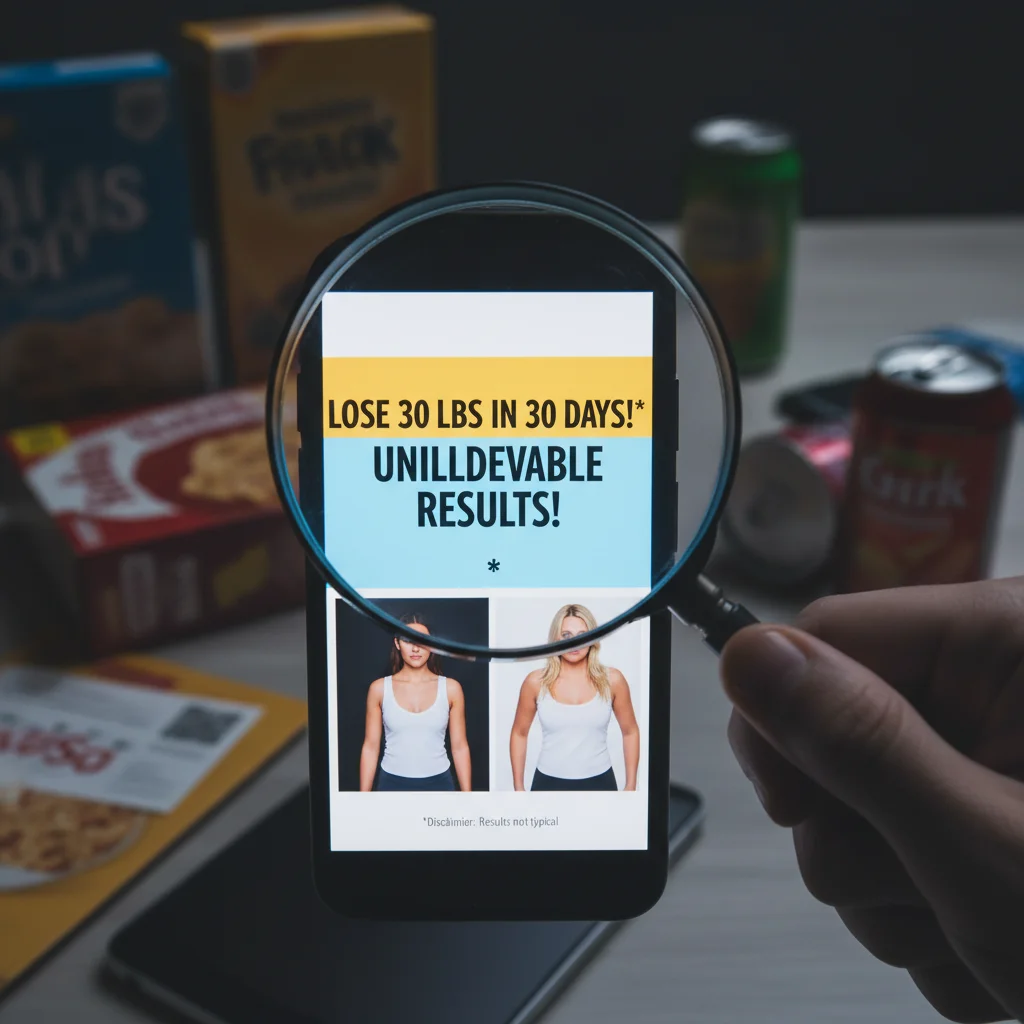
If a product promises extraordinary results with minimal effort or at an unbelievably low price, it’s often a red flag. Be skeptical of claims like ‘lose 30 pounds in 30 days without diet or exercise’ or ‘earn thousands overnight with no investment.’ These are classic hallmarks of deceptive advertising.
2. Look for Concrete Evidence and Specifics
Legitimate claims are usually backed by data, scientific studies, or specific details. Vague terms like ‘all-natural,’ ‘eco-friendly,’ or ‘clinically proven’ without further explanation should raise suspicion. Ask yourself: Proven by whom? Under what conditions? What are the specific ingredients or processes that make it ‘natural’?
3. Read the Fine Print (and the Entire Ad)
Crucial disclosures or limitations are often hidden in small text at the bottom of an advertisement or in a fleeting moment during a video. Always take the time to read all available information, including terms and conditions, disclaimers, and ingredient lists.
4. Verify Testimonials and Endorsements
While testimonials can be genuine, be wary of those that seem overly enthusiastic, generic, or feature stock photos. Check if the endorser is a real person and if their claims are consistent with what you’d expect. Influencer marketing is increasingly popular, but remember that influencers are often paid, and their opinions may be biased. Look for disclosures like ‘#ad’ or ‘#sponsored’.
5. Research the Company and Product
Before making a purchase based on an advertisement, do your due diligence. Search for independent reviews, news articles, and consumer reports about the product and the company. Look for patterns of complaints or legal actions against the brand. Websites like the Better Business Bureau (BBB) or consumer watchdog sites can be valuable resources.
6. Understand Psychological Triggers
Advertisers often use psychological tactics to influence buying decisions. These include creating a sense of urgency (‘limited time offer!’), appealing to emotions (‘for your family’s health!’), or leveraging social proof (‘everyone is buying it!’). Being aware of these triggers can help you make more rational decisions.
7. Be Wary of Before-and-After Photos
Especially in health, beauty, or fitness industries, ‘before-and-after’ photos can be heavily manipulated. Lighting, angles, makeup, and even digital editing can create dramatic, unrealistic transformations. Always approach such images with a healthy dose of skepticism.

Reporting False Advertising Claims: A Step-by-Step Guide
Once you’ve identified a false advertising claim, reporting it is a crucial step in protecting other consumers and holding deceptive businesses accountable. The process can seem daunting, but by following a structured approach, you can ensure your complaint is effective.
Step 1: Gather Evidence
Documentation is key. Collect as much evidence as possible related to the misleading advertisement. This includes:
- Screenshots or photos: Capture the advertisement itself, whether it’s online, in print, or on television.
- Product packaging: Keep the original packaging, labels, and any inserts that contain the misleading claims.
- Purchase receipts: Proof of purchase links you directly to the advertised product.
- Correspondence: Any emails, chat logs, or letters exchanged with the company regarding the product or advertisement.
- Product itself: If the product doesn’t match the claims, having it available for inspection can be important.
- Dates and locations: Note where and when you encountered the advertisement.
Step 2: Contact the Advertiser Directly (Optional but Recommended)
Sometimes, false advertising claims are due to oversight or miscommunication rather than deliberate deception. Contacting the company directly, outlining your concerns, and providing your evidence can sometimes resolve the issue quickly. Many companies have customer service departments or legal teams that handle such inquiries. Give them a chance to correct the claim or offer a resolution.
Step 3: Report to Relevant Regulatory Bodies
If direct contact doesn’t yield results or if the deception is severe, it’s time to involve regulatory agencies. The specific agency depends on your location and the nature of the product.
In the United States:
- Federal Trade Commission (FTC): For general deceptive advertising across most industries. File a complaint online at reportfraud.ftc.gov.
- Food and Drug Administration (FDA): For false advertising related to food, drugs, cosmetics, and medical devices. You can report issues through their MedWatch program or specific consumer complaint coordinators.
- State Attorney General’s Office: Your state’s Attorney General often has a consumer protection division that handles local false advertising complaints.
- Better Business Bureau (BBB): While not a government agency, the BBB can help mediate disputes and track complaints against businesses.
- National Advertising Division (NAD) of BBB National Programs: An industry self-regulatory body that reviews national advertising for truthfulness and accuracy.
In the European Union:
- National Consumer Protection Authorities: Each EU member state has its own consumer protection body. You can find a list on the European Commission’s website.
- European Consumer Centre (ECC): If the company is based in a different EU country, Norway, Iceland, or the UK, the ECC network can assist with cross-border complaints.
In Other Regions:
- Consumer Protection Agencies: Most countries have a national consumer protection agency responsible for overseeing advertising standards. A quick online search for ‘consumer protection agency [your country]’ should provide the relevant contact.
- Advertising Standards Authorities: Many countries have independent advertising standards bodies (e.g., ASA in the UK, Ad Standards in Canada) that enforce industry codes of practice.
Step 4: Consider Legal Action (If Applicable)
In some cases, especially where significant financial loss or harm has occurred, you might consider consulting a legal professional. Class-action lawsuits or individual claims can be pursued against companies engaged in pervasive false advertising claims. An attorney specializing in consumer law can advise you on the viability of such action.
Step 5: Share Your Experience
Sharing your experience on review sites, social media, or consumer forums can help alert others to deceptive practices. While this isn’t an official reporting mechanism, it contributes to public awareness and can pressure companies to rectify their misleading claims. Be factual and avoid making unsubstantiated accusations when sharing your story.
Preventative Measures for Consumers in 2026
Beyond reacting to false advertising claims, proactive measures can significantly reduce your risk of falling victim to them. Empowering yourself with knowledge and adopting smart shopping habits are key to becoming a resilient consumer in the face of sophisticated marketing.
Educate Yourself Continuously
Stay informed about common deceptive practices, especially in industries where you spend a lot of money (e.g., health, finance, technology). Follow consumer protection news, read reputable product reviews, and understand how different products are regulated. Knowledge is your best shield against manipulation.
Cultivate a Skeptical Mindset
Approach all advertisements, regardless of the medium, with a degree of skepticism. Don’t take claims at face value. Ask critical questions: Is this claim verifiable? What evidence supports it? Are there any hidden costs or conditions? This doesn’t mean being cynical, but rather being analytical.
Compare and Cross-Reference
Never rely on a single source of information. Before making a significant purchase, compare claims from multiple brands, read independent reviews from unbiased sources (e.g., consumer magazines, scientific journals), and seek advice from trusted experts or peers. Look for consistency in information across different platforms.
Understand Return and Refund Policies
Before purchasing, especially from unfamiliar brands, thoroughly understand their return and refund policies. A clear and generous return policy can offer a safety net if the product turns out to be misrepresented. Be wary of ‘all sales final’ policies, especially for high-value items where false advertising claims could lead to significant disappointment.
Use Secure Payment Methods
When shopping online, always use secure payment methods that offer consumer protection, such as credit cards or reputable payment processors. These often have dispute resolution services that can help you recover funds if you’ve been defrauded by false advertising.
Guard Your Personal Information
Deceptive advertisers sometimes use phishing or other scams to collect personal data. Be cautious about sharing sensitive information online, especially in response to unsolicited offers or advertisements that seem too good to be true. Legitimate companies rarely ask for extensive personal financial details via email or unverified links.
The Future of False Advertising Claims and Consumer Protection
As technology advances, so do the methods used in advertising, and unfortunately, in deceptive marketing. In 2026 and beyond, we can expect new challenges and evolving strategies in the fight against false advertising claims.
AI and Deepfakes
The rise of artificial intelligence (AI) and deepfake technology presents a significant challenge. AI can generate highly realistic images, videos, and even voices, making it increasingly difficult to distinguish genuine endorsements from fabricated ones. Advertisers could use AI to create ‘virtual influencers’ or simulate celebrity endorsements without their actual participation, leading to new forms of misleading claims. Regulatory bodies are already grappling with how to address these emerging technologies.
Personalized Deception
Data analytics and AI allow advertisers to create highly personalized marketing messages. While this can be beneficial for consumers, it also opens the door for ‘personalized deception,’ where specific vulnerabilities of individual consumers are targeted with tailor-made misleading claims. This makes universal detection and reporting more complex.
Blockchain for Transparency
Conversely, technology also offers potential solutions. Blockchain technology, for instance, could be used to create immutable records of product origins, supply chains, and even advertising claims, offering a new level of transparency and making it harder for companies to make unsubstantiated claims. Consumers could verify product information with greater confidence.
Enhanced Regulatory Scrutiny
Regulators are continually adapting to new advertising landscapes. We can anticipate increased scrutiny on digital advertising, influencer marketing, and AI-generated content. There will likely be a push for clearer disclosure requirements and more robust enforcement mechanisms to keep pace with technological advancements.
The Role of Consumer Activism
Consumer activism will continue to play a vital role. Collective action, organized through social media and online platforms, can quickly expose and pressure companies engaged in deceptive practices. Public outcry often leads to quicker responses from both businesses and regulatory bodies than individual complaints alone.
Conclusion: Your Role in Combating False Advertising Claims
The battle against false advertising claims is an ongoing one, requiring vigilance and proactive engagement from consumers. In 2026, the digital landscape will continue to evolve, bringing both innovative marketing and new forms of deception. By understanding the tactics of misleading advertisers, knowing your rights, and actively participating in the reporting process, you become an essential part of the solution.
Remember, every time you critically evaluate an advertisement, verify a claim, or report misleading information, you contribute to a more transparent and trustworthy marketplace. You protect not only yourself but also your community from financial harm and exploitation. Be informed, be skeptical, and be empowered to demand honesty and integrity from the brands you choose to support. Your collective action is the most powerful tool against the pervasive influence of false advertising.