Next Generation EU Funds Spain: Accessing €70 Billion by 2026
Next Generation Spain: How to Access the Remaining €70 Billion by 2026
Anúncios
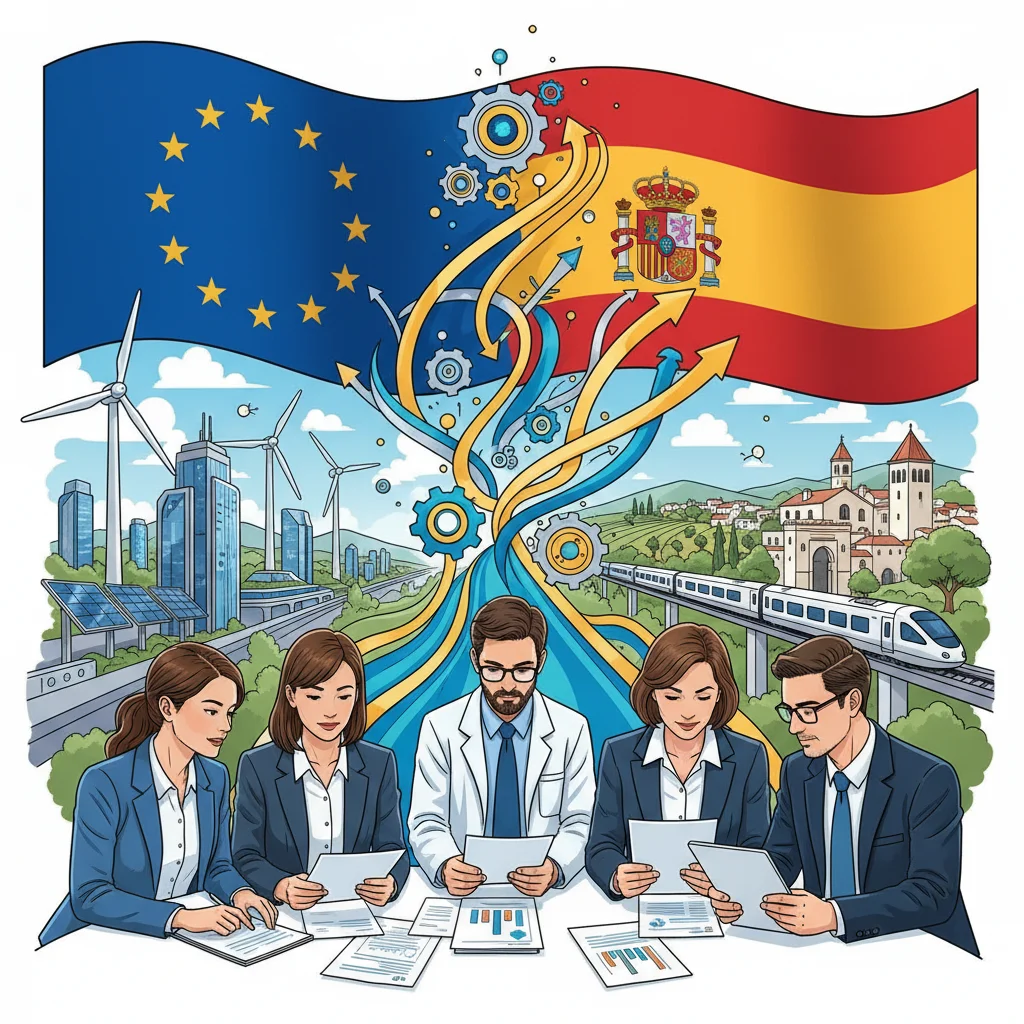
The European Union’s Next Generation EU (NGEU) recovery instrument represents an unprecedented financial commitment to help member states rebuild their economies stronger, more sustainably, and more resiliently after the COVID-19 pandemic. For Spain, this translates into a substantial allocation of funds, with approximately €140 billion – half in grants and half in loans – earmarked to catalyze transformative projects across the country. As we advance towards the 2026 deadline, a significant portion of these funds, specifically the remaining €70 billion, still needs to be effectively deployed. This presents a critical window of opportunity for businesses, public administrations, and other entities to secure vital financing for their strategic initiatives. Understanding how to navigate the complex landscape of ‘Next Generation Spain’ is paramount for unlocking these resources and contributing to the nation’s future.
What is Next Generation EU and its Impact on Spain?
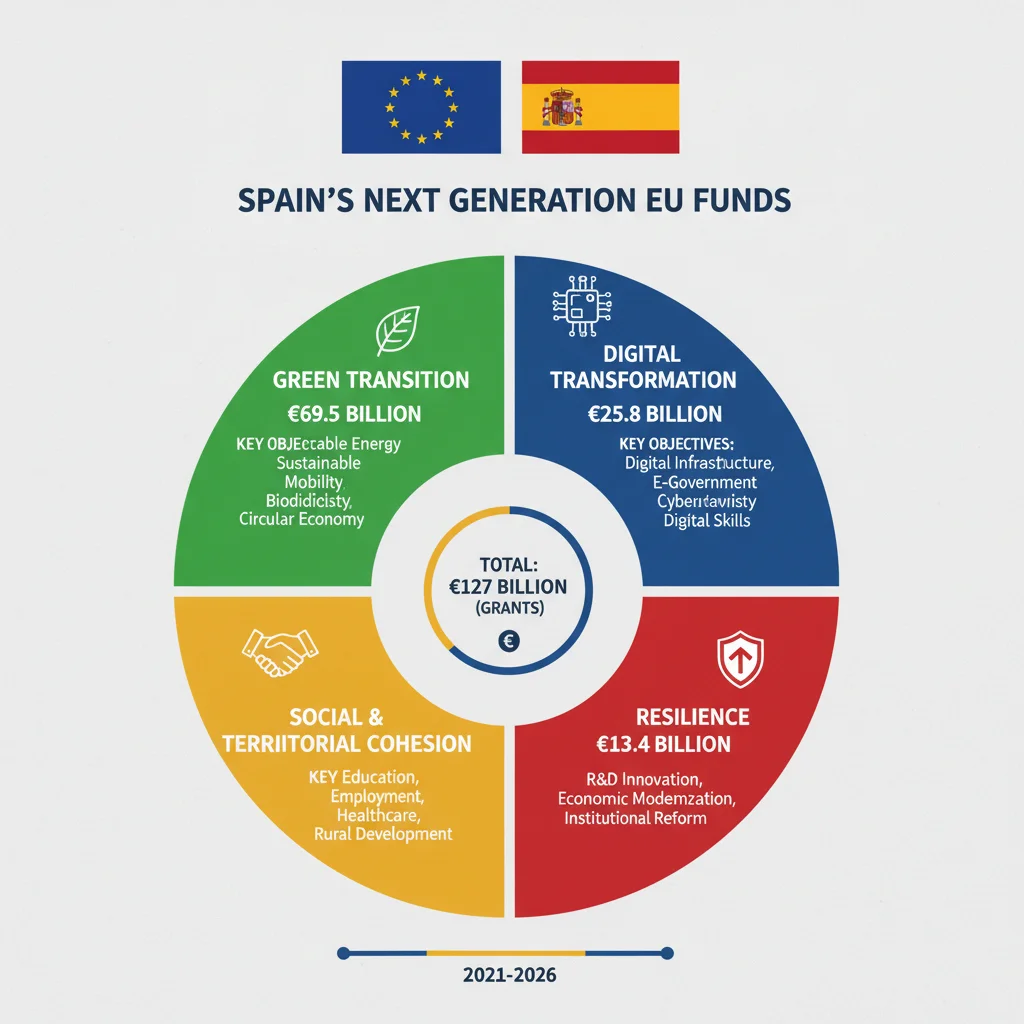
The Next Generation EU instrument, officially known as the Recovery and Resilience Facility (RRF), is the cornerstone of the EU’s response to the economic and social challenges posed by the pandemic. It aims to support investments and reforms that are essential for a lasting recovery, focusing on key areas such as the green transition, digital transformation, social and territorial cohesion, and economic resilience. For Spain, the ‘Plan de Recuperación, Transformación y Resiliencia’ (PRTR) – Spain’s Recovery, Transformation, and Resilience Plan – outlines how the country intends to utilize these funds. This plan is a strategic roadmap, detailing the reforms and investments that will drive Spain’s modernization and economic growth.
Anúncios
The initial allocation of €70 billion in grants has already seen significant progress, with numerous projects underway. However, the additional €70 billion in loans, coupled with any remaining unallocated grants, represents a massive potential injection into the Spanish economy. This second wave of funding, extending through 2026, is crucial for consolidating the recovery and ensuring that Spain meets its ambitious targets for a more sustainable and digital future. Businesses, from SMEs to large corporations, and public bodies at national, regional, and local levels, are all potential beneficiaries of these ‘Next Generation Spain’ funds.
Key Strategic Pillars of Next Generation Spain
To effectively access the remaining €70 billion, it’s essential to align projects with the strategic pillars defined in Spain’s PRTR. These pillars are not merely thematic categories; they represent the core objectives and priorities that the European Commission and the Spanish government seek to achieve. Understanding these areas will significantly increase the likelihood of successful funding applications.
- Green Transition: This pillar is central to the NGEU and aims to accelerate Spain’s transition towards a carbon-neutral economy. Projects under this category include investments in renewable energies (solar, wind, hydrogen), energy efficiency in buildings, sustainable mobility (electric vehicles, public transport infrastructure), circular economy initiatives, and biodiversity conservation. Businesses involved in renewable energy development, sustainable construction, waste management, or eco-friendly manufacturing will find significant opportunities here.
- Digital Transformation: The pandemic highlighted the urgency of digitalizing economies and societies. This pillar supports investments in digital infrastructure (5G, fiber optics), cybersecurity, digitalization of public services, digital skills development, and the adoption of advanced digital technologies (AI, big data, IoT) by companies. Companies focused on software development, digital services, e-commerce platforms, or industrial digitalization can leverage these funds.
- Social and Territorial Cohesion: This pillar aims to reduce inequalities and strengthen social welfare. It includes investments in education, vocational training, healthcare systems, social housing, and support for vulnerable groups. It also focuses on addressing the demographic challenge and promoting balanced territorial development. Public administrations, educational institutions, and healthcare providers are key players in this area, but private companies offering innovative solutions in these sectors can also benefit.
- Economic Resilience and Productivity: This pillar seeks to improve Spain’s competitiveness and long-term growth potential. It involves reforms and investments in R&D&I, support for SMEs, improvement of the business climate, and diversification of the productive fabric. This is a broad category that can encompass a wide range of innovative projects across various industries, from advanced manufacturing to tourism innovation, provided they contribute to enhancing Spain’s overall economic robustness.
Anúncios
Who Can Apply for Next Generation Spain Funds?
The ‘Next Generation Spain’ funds are accessible to a broad spectrum of entities, reflecting the comprehensive nature of the recovery plan. Eligibility often depends on the specific call for proposals (convocatoria) and the type of project. Generally, the following categories of applicants are eligible:
- Companies: This includes small and medium-sized enterprises (SMEs), large corporations, and self-employed individuals. The focus is often on projects that drive innovation, sustainability, digitalization, and job creation. Specific programs might target certain sectors or company sizes.
- Public Administrations: Central, regional (Autonomous Communities), and local governments (municipalities) are crucial recipients, implementing projects related to public services, infrastructure, and territorial development.
- Research Centers and Universities: Institutions involved in R&D&I are eligible for funding related to scientific advancement, technological development, and knowledge transfer.
- Non-profit Organizations and Associations: Entities working on social inclusion, environmental protection, cultural heritage, or community development can also access funds.
- Consortia and Partnerships: Many calls encourage collaborative projects involving multiple entities, such as public-private partnerships, or collaborations between companies and research institutions.
It’s important to note that many opportunities target the private sector, recognizing its role as an engine of economic recovery and transformation. The key is to identify the specific calls that align with your entity’s nature and project’s objectives.
How to Access the Remaining €70 Billion: The Application Process
Accessing the ‘Next Generation Spain’ funds can be a multi-step process that requires careful planning, thorough documentation, and strategic alignment. Here’s a general overview of the typical application pathway:
1. Stay Informed and Identify Opportunities
The first and most crucial step is to continuously monitor the official channels for new calls for proposals (convocatorias). These funds are disbursed through various ministries, regional governments, and public entities. Key sources of information include:
- The Official State Gazette (BOE): All official calls are published here.
- Websites of relevant ministries: For example, the Ministry of Economy, Ministry for Ecological Transition, Ministry of Industry, etc.
- Websites of Autonomous Communities: Regional governments also manage a significant portion of the funds for local projects.
- Public entities: Such as CDTI (Centre for Industrial Technological Development) for R&D&I projects, or IDAE (Institute for Energy Diversification and Saving) for energy efficiency initiatives.
- Specialized consulting firms: Many firms offer services to help identify relevant calls and navigate the application process.
Subscribing to newsletters and setting up alerts for relevant keywords can help ensure you don’t miss out on critical opportunities within ‘Next Generation Spain’.
2. Understand the Requirements and Eligibility Criteria
Once a suitable call is identified, meticulously review the specific requirements, eligibility criteria, and evaluation guidelines. Each call will have unique conditions regarding:
- Applicant profile: Type of entity, size, legal status.
- Project alignment: How well the project contributes to the strategic pillars and objectives of the call.
- Technical feasibility: Detailed description of the project, methodology, work plan, and expected outcomes.
- Economic and financial viability: Detailed budget, co-financing sources, and justification of costs.
- Impact assessment: How the project will contribute to job creation, environmental sustainability, digital transformation, or social cohesion.
- Cross-cutting principles: Adherence to principles such as “do no significant harm” (DNSH) to the environment, gender equality, and digitalization.
Failing to meet even minor criteria can lead to immediate disqualification, so attention to detail is paramount.
3. Develop a Robust Project Proposal
A strong project proposal is the cornerstone of a successful application. This document must clearly articulate:
- Problem and Solution: What problem does your project address, and how does your solution provide value?
- Objectives: Clear, measurable, achievable, relevant, and time-bound (SMART) objectives.
- Activities and Methodology: A detailed breakdown of tasks, timelines, and the approach to be taken.
- Expected Results and Impact: Quantifiable outcomes and how they contribute to the NGEU’s strategic pillars and Spain’s PRTR.
- Budget: A realistic and justified budget, demonstrating how the funds will be utilized efficiently.
- Team and Resources: Highlight the capabilities of your team and the resources available to execute the project.
- Risk Assessment: Identify potential risks and outline mitigation strategies.
Emphasis should be placed on innovation, sustainability, and digitalization, as these are core to the ‘Next Generation Spain’ objectives. Demonstrating the project’s “transformative” potential is often a key differentiator.
4. Prepare Comprehensive Documentation
Beyond the project proposal, applicants will typically need to submit a range of administrative, legal, and financial documents. These may include:
- Legal identity documents of the applicant entity.
- Financial statements and solvency proofs.
- Certificates of being up-to-date with tax and social security obligations.
- Declarations of not being subject to any prohibitions from receiving public subsidies.
- Specific forms provided by the granting authority.
Ensure all documents are correctly formatted, signed, and submitted within the deadlines. Electronic submission platforms are common, so familiarity with digital certificates and online portals is essential.
5. Submission and Follow-up
Adhere strictly to the submission deadlines and procedures. Once submitted, some calls may involve an evaluation phase with requests for additional information or clarifications. Being responsive and providing prompt, clear answers can be crucial for moving forward in the selection process. While the waiting period can be long, continuous follow-up through official channels is advisable.

Critical Success Factors for Next Generation Spain Funding
Securing ‘Next Generation Spain’ funds is competitive. To maximize your chances, consider these critical success factors:
- Early Preparation: Don’t wait for a specific call to be published. Start developing project ideas, forming partnerships, and gathering necessary data well in advance.
- Strategic Alignment: Ensure your project doesn’t just fit; it excels in aligning with the NGEU’s core objectives and Spain’s PRTR. Explicitly state how your project contributes to the green and digital transitions, creates jobs, or enhances social cohesion.
- Innovation and Scalability: Projects that demonstrate a high degree of innovation, potential for scalability, and long-term impact are often favored.
- Collaboration and Partnerships: Many calls prioritize projects involving collaboration between different entities (e.g., SMEs with research centers, public-private partnerships). Forming strategic alliances can strengthen your proposal.
- Robust Financial Planning: Provide a clear, realistic, and well-justified budget. Demonstrate financial solvency and, if required, outline your co-financing strategy.
- “Do No Significant Harm” (DNSH) Principle: This is a mandatory requirement. Projects must demonstrate that they do not significantly harm any of the six environmental objectives (climate change mitigation, climate change adaptation, sustainable use and protection of water and marine resources, transition to a circular economy, pollution prevention and control, and protection and restoration of biodiversity and ecosystems).
- Digitalization and Gender Perspective: Integrate these cross-cutting principles into your project design and narrative, showcasing how your initiative promotes digital inclusion or gender equality.
- Expert Advice: Given the complexity, engaging with specialized consultants or legal advisors experienced in European funds can provide invaluable guidance and increase the quality of your application.
- Monitor Implementation: Once funds are granted, rigorous monitoring and reporting are essential to ensure compliance with milestones and targets, avoiding potential clawbacks.
Common Pitfalls to Avoid
While the opportunities are vast, several common mistakes can derail an application for ‘Next Generation Spain’ funds:
- Late Submission: Missing deadlines is an immediate disqualifier.
- Incomplete Documentation: Submitting an application with missing forms or certificates.
- Lack of Alignment: Proposing a project that does not clearly fit the objectives of the specific call or the broader NGEU framework.
- Unrealistic Budget: Overestimating or underestimating costs without proper justification.
- Poorly Defined Objectives: Vague or unmeasurable project goals.
- Ignoring DNSH Principle: Failing to demonstrate how the project adheres to environmental sustainability criteria.
- Insufficient Co-financing: Many grants require a percentage of co-financing, which must be secured and demonstrated.
- Not Reading the Fine Print: Overlooking specific details or conditions in the call for proposals.
- Lack of Technical Expertise: A project proposal that lacks technical rigor or feasibility.
Avoiding these pitfalls requires meticulous planning and a deep understanding of the requirements.
The Road Ahead: 2026 and Beyond
The deadline of 2026 for the ‘Next Generation Spain’ funds is not just an application cutoff; it’s a target for project completion and disbursement. This means that projects must not only be approved but also well into their implementation phases by then. The urgency is real, and the remaining €70 billion represents a significant challenge and opportunity.
The successful deployment of these funds will play a pivotal role in shaping Spain’s economic trajectory for decades to come. It’s an opportunity to modernize industries, create green jobs, enhance digital capabilities, and build a more resilient and equitable society. For any entity – public or private – with transformative project ideas aligned with these objectives, now is the time to act.
The Spanish government continues to refine its strategies for managing these funds, including simplifying administrative procedures and providing clearer guidance to applicants. Staying updated with these developments is part of a successful strategy.
Conclusion: Seizing the Next Generation Spain Opportunity
The ‘Next Generation Spain’ funds are more than just financial aid; they are a catalyst for profound structural change and an invitation to participate in Spain’s future. With €70 billion still available until 2026, the potential for impactful projects is immense. By thoroughly understanding the strategic pillars, meticulously preparing proposals, and proactively seeking out opportunities, businesses, public administrations, and research institutions can secure the financing needed to drive innovation, foster sustainability, and strengthen Spain’s position in the global economy.
This is a “once-in-a-generation” opportunity that demands strategic vision, meticulous execution, and a commitment to the transformative goals set forth by the European Union. Engage, prepare, and seize the opportunity to be a part of Spain’s recovery and resilience journey. The future is being built today, with the support of ‘Next Generation Spain’ funds.