Advanced Tax-Loss Harvesting 2026: Reduce Capital Gains by 10%

Anúncios
Advanced Tax-Loss Harvesting 2026: Reduce Your United States Capital Gains Tax by Up to 10% (Insider Knowledge)
As we approach 2026, savvy investors are constantly seeking innovative and effective strategies to optimize their portfolios and minimize their tax liabilities. Among the most powerful tools in an investor’s arsenal is Tax-Loss Harvesting 2026. This isn’t just about selling a losing stock; it’s a sophisticated, year-round strategy that, when executed correctly, can significantly reduce your United States capital gains tax by up to 10% or more. This comprehensive guide delves into the advanced nuances of tax-loss harvesting, providing you with insider knowledge to navigate the complexities and maximize your tax savings in the coming year.
Understanding the Fundamentals of Tax-Loss Harvesting
Before we dive into advanced tactics, a solid understanding of the basics is crucial. Tax-loss harvesting involves selling investments at a loss to offset capital gains and, potentially, a limited amount of ordinary income. The Internal Revenue Service (IRS) allows taxpayers to deduct capital losses from capital gains. If your capital losses exceed your capital gains, you can deduct up to $3,000 of the remaining loss against your ordinary income each year. Any unused losses can be carried forward indefinitely to offset future gains.
Anúncios
Why Tax-Loss Harvesting 2026 is More Critical Than Ever
The financial landscape is ever-evolving. Market volatility, changing tax regulations, and shifting economic conditions make proactive tax planning indispensable. For 2026, while the core principles of tax-loss harvesting remain consistent, understanding potential legislative changes and market trends will be key to maximizing its benefits. This strategy is particularly potent in years following significant market swings, as it allows investors to capitalize on downturns for future tax advantages.
The Mechanics of Capital Gains and Losses
To effectively implement Tax-Loss Harvesting 2026, you must grasp the distinction between short-term and long-term capital gains and losses. Short-term gains or losses arise from assets held for one year or less, while long-term gains or losses are from assets held for more than one year. This distinction is vital because short-term capital gains are taxed at ordinary income rates, which are typically higher than long-term capital gains rates. Capital losses are first used to offset gains of the same type (short-term losses against short-term gains, long-term losses against long-term gains). If there’s an excess, they then offset the other type of gain.
Example of Loss Application:
- You have $10,000 in short-term capital gains and $5,000 in short-term capital losses. Your net short-term gain is $5,000.
- You also have $15,000 in long-term capital gains and $8,000 in long-term capital losses. Your net long-term gain is $7,000.
- Overall, you have $12,000 in capital gains ($5,000 short-term + $7,000 long-term).
- Now, let’s say you harvest an additional $10,000 in long-term losses.
- Your net long-term position becomes a $3,000 loss ($7,000 gain – $10,000 loss).
- This $3,000 long-term loss first offsets your $5,000 net short-term gain, reducing it to $2,000.
- Alternatively, if you had more long-term losses, they could offset all short-term gains and then up to $3,000 against ordinary income, with any remainder carried forward.
Advanced Strategies for Tax-Loss Harvesting 2026
Moving beyond the basics, advanced tax-loss harvesting involves a more strategic and often proactive approach. It requires a deeper understanding of market dynamics, tax rules, and your personal financial situation.
Anúncios
1. Year-Round Harvesting, Not Just Year-End
Many investors mistakenly view tax-loss harvesting as a year-end activity. While year-end is a common time to assess portfolios, the most effective strategy for Tax-Loss Harvesting 2026 is to integrate it throughout the year. Markets can be volatile, and opportunities to realize losses can arise at any time. By monitoring your portfolio regularly, you can identify and act on these opportunities before they disappear. This proactive approach allows for more flexibility and potentially larger overall tax savings.
2. The Wash Sale Rule: A Critical Consideration
One of the most important rules to understand in tax-loss harvesting is the wash sale rule. The IRS prohibits you from claiming a loss on a security if you buy a substantially identical security within 30 days before or after the sale. This 61-day window is crucial. Violating the wash sale rule means your loss will be disallowed, and the basis of the new security will be adjusted to include the disallowed loss, effectively deferring the tax benefit rather than realizing it immediately.
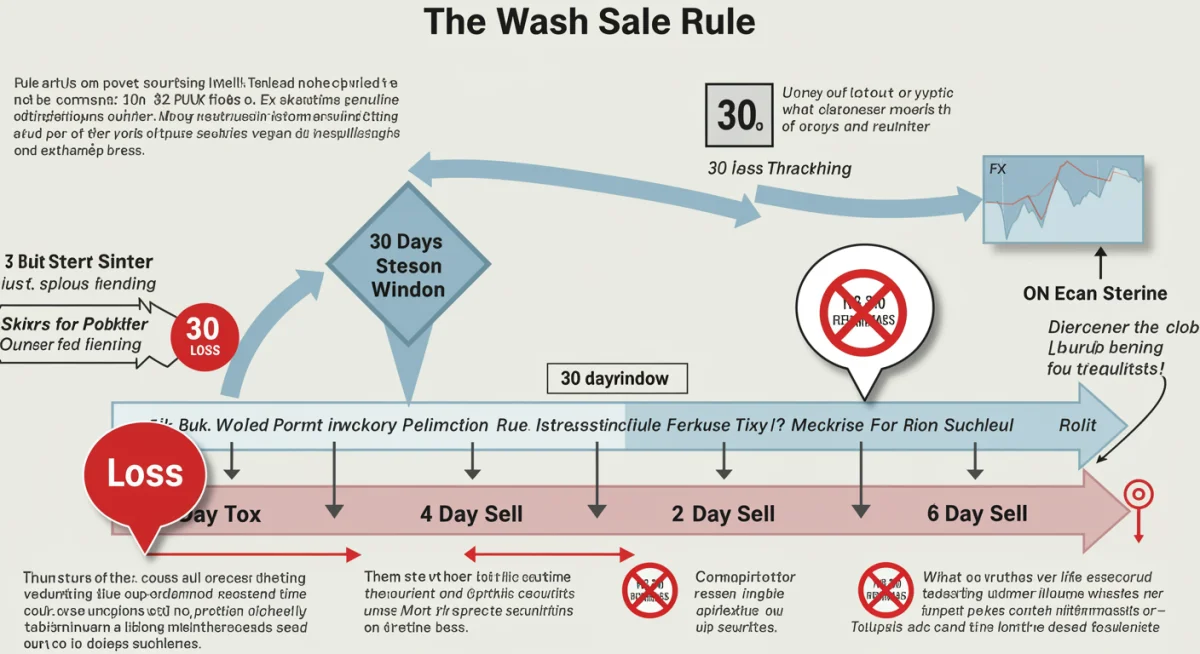
Insider Knowledge: What constitutes a "substantially identical" security? This is where it gets tricky. It’s not just the exact same stock. It can include options, convertible bonds, or even exchange-traded funds (ETFs) that track the same index or sector very closely. For example, selling an S&P 500 index ETF at a loss and immediately buying another S&P 500 index ETF from a different provider might still trigger the wash sale rule if the IRS deems them substantially identical. To avoid this, consider purchasing an ETF that tracks a different, but correlated, index or sector, or waiting the full 31 days before repurchasing the original security or a truly distinct one.
3. Strategically Rebalancing with Tax-Loss Harvesting
Tax-Loss Harvesting 2026 can be seamlessly integrated into your portfolio rebalancing strategy. Instead of simply selling appreciated assets to rebalance, look for opportunities to sell assets at a loss. This allows you to harvest losses while simultaneously bringing your portfolio back to its target asset allocation. The key is to replace the sold security with a different, non-substantially identical security that maintains your desired asset allocation and risk profile. After the 31-day wash sale period, you can then repurchase the original security if you still believe in its long-term potential.
4. Leveraging Specific Identification for Cost Basis
When you sell shares of a security that you’ve purchased at different times and prices, you have a choice in how to identify which shares you’re selling. The default method is often First-In, First-Out (FIFO), meaning the oldest shares are sold first. However, for Tax-Loss Harvesting 2026, specific identification is a far more powerful tool. By using specific identification, you can choose to sell only those shares that have the highest unrealized losses, thus maximizing your harvested loss. Be sure to instruct your brokerage firm on which specific shares to sell before the transaction settles.
5. Tax-Loss Harvesting in Retirement Accounts (and Why Not)
A common misconception is that tax-loss harvesting applies to all investment accounts. It’s crucial to remember that tax-loss harvesting benefits only apply to taxable brokerage accounts. Losses in tax-advantaged accounts like 401(k)s, IRAs, or Roth IRAs cannot be used to offset capital gains or income, as these accounts grow tax-deferred or tax-free. Therefore, focus your Tax-Loss Harvesting 2026 efforts on your non-retirement investment portfolios.
The 10% Reduction: How to Achieve Significant Savings
Achieving a 10% reduction in your capital gains tax through Tax-Loss Harvesting 2026 requires a combination of vigilance, strategic planning, and understanding your tax bracket. The 10% figure isn’t a fixed percentage off your tax bill; rather, it represents a potential reduction in your taxable capital gains, which translates into significant tax savings.
Scenario: Maximizing Your Capital Loss Deduction
Imagine you’ve realized $50,000 in net long-term capital gains in 2026. If you are in the 15% long-term capital gains tax bracket, your tax liability on those gains would be $7,500. Now, suppose you strategically harvest $20,000 in long-term capital losses. Your net long-term capital gains would be reduced to $30,000. Your new tax liability would be $4,500 ($30,000 * 15%). This represents a $3,000 saving, which is a 40% reduction in your capital gains tax for that year. The ability to offset up to $3,000 against ordinary income also provides a direct reduction in your overall tax bill, especially valuable if you are in a higher ordinary income tax bracket.
When to Consider Aggressive Harvesting
Aggressive Tax-Loss Harvesting 2026 is most beneficial in several situations:
- High Capital Gains Year: If you’ve sold a significant amount of appreciated assets, harvesting losses can dramatically reduce your tax bill.
- Anticipated Higher Income Year: If you expect to be in a higher ordinary income tax bracket in 2026 than in subsequent years, taking the $3,000 ordinary income deduction now can be more valuable.
- Market Downturns: Periods of market decline present the best opportunities to identify and realize substantial losses.
Practical Implementation: Tools and Resources for Tax-Loss Harvesting 2026
Successfully implementing advanced tax-loss harvesting strategies requires more than just theoretical knowledge. It demands practical tools and a disciplined approach.
Utilizing Brokerage Firm Tools
Most major brokerage firms offer robust tools to help investors identify unrealized gains and losses. These platforms often provide:
- Realized Gain/Loss Reports: Essential for tracking your current tax position.
- Unrealized Gain/Loss Reports: Highlight potential harvesting opportunities.
- Cost Basis Tracking: Crucial for specific identification strategies.
- Wash Sale Alerts: Some platforms will warn you if a potential wash sale is detected.
Financial Advisors and Tax Professionals
For complex portfolios or if you’re new to advanced tax strategies, consulting a qualified financial advisor or tax professional is invaluable. They can help you:
- Develop a personalized Tax-Loss Harvesting 2026 plan.
- Navigate the intricacies of the wash sale rule and "substantially identical" securities.
- Optimize your loss carryforwards.
- Ensure compliance with all IRS regulations.
Software and Automated Solutions
Several financial software platforms and robo-advisors now offer automated tax-loss harvesting features. These solutions can continuously monitor your portfolio and automatically harvest losses when opportunities arise, while also managing the wash sale rule. While convenient, it’s still important to understand the underlying mechanics and regularly review their actions to ensure they align with your overall financial strategy.

The Long-Term Impact of Tax-Loss Harvesting 2026
The benefits of tax-loss harvesting extend beyond a single tax year. By effectively utilizing loss carryforwards, you can reduce your tax burden for years to come. This creates a powerful compounding effect, as the money saved on taxes can be reinvested, further growing your wealth. Over a lifetime of investing, a consistent and disciplined approach to Tax-Loss Harvesting 2026 can lead to substantial wealth accumulation that might otherwise be eroded by taxes.
Considerations for Future Tax Laws
While we focus on Tax-Loss Harvesting 2026, it’s prudent to keep an eye on potential changes in tax legislation. Tax laws are not static, and future changes could impact the efficacy or rules surrounding capital gains and losses. Staying informed through reputable financial news sources and consulting with tax professionals will help you adapt your strategies as needed.
Common Pitfalls to Avoid in Tax-Loss Harvesting 2026
Even with advanced knowledge, investors can fall into common traps. Being aware of these can save you headaches and ensure your harvesting efforts are successful.
1. Ignoring the Wash Sale Rule
This is by far the most common mistake. Accidentally repurchasing a substantially identical security within the 61-day window will negate your harvested loss. Always double-check your transactions and consider alternative, non-identical investments if you wish to maintain market exposure.
2. Selling for the Sake of Selling
Don’t let the pursuit of tax savings dictate your investment decisions entirely. Only sell investments at a loss if you no longer believe in their long-term potential or if it aligns with your rebalancing strategy. Selling a good investment solely for a tax loss, only to see it rebound significantly, could cost you more in missed gains than you saved in taxes.
3. Neglecting Cost Basis Records
Accurate cost basis tracking is paramount. Without it, you cannot properly identify specific lots for sale or correctly calculate your gains and losses. Ensure your brokerage firm’s records are accurate and keep your own documentation as a backup.
4. Overlooking Transaction Costs
While less of an issue with commission-free trading, frequent buying and selling can still incur hidden costs, such as bid-ask spreads or potential capital gains taxes on replacement securities if they appreciate quickly. Factor these into your calculations to ensure the tax benefits outweigh the transaction costs.
The Ethical and Legal Landscape of Tax-Loss Harvesting 2026
It’s important to emphasize that Tax-Loss Harvesting 2026 is a completely legal and ethical strategy endorsed by the IRS. It’s a tool provided within the tax code to help investors manage their tax liabilities. The key is to adhere strictly to the rules, especially the wash sale rule, to ensure your deductions are valid.
The Role of Good Faith
While the rules are clear, the spirit of the law also matters. Tax-loss harvesting should be part of a genuine investment strategy, not merely a scheme to avoid taxes without any underlying investment rationale. As long as your actions are within the defined IRS guidelines, you are legitimately leveraging the tax code to your advantage.
Conclusion: Mastering Tax-Loss Harvesting 2026 for Superior Returns
Tax-Loss Harvesting 2026 is far more than a simple trick; it’s a sophisticated, ongoing process that, when mastered, can significantly enhance your investment returns by reducing your capital gains tax burden. By embracing a year-round approach, meticulously understanding the wash sale rule, leveraging specific identification, and integrating it with your rebalancing strategy, you can unlock substantial savings. The potential to reduce your capital gains tax by up to 10% (or more, depending on your individual circumstances and tax bracket) is a powerful incentive for investors to incorporate these advanced techniques into their financial planning.
As you plan for 2026 and beyond, remember that proactive tax management is just as important as astute investment selection. By staying informed, utilizing available tools, and consulting with professionals when needed, you can turn market downturns into tax advantages, ultimately building a more resilient and tax-efficient portfolio for the future. Don’t leave money on the table; make Tax-Loss Harvesting 2026 a cornerstone of your investment strategy.