US Energy Market Forecast: Price Trends & Supply Changes
Anúncios
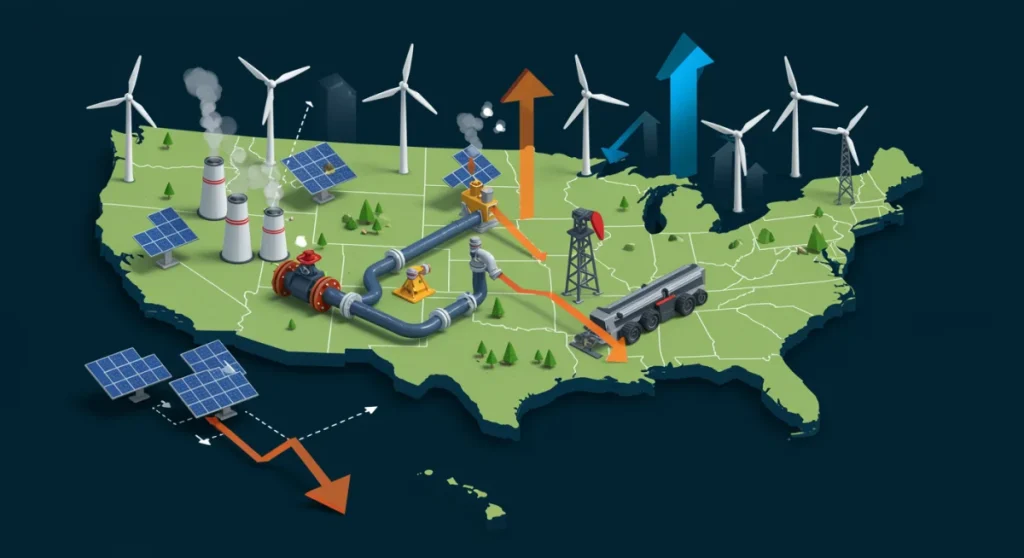
The US Energy Outlook for the next year anticipates continued volatility in fossil fuel prices influenced by geopolitical events and production levels, alongside significant growth in renewable energy capacity and evolving regulatory frameworks.
Understanding the future of the US Energy Outlook for the next year is crucial for consumers, businesses, and policymakers alike. What are the key factors shaping price trends and supply changes across the nation’s diverse energy landscape? Let’s delve into the projections and underlying dynamics.
Anúncios
Global Influences on US Energy Prices
The US energy market, while robust, is not an island. Global events and international dynamics play a significant role in shaping domestic price trends and supply availability. From geopolitical tensions to production decisions by major oil-producing nations, these external forces create ripples that are felt directly by American consumers and industries.
Anúncios
Geopolitical Tensions and Supply Security
Ongoing conflicts and political instability in key energy-producing regions can disrupt supply chains and create uncertainty. This often leads to speculative trading and higher prices at the pump and for natural gas. The interconnectedness of global energy markets means that a crisis far away can quickly impact local energy costs.
- Middle East Stability: Any major disruption in Middle Eastern oil production or transit routes can send crude oil prices soaring globally.
- Russia-Ukraine Conflict: Sanctions and supply reconfigurations related to this conflict continue to influence natural gas and oil markets, especially in Europe, with spillover effects on US markets.
- OPEC+ Decisions: The Organization of the Petroleum Exporting Countries and its allies significantly influence global oil supply through production quotas, directly affecting international crude benchmarks.
Moreover, trade policies and international agreements on climate change can also steer investment and production decisions, indirectly altering the global energy mix and impacting US energy imports and exports. The market remains sensitive to any signals of reduced supply or increased demand from major global players.
Understanding these global influences is paramount for any accurate US Energy Outlook. Businesses often hedge against these risks, while consumers brace for potential price fluctuations driven by events beyond national borders. The intricate web of international relations ensures that energy markets will always be subject to a degree of unpredictability.
Oil Market Dynamics: Crude Prices and Gasoline Costs
The oil market remains a cornerstone of the US energy landscape, directly impacting transportation costs and a wide array of industrial processes. Projecting crude oil prices involves a complex interplay of supply, demand, and speculative factors. Gasoline prices, while linked to crude, also depend on refining capacity, distribution, and local taxes.
Analysts are closely watching several indicators for the coming year. On the supply side, US shale oil production is expected to continue its recovery, albeit potentially at a slower pace due to capital discipline among producers and labor shortages. Global demand recovery, especially from emerging economies, will be a critical demand-side factor.
Key Factors Influencing Oil Prices
Several variables will dictate the trajectory of oil prices:
- Global Economic Growth: A strong global economy typically translates to higher oil demand for transportation and industrial use.
- US Production Levels: The ability of US shale producers to ramp up or maintain output will directly influence domestic supply and global benchmarks.
- Strategic Petroleum Reserve (SPR): Decisions regarding releases or replenishments of the SPR can temporarily affect supply and price sentiment.
For gasoline prices, refining utilization rates are crucial. Bottlenecks in refining capacity, particularly for certain types of crude, can lead to higher pump prices even if crude oil is relatively abundant. Seasonal demand patterns, such as the summer driving season, also play a predictable role in increasing gasoline consumption and prices.
The interplay of these factors suggests a volatile but potentially stable outlook for crude oil, with gasoline prices reflecting these trends alongside domestic refining and distribution challenges. Consumers should expect fluctuations but perhaps not sustained, dramatic spikes unless unforeseen global events occur. This nuanced perspective is vital for a realistic US Energy Outlook.
Natural Gas: Production, Demand, and Price Volatility
Natural gas is a vital component of the US energy mix, powering electricity generation, heating homes, and fueling industrial operations. The market for natural gas has seen significant volatility in recent years, driven by a combination of robust domestic production, increasing international demand for US LNG, and weather-related factors.
The US continues to be a leading producer of natural gas, largely thanks to advancements in hydraulic fracturing. This abundant supply has generally kept domestic prices relatively lower compared to international benchmarks. However, the rapidly expanding liquefied natural gas (LNG) export market connects US prices more closely to global supply and demand dynamics.
Factors Driving Natural Gas Trends
The following elements are key to understanding natural gas price movements:
- LNG Export Capacity: As more LNG export terminals come online, a larger portion of US natural gas production is directed to international markets, influencing domestic supply and prices.
- Weather Patterns: Extreme temperatures, both hot and cold, significantly increase demand for natural gas for heating and cooling, leading to price spikes.
- Storage Levels: Inventory levels in underground storage facilities provide a buffer against supply disruptions and are a key indicator of market balance.
Looking ahead, the US Energy Outlook for natural gas suggests continued strong production, but also sustained high demand, both domestically and internationally. This balance could lead to periods of price stability, punctuated by volatility driven by weather events or unexpected export facility outages. Infrastructure development, particularly new pipelines and LNG terminals, will also be critical in shaping future supply and price dynamics.
The push for decarbonization also affects natural gas, as it is seen as a bridge fuel away from coal, but also faces long-term competition from renewable sources. This dual role adds another layer of complexity to its market trajectory.
The Accelerating Shift to Renewable Energy
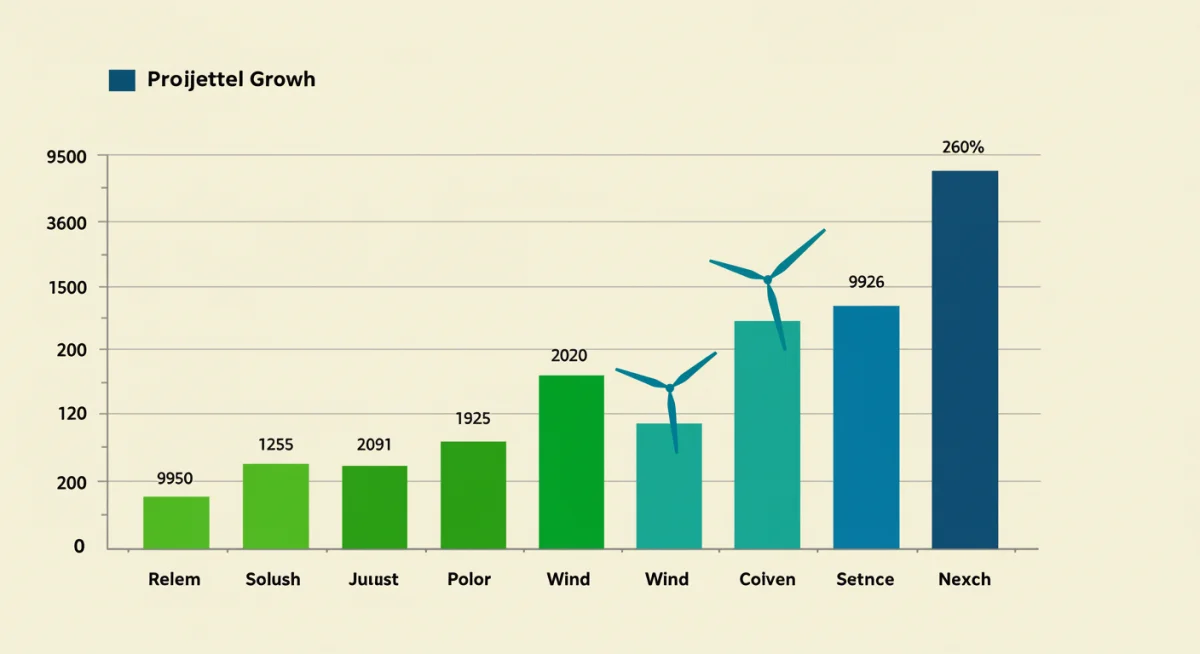
The landscape of US energy is undergoing a profound transformation with the accelerating adoption of renewable energy sources. Solar and wind power, in particular, are experiencing unprecedented growth, driven by technological advancements, declining costs, and supportive government policies. This shift is not just about environmental benefits; it’s also about energy independence and economic opportunity.
The next year is projected to see significant additions to renewable energy capacity, further diversifying the national grid and reducing reliance on fossil fuels. This trend is bolstered by federal tax credits, state-level renewable portfolio standards, and corporate sustainability initiatives.
Drivers of Renewable Energy Expansion
- Cost Competitiveness: The levelized cost of electricity (LCOE) for solar and wind has fallen dramatically, making them competitive with, and often cheaper than, new fossil fuel power plants.
- Technological Innovation: Improvements in battery storage, grid management, and panel efficiency are enhancing the reliability and dispatchability of renewables.
- Government Incentives: The Inflation Reduction Act (IRA) and other federal and state policies provide substantial financial incentives for renewable energy projects and manufacturing.
While the growth is undeniable, challenges remain. Grid modernization is essential to integrate intermittent renewable sources effectively. Transmission infrastructure needs significant upgrades and expansion to bring renewable power from remote generation sites to demand centers. Permitting processes for new projects can also be lengthy, posing a hurdle to rapid deployment.
Despite these challenges, the US Energy Outlook clearly indicates that renewables will continue to be the fastest-growing segment of the energy market. This expansion will increasingly influence overall electricity prices and contribute to a cleaner, more resilient energy system. The transition is complex, but the momentum towards a renewable-powered future is strong.
Electricity Market: Generation Mix and Consumer Rates
The US electricity market is a dynamic ecosystem, constantly evolving with changes in generation sources, demand patterns, and regulatory frameworks. The shift towards renewables is profoundly impacting how electricity is generated and distributed, which in turn affects consumer rates and grid stability. Understanding these changes is crucial for predicting future electricity costs.
As coal-fired power plants continue to retire, their capacity is being replaced by a combination of natural gas and, increasingly, renewable sources. This transition can lead to a cleaner grid but also introduces new operational challenges related to the intermittency of solar and wind power. Grid operators are investing in smart grid technologies and energy storage solutions to manage these complexities.
Factors Influencing Electricity Rates
Consumer electricity rates are influenced by a multitude of factors:
- Fuel Costs: The price of natural gas, a primary fuel for electricity generation, directly impacts wholesale electricity prices.
- Infrastructure Investments: Upgrades to transmission and distribution lines, as well as new power plant construction, are passed on to consumers.
- Regulatory Policies: State-level regulations, renewable energy mandates, and market design choices by regional transmission organizations (RTOs) all play a role.
Looking ahead, the US Energy Outlook for electricity suggests a continued diversification of the generation mix. While natural gas will remain a significant player, the increasing penetration of renewables is expected to put downward pressure on wholesale electricity prices in the long run, particularly during periods of high renewable output. However, the costs associated with grid modernization and resilience improvements could partially offset these savings.
The reliability of the grid, especially in the face of extreme weather events, is a growing concern. Investments in hardening infrastructure and developing microgrids will be essential. Ultimately, the balance between affordability, reliability, and sustainability will define the future of the US electricity market.
Policy and Regulatory Landscape: Impact on Energy Future
Government policies and regulatory frameworks are powerful drivers shaping the trajectory of the US energy market. From federal legislation to state-specific mandates, these interventions can accelerate or slow down transitions, incentivize certain technologies, and influence investment decisions across the entire energy sector. The coming year will likely see continued legislative and regulatory activity impacting energy production, consumption, and environmental standards.
Key federal initiatives, such as the Inflation Reduction Act (IRA), are already having a significant impact by providing long-term tax credits for renewable energy, electric vehicles, and energy efficiency. These policies aim to stimulate domestic manufacturing, create jobs, and reduce carbon emissions, thereby reshaping the energy supply chain and demand profile.
Key Policy and Regulatory Influences
- Federal Incentives: Tax credits, grants, and loan programs for clean energy technologies and infrastructure development are critical.
- Environmental Regulations: EPA rules on emissions from power plants and vehicles can drive shifts towards cleaner fuels and technologies.
- State-Level Mandates: Renewable portfolio standards (RPS) and clean energy goals adopted by individual states often set ambitious targets for renewable energy procurement.
Furthermore, permitting reform, particularly for large-scale energy infrastructure projects like transmission lines and pipelines, is a recurring topic of debate. Streamlining these processes could accelerate the deployment of both renewable and traditional energy projects, while overly complex procedures can cause delays and increase costs.
The US Energy Outlook is heavily dependent on the stability and direction of these policies. Any significant shifts in political priorities or regulatory enforcement could alter investment flows and market dynamics. The balance between promoting economic growth, ensuring energy security, and addressing climate change will continue to be a central challenge for policymakers, with profound implications for the nation’s energy future.
| Key Aspect | Outlook for Next Year |
|---|---|
| Oil Prices | Expected volatility influenced by global supply, demand recovery, and geopolitical events. |
| Natural Gas | Strong production, but prices sensitive to LNG exports and weather-driven demand spikes. |
| Renewable Energy | Significant capacity growth driven by declining costs and supportive policies. |
| Electricity Rates | Diversifying generation mix, with potential for long-term downward pressure from renewables, offset by infrastructure costs. |
Frequently Asked Questions About the US Energy Outlook
Geopolitical events, particularly in major oil-producing regions, can introduce significant volatility. Disruptions to supply chains or changes in production quotas by OPEC+ can lead to immediate price surges, directly affecting gasoline costs and broader economic stability within the US.
The US is projected to see substantial growth in renewable energy capacity, especially solar and wind. Driven by decreasing technology costs and supportive federal policies like the Inflation Reduction Act, these sources are expected to account for a significant portion of new electricity generation additions.
While the US has abundant natural gas production, prices are increasingly influenced by global demand for US LNG exports and domestic weather patterns. This means prices could experience periods of stability but are also prone to volatility due to extreme temperatures or international market shifts.
The clean energy transition is expected to diversify the generation mix, potentially leading to lower wholesale electricity prices from cheaper renewables. However, investments in grid modernization, energy storage, and transmission infrastructure to support this transition may offset some of these savings for consumers.
Government policies, including federal incentives, environmental regulations, and state mandates, are crucial. They shape investment decisions, encourage specific energy technologies, and influence market dynamics, directly impacting supply, demand, and price trends across the entire US energy sector.
Conclusion
The US Energy Outlook for the next year paints a picture of a market in constant evolution. While traditional fossil fuels like oil and natural gas will continue to experience price volatility influenced by global events and domestic supply-demand balances, the momentum towards renewable energy is undeniable. This shift, driven by technological advancements, cost reductions, and robust policy support, is fundamentally reshaping the electricity grid and offering pathways to greater energy independence and sustainability. Navigating these complex dynamics will require adaptability from consumers, strategic planning from businesses, and forward-thinking policies from government entities to ensure a resilient, affordable, and cleaner energy future for the United States.