FTC Online Reviews 2026: What Consumers Must Know
Anúncios
In an increasingly digital world, online reviews have become the bedrock of consumer trust. From choosing a new restaurant to purchasing a high-value electronic device, the collective wisdom of other buyers often sways our decisions. However, this reliance has also opened the door to manipulative practices, where fake reviews and undisclosed incentives can mislead unsuspecting consumers. Recognizing this growing challenge, the Federal Trade Commission (FTC) has stepped up its efforts to ensure transparency and fairness in the digital marketplace. The year 2026 marks a pivotal moment, as new, more stringent FTC Online Reviews guidelines come into full effect. These updated regulations are designed to protect consumers and hold businesses accountable for the authenticity of the feedback they display.
Understanding these new FTC guidelines is not just important; it’s essential for every consumer navigating the vast ocean of online information. This comprehensive guide will break down the key changes, explain what they mean for you, and equip you with the knowledge to identify legitimate reviews from deceptive ones. We will delve into the enhanced responsibilities of businesses, the expanded definition of what constitutes a ‘review,’ and the increased penalties for non-compliance. By the end of this article, you will be well-prepared to make informed purchasing decisions, confident in the knowledge that you can discern genuine feedback from fabricated endorsements.
Anúncios
The Shifting Landscape of Online Reviews: Why New FTC Guidelines Are Necessary
The digital economy thrives on trust, and online reviews are its currency. For years, businesses have leveraged platforms like Amazon, Yelp, Google, and countless others to showcase their products and services, often relying heavily on user-generated content to build reputation and drive sales. However, the sheer volume and anonymity of online interactions have also created fertile ground for abuse. Fake reviews, whether positive or negative, have become a persistent problem, eroding consumer confidence and distorting market competition. Companies have been caught paying for positive reviews, coercing employees to leave glowing feedback, or even sabotaging competitors with negative, unfounded claims.
The previous FTC guidelines, while foundational, proved increasingly insufficient to address the sophistication of modern deceptive practices. As technology advanced, so did the methods used to manipulate public perception. The proliferation of social media influencers, affiliate marketing, and sophisticated bot networks further complicated the landscape, making it difficult for average consumers to distinguish between authentic endorsements and paid promotions. The new FTC Online Reviews guidelines for 2026 are a direct response to these evolving challenges, aiming to restore integrity to the review ecosystem and empower consumers with greater transparency.
Anúncios
These updated regulations recognize that the definition of a ‘review’ has expanded beyond simple star ratings and written comments on product pages. It now encompasses a broader spectrum of consumer feedback, including social media posts, video testimonials, and even unboxing videos, if they are presented as genuine, unsolicited opinions. This holistic approach is crucial for ensuring that the spirit of the law keeps pace with technological innovation and the diverse ways consumers share their experiences online. The FTC’s goal is not to stifle online expression but to ensure that when consumers encounter what appears to be an independent opinion, it is indeed just that.
Moreover, the new guidelines place a greater emphasis on proactive monitoring and disclosure. Businesses are no longer just expected to react to reported fake reviews; they are now held to a higher standard of actively preventing and identifying such practices. This includes implementing robust systems for verifying reviewer authenticity, clearly disclosing any material connections between a reviewer and the business, and promptly removing or clearly flagging any reviews found to be deceptive. The penalties for non-compliance have also been significantly increased, signaling the FTC’s commitment to rigorous enforcement. This shift underscores a fundamental principle: the burden of ensuring review authenticity increasingly falls on the businesses and platforms that host them.
Key Changes in the 2026 FTC Online Reviews Guidelines for Consumers
For consumers, the new FTC Online Reviews guidelines bring a wave of enhanced protections and clearer expectations. Understanding these changes will empower you to navigate the online marketplace with greater confidence and discernment. Here’s what you need to know:
1. Enhanced Disclosure Requirements for Endorsements and Testimonials
One of the most significant changes revolves around disclosure. The FTC has tightened the rules for disclosing any “material connection” between a reviewer and the company whose product or service they are reviewing. A material connection is anything that might affect the weight or credibility of an endorsement, such as:
- Payment or Free Products: If someone received money, a free product, or a discount in exchange for their review, this must be clearly and conspicuously disclosed. This applies not only to traditional reviews but also to social media posts, blog articles, and video testimonials. The disclosure must be easy to see and understand, not buried in fine print or hidden behind a link.
- Employment or Family Relationship: Employees, their family members, or anyone with a direct business relationship to the company cannot post reviews without clearly stating their affiliation. This prevents businesses from artificially inflating their ratings with biased feedback from insiders.
- Incentives for Positive Reviews: Businesses are strictly prohibited from offering incentives (e.g., gift cards, sweepstakes entries) specifically for positive reviews. If incentives are offered for any review, regardless of sentiment, this must be disclosed, and consumers must understand that their opinion will not affect the incentive.
What this means for you: Always look for clear disclosures. If a review seems overly enthusiastic or lacks critical nuance, check if there’s a disclosure statement. If you don’t see one, be skeptical. The absence of a clear disclosure, especially in cases where a material connection is likely, is a red flag.
2. Stricter Rules Against Fake Reviews and Review Suppression
The FTC is cracking down harder on both the creation of fake reviews and the suppression of legitimate negative reviews. The new guidelines explicitly state that:
- Generating Fake Reviews is Illegal: Companies cannot write, procure, or disseminate fake positive reviews for their own products/services or fake negative reviews for competitors. This includes using bots, creating fake user profiles, or paying third-party services to generate fabricated feedback.
- Review Gating and Suppression are Prohibited: Businesses cannot use tactics to prevent negative reviews from being published or to selectively solicit positive reviews from satisfied customers while avoiding negative feedback. For example, a business cannot only invite customers who had a 5-star experience to leave a review, while ignoring those who had a bad experience. All customers should have an equal opportunity to provide feedback.
- Purchasing Positive Reviews: The act of buying positive reviews, even if disclosed, is now under heavier scrutiny. The focus is on whether the payment itself creates an inherent bias that cannot be fully mitigated by disclosure alone.
What this means for you: You should expect to see a more balanced representation of feedback. If a product or service has an overwhelmingly positive rating with very few critical reviews, even for common issues, it might be a sign of review manipulation. Conversely, if you try to leave an honest negative review and encounter unusual obstacles, that’s a sign the business might be engaging in prohibited suppression tactics.
3. Clearer Guidelines for Review Collection and Monitoring
Businesses are now expected to implement reasonable procedures to monitor and address fake or misleading reviews. This isn’t just about removing reported fake reviews but proactively identifying them. This includes:
- Verification of Reviewers: Companies should have systems in place to verify that reviewers are actual customers who have used the product or service. This could involve order numbers, email verification, or other authentication methods.
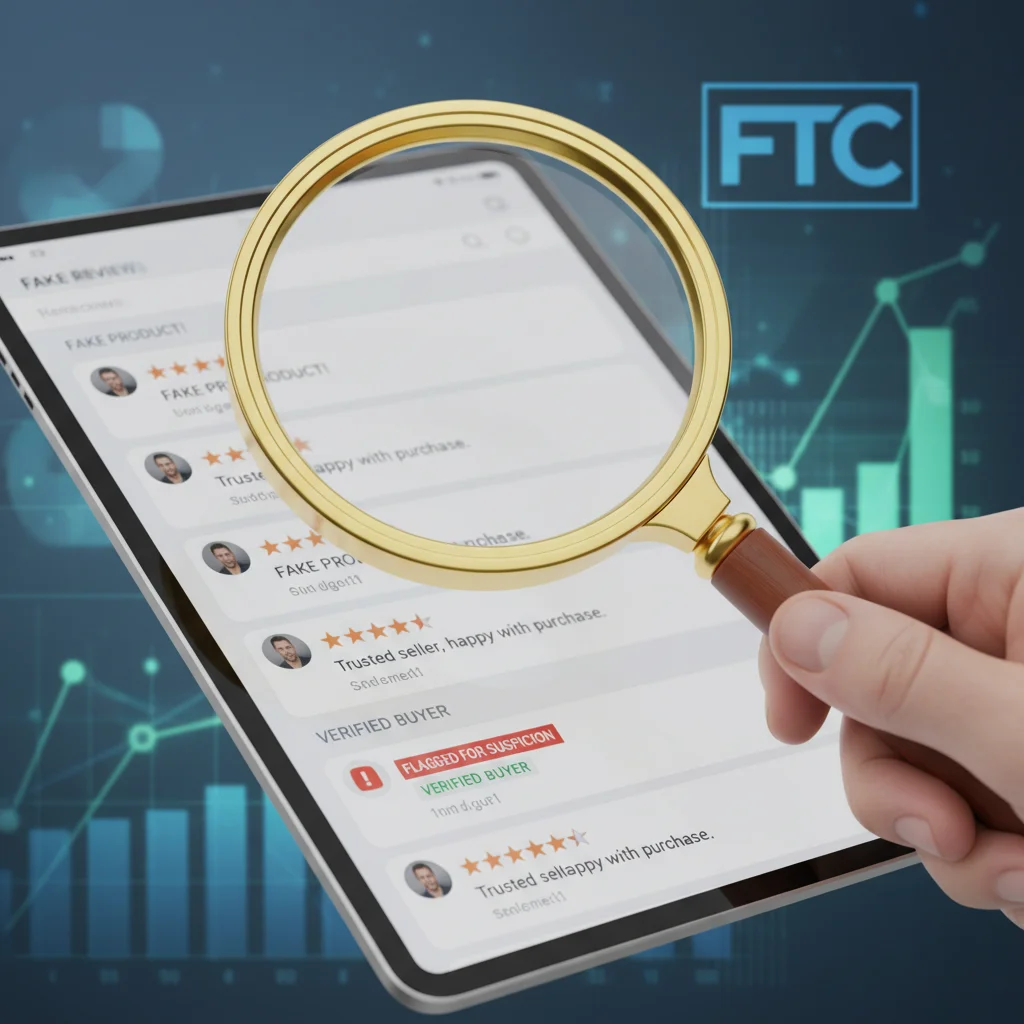
- Regular Monitoring: Platforms and businesses are encouraged to regularly monitor their reviews for suspicious patterns, such as multiple reviews from the same IP address, sudden influxes of highly positive or negative reviews, or reviews using identical phrasing.
- Prompt Action: When fake or misleading reviews are identified, businesses must take prompt action to remove them or clearly flag them as potentially unauthentic.
What this means for you: While you might not directly see these internal processes, the outcome should be a cleaner, more reliable review section. You can trust reviews more when platforms demonstrate a commitment to authenticity. If a platform seems overrun with generic or suspiciously similar reviews, it may indicate a failure to comply with these monitoring requirements.

Identifying Authentic vs. Fake Reviews: Your Consumer Toolkit
Even with stricter FTC Online Reviews guidelines, the onus is still on the consumer to exercise critical thinking. Here’s a toolkit to help you spot the fakes and identify genuine feedback:
1. Look for Extremes and Patterns
- Too Good to Be True: Be wary of products with an overwhelming number of five-star reviews and very few (or no) critical ones. Even the best products have some minor flaws or receive mixed opinions.
- Excessive Negativity: Conversely, a product with an unusually high number of one-star reviews, especially if they are vague or seem coordinated, could be a sign of competitor sabotage.
- Repetitive Language: Fake reviews often use similar phrasing, keywords, or grammatical errors, suggesting they might originate from the same source or a template.
2. Analyze Reviewer Profiles
- New Accounts: Many fake reviews come from newly created accounts with no previous review history or very few reviews posted in a short period.
- Generic Usernames: Profiles with generic names or random strings of letters and numbers can be a red flag.
- Reviewer’s History: Check if the reviewer has reviewed a wide range of unrelated products or only products from a single brand. A reviewer who only posts glowing reviews for one company might have an undisclosed connection.
3. Examine the Content and Tone
- Vague or Generic Descriptions: Authentic reviews often provide specific details about the product’s features, performance, and personal experience. Fake reviews tend to be generic, praising the product without offering concrete examples.
- Emotional Language without Substance: Overly emotional language (e.g., “This changed my life!”) without explaining *how* it changed their life can be suspicious.
- Poor Grammar and Spelling: While not always indicative of a fake review, a consistent pattern of poor grammar or awkward phrasing across multiple reviews can be a warning sign, especially if the product is marketed towards a demographic that typically uses standard English.
- Lack of ‘Verified Purchase’ Badge: Many platforms offer a ‘verified purchase’ badge, indicating the reviewer actually bought the product through that platform. While not foolproof, its absence can warrant closer scrutiny.
4. Check for Disclosure Statements
As per the new FTC Online Reviews guidelines, look for clear and prominent disclosures. Phrases like “I received this product for free in exchange for my honest review” or “Sponsored content” should be easily visible. If you suspect a review is incentivized but see no disclosure, proceed with caution.
5. Use Third-Party Review Analysis Tools
Several online tools exist that can analyze review authenticity for products on major platforms. While not perfect, they can often highlight suspicious patterns and give you a general idea of review integrity.
What Businesses Need to Know: Navigating the New FTC Landscape
For businesses, the 2026 FTC Online Reviews guidelines represent a significant shift from reactive compliance to proactive responsibility. Ignoring these changes can lead to substantial penalties, reputational damage, and loss of consumer trust. Here’s a summary of key obligations:
1. Implement Robust Disclosure Policies
Businesses must establish clear, easily accessible policies for all types of endorsements and testimonials. This includes creating guidelines for employees, affiliates, and influencers, ensuring they understand and comply with disclosure requirements. Disclosures must be:
- Clear and Conspicuous: Not hidden, in small print, or requiring a click to view.
- Unambiguous: Plain language that consumers can easily understand.
- Applicable to all forms: From written reviews to social media stories and video content.
2. Establish Review Authenticity Verification Systems
Companies are now expected to have reasonable processes in place to verify that reviews come from actual customers. This could involve:
- Order Verification: Linking reviews to purchase records.
- Email/Account Verification: Ensuring reviewers have a legitimate account or email address.
- IP Address Monitoring: Identifying suspicious patterns of reviews from the same location.
The goal is to demonstrate a good-faith effort to prevent and detect fake reviews, not necessarily to catch every single instance, but to have a system that is reasonably effective.
3. Prohibit and Act Against Review Manipulation
Businesses must actively prevent and immediately address the creation of fake reviews (positive or negative) and any form of review suppression. This means:
- No Gating: Allowing all customers, regardless of their experience, an equal opportunity to leave reviews.
- No Incentives for Positive Reviews: Incentives can only be offered for *any* review, and the incentive must be disclosed.
- Prompt Removal/Flagging: Implementing procedures to quickly remove or clearly flag reviews identified as fake or misleading.
4. Train Employees and Partners
All employees, marketing teams, and third-party agencies (including PR firms and influencer marketing agencies) must be thoroughly trained on the new FTC guidelines. Ignorance of the law is not an excuse for non-compliance, and businesses are ultimately responsible for the actions of their partners.
5. Be Prepared for Increased Enforcement and Penalties
The FTC has signaled its intent to significantly increase enforcement actions and penalties for violations. This includes substantial fines, injunctions, and public exposure for non-compliant businesses. Proactive compliance is far less costly than reactive damage control.

The Future of Trust: How the New Guidelines Benefit Everyone
The overhaul of the FTC Online Reviews guidelines is not merely a bureaucratic update; it’s a crucial step towards fostering a more honest and transparent digital marketplace. While the immediate impact might feel like an increased burden for businesses and a learning curve for consumers, the long-term benefits are substantial for all stakeholders.
For consumers, these guidelines mean a renewed sense of trust. Imagine confidently browsing products, knowing that the reviews you read are more likely to be genuine, reflecting real experiences from real people. This greatly reduces the risk of making poor purchasing decisions based on fabricated feedback, saving you time, money, and frustration. It empowers you to become a more discerning buyer, equipped with the knowledge to identify and disregard deceptive practices. This increased trust will also encourage more consumers to rely on online reviews, further solidifying their role as a vital information source, but one that is now more reliable.
For legitimate businesses, the new regulations level the playing field. Companies that genuinely earn positive feedback through superior products and excellent customer service will no longer be disadvantaged by unscrupulous competitors who resort to buying fake reviews. This fosters fair competition, rewarding innovation and quality rather than deceptive marketing tactics. By reducing the prevalence of fake reviews, businesses can build stronger, more authentic relationships with their customer base, leading to increased loyalty and sustainable growth. While the initial investment in compliance might seem significant, the long-term gain in reputation and consumer confidence is invaluable.
Furthermore, the guidelines promote greater accountability across the entire digital ecosystem. Review platforms and marketplaces are now under greater pressure to implement robust systems for monitoring and enforcing review authenticity. This collaborative effort among regulators, platforms, and businesses is essential for creating an environment where honesty is the norm, not the exception. The ripple effect of these changes will extend beyond just review sections, influencing overall advertising practices and promoting a culture of transparency in online commerce.
In essence, the 2026 FTC Online Reviews guidelines are about safeguarding the integrity of online information. They are a declaration that the digital marketplace, like its physical counterpart, must operate on principles of fairness and truth. By understanding and embracing these changes, both consumers and businesses contribute to a healthier, more trustworthy online environment for everyone.
Conclusion: Empowering Your Online Decisions in 2026 and Beyond
The introduction of the new FTC Online Reviews guidelines in 2026 marks a significant turning point in the battle for authenticity in the digital marketplace. These comprehensive updates are designed to arm consumers with greater protection against deceptive practices and hold businesses to a higher standard of transparency and honesty. As we’ve explored, understanding these changes is paramount for making informed purchasing decisions and navigating the vast landscape of online feedback with confidence.
For consumers, the takeaway is clear: be vigilant, be informed, and be critical. Always look for clear disclosures, scrutinize review patterns, and pay attention to the specifics (or lack thereof) in the content. Your ability to identify genuine feedback from fabricated endorsements is your most powerful tool in this new era. The FTC has provided the framework, but your active participation in discerning truth from fiction is what truly strengthens the system. Report suspicious activities, share your honest experiences, and demand transparency from the brands you engage with.
For businesses, the message is equally unequivocal: compliance is not optional. Proactive measures to ensure review authenticity, transparent disclosure policies, and robust monitoring systems are no longer just good practices; they are legal requirements. Embracing these guidelines will not only protect your business from hefty penalties but, more importantly, will foster genuine trust with your customer base, building a reputation that is truly earned.
The future of online commerce hinges on trust, and authentic reviews are its cornerstone. By understanding and adapting to the 2026 FTC Online Reviews guidelines, both consumers and businesses play a vital role in creating a more ethical, transparent, and reliable online environment. Let these new regulations serve as a beacon, guiding us towards a digital marketplace where genuine opinions are valued, and deception has no place.