Navigating the 2026 Federal Reserve Policy: Economic Growth Implications
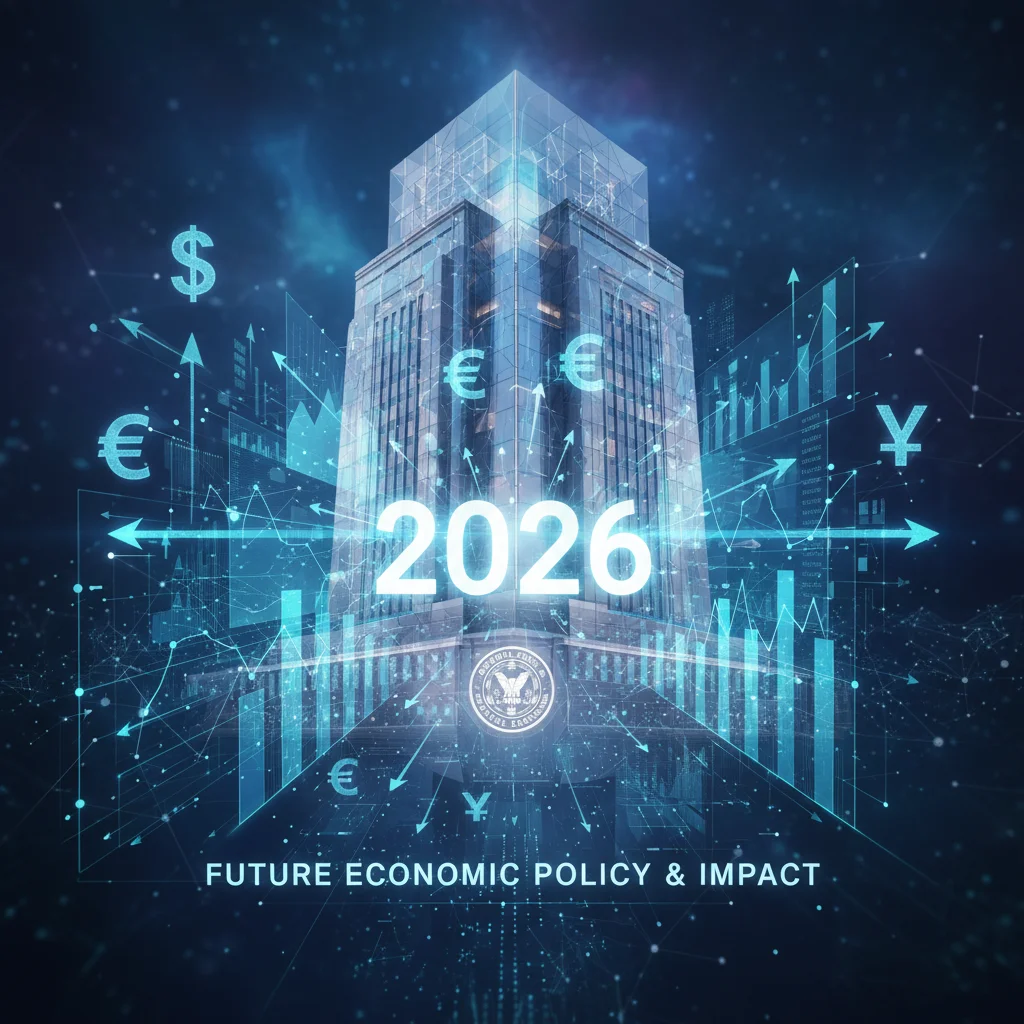
Understanding the 2026 Federal Reserve Policy: A Deep Dive into Its Effects on U.S. Economic Growth
Anúncios
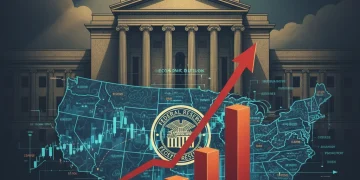
The Federal Reserve, often referred to as the Fed, stands as the central banking system of the United States. Its primary mandates are to foster maximum employment, stable prices, and moderate long-term interest rates. These objectives are pursued through the implementation of monetary policy, a complex and dynamic process that profoundly influences the nation’s economic trajectory. As we cast our gaze towards 2026, understanding the potential shifts in Federal Reserve Policy 2026 becomes paramount for businesses, investors, and everyday citizens alike. The decisions made by the Federal Open Market Committee (FOMC) in the coming years will undoubtedly shape the landscape of U.S. economic growth, inflation, employment, and financial market stability.
The economic environment leading up to 2026 is expected to be characterized by a confluence of factors, including the lingering effects of global geopolitical events, technological advancements, evolving labor market dynamics, and potential shifts in fiscal policy. These elements will form the backdrop against which the Fed will formulate its strategies. Forecasting the exact nature of the Federal Reserve Policy 2026 requires careful consideration of current trends and an informed projection of future economic indicators. This article aims to provide a comprehensive analysis of the anticipated policy directions, their rationale, and their far-reaching implications for the U.S. economy.
Anúncios
The Mandate of the Federal Reserve: A Foundation for Policy
To fully grasp the intricacies of the Federal Reserve Policy 2026, it is essential to revisit the core mandates that guide the Fed’s actions. The dual mandate of maximum employment and price stability forms the bedrock of its decision-making. Maximum employment does not imply zero unemployment, but rather the lowest sustainable unemployment rate consistent with stable prices. Price stability, on the other hand, generally refers to a low and stable rate of inflation, typically targeted at around 2% over the long run. The Fed also considers moderate long-term interest rates as part of its broader objective to foster a healthy economic environment.
The tools at the Fed’s disposal to achieve these mandates are varied and powerful. These include setting the federal funds rate target, conducting open market operations (buying and selling government securities), adjusting the discount rate, and implementing quantitative easing or tightening measures. The judicious application of these tools allows the Fed to influence the availability and cost of money and credit in the economy, thereby steering economic activity towards its desired goals.
As we approach 2026, the Fed will be evaluating the performance of the economy against these mandates. Factors such as the pace of job creation, wage growth, inflation readings (both headline and core), and global economic conditions will all play a crucial role in determining the appropriate policy stance. The Fed’s commitment to data-driven decision-making means that any significant shifts in these indicators could trigger adjustments in its policy approach.
Anúncios
Anticipated Economic Landscape Leading to 2026
Projecting the economic landscape for 2026 involves making informed assumptions about several key variables. Global economic growth, trade relations, technological advancements, and domestic fiscal policies will all contribute to the environment in which the Federal Reserve Policy 2026 will operate. For instance, continued advancements in artificial intelligence and automation could reshape labor markets, while ongoing supply chain adjustments might influence inflationary pressures. Furthermore, government spending and taxation policies will significantly impact aggregate demand and the overall fiscal health of the nation, indirectly affecting the Fed’s strategy.
Demographic shifts, such as an aging population and changes in labor force participation rates, will also exert influence. These long-term trends can affect potential economic growth and the natural rate of unemployment, which are critical considerations for monetary policy. The Fed will need to carefully distinguish between cyclical and structural changes in the economy to avoid misinterpreting signals and implementing inappropriate policies.
Another crucial aspect will be the evolution of financial markets. The interconnectedness of global markets means that events in other major economies can have ripple effects on the U.S. financial system. The Fed’s policy decisions in 2026 will therefore need to be made with an eye on both domestic and international developments, ensuring that its actions promote stability without inadvertently creating undue volatility in global markets.
Potential Shifts in Monetary Policy Tools and Strategies
By 2026, the Federal Reserve might refine or introduce new approaches to its monetary policy toolkit. While the federal funds rate will likely remain a primary instrument, the efficacy and appropriate use of other tools, such as quantitative easing (QE) and quantitative tightening (QT), will be continuously assessed. The experience gained from recent periods of unconventional monetary policy will inform future decisions, potentially leading to more nuanced and targeted interventions.
One area of ongoing discussion is the Fed’s balance sheet. The process of normalizing the balance sheet after periods of expansion is complex and has implications for long-term interest rates and financial market liquidity. The Federal Reserve Policy 2026 might involve a more defined strategy for balance sheet management, aiming to provide greater predictability and reduce market uncertainty.
Furthermore, the Fed is constantly evaluating its communication strategies. Transparency and forward guidance are critical for anchoring market expectations and ensuring the effectiveness of monetary policy. By 2026, the Fed may adopt even more sophisticated methods of communicating its policy intentions and economic outlook, leveraging technology and diverse platforms to reach a wider audience and enhance public understanding.
The role of digital currencies and financial technology (FinTech) could also become a more prominent consideration for the Fed. While not directly a monetary policy tool, the rise of central bank digital currencies (CBDCs) and other digital financial innovations could influence the transmission mechanisms of monetary policy and require the Fed to adapt its oversight and regulatory frameworks. This evolving financial landscape will undoubtedly be a factor in the broader strategic thinking behind the Federal Reserve Policy 2026.
Impact on U.S. Economic Growth
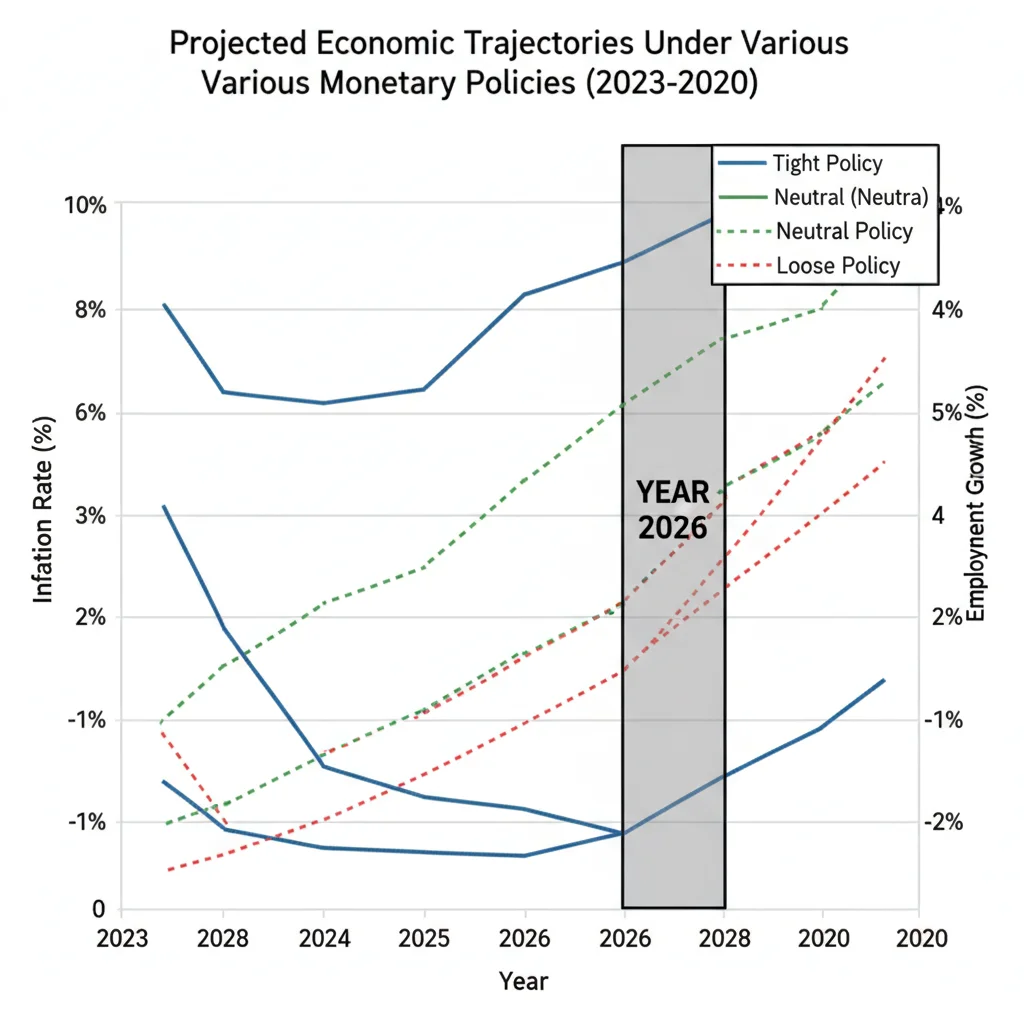
The most direct and significant impact of Federal Reserve Policy 2026 will be on U.S. economic growth. The Fed’s actions, particularly concerning interest rates, influence borrowing costs for businesses and consumers. Lower interest rates typically stimulate investment and consumption, leading to higher economic growth, while higher rates tend to dampen demand to control inflation.
Should the Fed pursue an accommodative stance (lower interest rates), we could expect to see continued robust investment in areas like technology, infrastructure, and housing. This would likely translate into higher GDP growth and potentially further reductions in unemployment. However, an overly accommodative policy risks igniting inflationary pressures, which the Fed would then need to address.
Conversely, a restrictive policy (higher interest rates) would aim to cool down an overheating economy and curb inflation. While this might temper growth in the short term, it could be seen as necessary to ensure long-term price stability and sustainable economic expansion. The challenge for the Fed will be to find the delicate balance that fosters growth without creating undesirable side effects.
The Federal Reserve Policy 2026 will also influence sector-specific growth. Industries that are particularly sensitive to interest rates, such as real estate, automotive, and capital-intensive manufacturing, will feel the effects more acutely. Small businesses, which often rely on bank loans for expansion, will also be highly responsive to changes in lending conditions driven by Fed policy.
Inflationary Pressures and Price Stability
Maintaining price stability is a cornerstone of the Fed’s mandate, and the Federal Reserve Policy 2026 will undoubtedly be heavily influenced by the prevailing inflationary environment. If inflation remains elevated above the Fed’s 2% target, a more hawkish stance (tighter monetary policy) would be anticipated. This could involve further interest rate hikes and potentially a more aggressive pace of quantitative tightening to reduce the money supply.
Conversely, if inflationary pressures subside and inflation falls persistently below the target, the Fed might consider a more dovish approach (looser monetary policy) to stimulate demand and bring inflation back to its desired level. This could manifest as interest rate cuts or a slower pace of balance sheet reduction.
The sources of inflation will be a critical factor in the Fed’s analysis. Supply-side shocks, such as disruptions to global supply chains or energy price volatility, require a different policy response than demand-driven inflation. The Fed will need to carefully distinguish between these factors to implement effective policies that address the root causes of price instability without unduly harming economic growth.
Expectations about future inflation also play a significant role. If businesses and consumers anticipate higher inflation, they may adjust their pricing and wage demands accordingly, creating a self-fulfilling prophecy. The Fed’s communication and credibility are thus vital in anchoring inflation expectations and preventing them from becoming unmoored.
Employment Trends and Labor Market Dynamics
The goal of maximum employment is equally important to the Federal Reserve. By 2026, the labor market is expected to continue its evolution, driven by technological advancements, demographic shifts, and changing worker preferences. The Federal Reserve Policy 2026 will aim to support a robust labor market characterized by strong job growth, low unemployment, and rising wages that are consistent with productivity gains and price stability.
The Fed pays close attention to various labor market indicators beyond the headline unemployment rate. These include labor force participation rates, underemployment, wage growth across different sectors, and job openings. A healthy labor market is one where there is a good balance between labor supply and demand, allowing for sustainable wage increases without triggering excessive inflationary pressures.
Should the labor market show signs of overheating, with wages rising unsustainably fast, the Fed might lean towards a tighter monetary policy to temper demand. Conversely, if there are signs of slack in the labor market, such as persistently high unemployment or stagnant wages, the Fed might adopt a more accommodative stance to encourage hiring and investment.
The structural changes in the labor market, such as the increasing demand for skilled workers in certain sectors and the displacement of jobs in others due to automation, will pose ongoing challenges. The Fed’s policies, while primarily focused on aggregate demand, can indirectly support labor market adjustments by fostering an environment conducive to investment in education and training.
Impact on Financial Markets and Investment
Financial markets are highly sensitive to Federal Reserve policy, and the Federal Reserve Policy 2026 will undoubtedly trigger significant reactions across various asset classes. Interest rate decisions, in particular, directly influence bond yields, stock valuations, and currency exchange rates.
For bond markets, higher interest rates typically lead to lower bond prices and higher yields, making fixed-income investments more attractive relative to equities. Conversely, lower interest rates generally boost bond prices. The Fed’s balance sheet management also plays a crucial role, with quantitative tightening potentially putting upward pressure on long-term yields.
In the equity markets, the impact is more nuanced. While lower interest rates can make borrowing cheaper for companies and boost their profitability, leading to higher stock prices, excessively low rates might also signal economic weakness. Higher rates, while potentially dampening corporate earnings, can also be interpreted as a sign of a strong economy, though they might make equity investments less appealing compared to safer fixed-income alternatives.
The U.S. dollar’s value is also heavily influenced by Fed policy. A relatively hawkish Fed, with higher interest rates compared to other major central banks, tends to strengthen the dollar, making U.S. exports more expensive but imports cheaper. A dovish Fed, on the other hand, might lead to a weaker dollar. These currency fluctuations have significant implications for international trade and global capital flows.

Global Economic Context and International Spillovers
The U.S. economy does not operate in isolation, and the Federal Reserve Policy 2026 will have substantial international spillovers. As the world’s largest economy and with the U.S. dollar serving as the primary reserve currency, changes in Fed policy reverberate across global financial markets and economies.
When the Fed tightens monetary policy, it can lead to capital outflows from emerging markets as investors seek higher returns in dollar-denominated assets. This can put pressure on emerging market currencies, increase their borrowing costs, and potentially destabilize their financial systems. Conversely, an accommodative Fed can encourage capital flows into these economies.
Trade relations will also be affected. A stronger dollar, resulting from a hawkish Fed, can make U.S. exports less competitive globally, potentially widening trade deficits. Conversely, a weaker dollar can boost U.S. exports. These dynamics are critical for countries with significant trade ties to the United States.
The Fed’s policy decisions are made with an understanding of these international implications, though its primary mandate remains domestic. However, global economic stability is often seen as a prerequisite for sustained U.S. economic growth, suggesting that international considerations will always be a part of the broader policy calculus for the Federal Reserve Policy 2026.
Challenges and Uncertainties for the 2026 Policy
Forecasting and implementing monetary policy for 2026 is fraught with challenges and uncertainties. The global economic environment is constantly evolving, with new risks and opportunities emerging regularly. Geopolitical tensions, unforeseen technological disruptions, and climate-related events could all significantly alter economic trajectories and necessitate adjustments to the Fed’s planned course of action.
One major uncertainty is the future path of inflation. Will supply chain issues fully resolve? Will wage growth moderate naturally, or will it require more aggressive intervention? The persistence and drivers of inflation will be key determinants of the Federal Reserve Policy 2026.
Another challenge lies in assessing the natural rate of interest and the natural rate of unemployment – theoretical concepts that are difficult to observe directly but are crucial for guiding policy. Misestimations of these rates can lead to either an overly tight policy that stifles growth or an overly loose policy that fuels inflation.
Furthermore, the effectiveness of monetary policy tools can vary depending on the economic context. For instance, in a low-interest-rate environment, the effectiveness of conventional interest rate cuts might be diminished, requiring the Fed to rely more on unconventional tools. The Fed’s ability to adapt its strategies to these evolving circumstances will be critical for the success of the Federal Reserve Policy 2026.
Preparing for the Future: Implications for Businesses and Individuals
Understanding the likely direction of the Federal Reserve Policy 2026 is not just an academic exercise; it has tangible implications for businesses and individuals. For businesses, anticipating interest rate trends can inform investment decisions, capital expenditure plans, and financing strategies. Companies that are highly leveraged or rely heavily on short-term borrowing will be particularly sensitive to changes in the federal funds rate.
Individuals should also consider the implications for their personal finances. Mortgage rates, auto loan rates, and credit card interest rates are all influenced by Fed policy. A period of rising interest rates could mean higher borrowing costs for consumers, while lower rates could make loans more affordable. Savers, on the other hand, might see higher returns on their deposits during periods of rising rates.
Investment portfolios will also need to be adjusted in light of anticipated Fed actions. Diversification across different asset classes and geographies can help mitigate risks associated with specific policy shifts. Consulting with financial advisors to align investment strategies with the evolving economic landscape, shaped by the Federal Reserve Policy 2026, is a prudent step.
Ultimately, staying informed about economic data releases, Fed communications, and expert analyses will empower both businesses and individuals to make more informed decisions and navigate the economic environment effectively. Proactive planning, rather than reactive responses, will be key to thriving in the economic climate influenced by the Federal Reserve’s actions in 2026 and beyond.
Conclusion
The Federal Reserve Policy 2026 will be a crucial determinant of the U.S. economic trajectory. Guided by its dual mandate of maximum employment and price stability, the Fed will navigate a complex landscape shaped by global events, technological progress, and domestic economic dynamics. Its decisions on interest rates, balance sheet management, and communication strategies will have profound impacts on economic growth, inflation, employment, and financial markets.
While the exact contours of the policy remain subject to evolving economic conditions, a deep understanding of the Fed’s objectives, tools, and the challenges it faces is essential. By meticulously analyzing economic indicators and maintaining a flexible approach, the Federal Reserve aims to foster a stable and prosperous economic environment for the United States. Businesses and individuals who remain vigilant and adapt their strategies in anticipation of these policies will be better positioned to capitalize on opportunities and mitigate potential risks in the years leading up to and including 2026.