
Navigating the 2026 Tax Code Changes: 5 Key Strategies for Maximizing Your Personal Deductions
Anúncios
The landscape of taxation is in perpetual motion, and as we approach 2026, significant shifts in the tax code are on the horizon. For individuals and families, understanding these changes is not merely an academic exercise; it’s a critical component of sound financial planning. The ability to effectively navigate these new regulations and strategically maximize your personal deductions can have a profound impact on your financial well-being, potentially saving you thousands of dollars. This comprehensive guide will delve into the anticipated changes, offering five key strategies to ensure you are well-prepared to optimize your financial position under the new 2026 tax deductions framework.
The upcoming revisions to the tax code are expected to touch various aspects of personal finance, from itemized deductions to standard deduction amounts, and potentially even tax brackets. While the specifics are still being finalized, proactive planning is paramount. Waiting until the last minute can lead to missed opportunities and unnecessary financial burdens. By familiarizing yourself with potential changes and adopting a forward-thinking approach, you can transform what might seem like a daunting challenge into a strategic advantage.
Our goal is to demystify these complex tax regulations and provide actionable insights that empower you to make informed decisions. We will explore how to identify new opportunities for deductions, understand the implications of sunsetting provisions, and leverage tax-advantaged accounts more effectively. Whether you’re a seasoned taxpayer or new to managing your own finances, this article will equip you with the knowledge and tools necessary to approach the 2026 tax season with confidence and a clear strategy for maximizing your personal deductions.
Anúncios
Understanding the Evolving Tax Landscape for 2026
Before we dive into specific strategies, it’s crucial to grasp the overarching context of the 2026 tax code changes. The year 2025 marks the expiration of several key provisions from the Tax Cuts and Jobs Act (TCJA) of 2017. This means that without new legislative action, many tax rules will revert to their pre-TCJA state, or be modified in ways that could significantly alter your tax liability. These changes are not minor tweaks; they represent a potential paradigm shift in how individuals calculate their taxable income and, consequently, their tax obligations.
One of the most widely discussed aspects of the TCJA was the significant increase in the standard deduction and the limitation of certain itemized deductions. As these provisions are set to expire, we could see a return to lower standard deduction amounts, making itemizing deductions a more attractive option for a broader range of taxpayers. Conversely, some of the limitations on state and local tax (SALT) deductions, which were capped at $10,000 under the TCJA, could also see modifications, potentially offering relief to taxpayers in high-tax states.
Anúncios
Beyond these broad strokes, specific deductions related to mortgage interest, charitable contributions, and medical expenses might also undergo revisions. The Alternative Minimum Tax (AMT), which was significantly scaled back under the TCJA, could also become a more prevalent concern for higher-income earners. The interplay of these various factors makes comprehensive tax planning indispensable. Staying informed about legislative developments and consulting with tax professionals will be key to understanding how these changes specifically impact your financial situation. The goal is to proactively identify opportunities to maximize your 2026 tax deductions before they become a reality.
Furthermore, it’s not just about the deductions; tax brackets themselves are subject to change. While inflation adjustments typically occur annually, the expiration of TCJA provisions could lead to a restructuring of the tax brackets, potentially pushing more income into higher tax rates for some individuals. This underscores the importance of a holistic approach to tax planning, where deductions are considered in conjunction with overall income and tax rate projections. By understanding the potential shifts, you can begin to model different scenarios and develop a robust strategy for minimizing your tax burden in 2026 and beyond.
The complexity of these potential changes necessitates a proactive stance. Simply reacting to the new tax code once it’s in effect could lead to missed opportunities. Instead, view this period as a chance to re-evaluate your financial strategies, adjust your investment portfolios, and optimize your giving strategies to align with the evolving tax landscape. The insights gained from understanding these shifts will be invaluable in crafting a resilient financial plan.
Strategy 1: Re-evaluating Your Itemized vs. Standard Deduction Choice
For many years, the decision between taking the standard deduction and itemizing deductions has been a crucial one for taxpayers. With the potential expiration of TCJA provisions in 2025, this decision will become even more critical for the 2026 tax year. The TCJA significantly increased the standard deduction, leading many taxpayers who previously itemized to opt for the simpler standard deduction. However, as the standard deduction amounts are likely to revert to lower, pre-TCJA levels (adjusted for inflation), and some itemized deduction limitations potentially loosen, itemizing could once again become the more advantageous option for a substantial number of individuals.
To effectively implement this strategy, you need to meticulously track all your potential itemized deductions throughout the year. This includes, but is not limited to, medical expenses, state and local taxes (SALT), mortgage interest, and charitable contributions. It’s not enough to simply estimate these amounts; maintaining accurate records, receipts, and documentation is paramount. As we move closer to 2026, pay close attention to any legislative updates regarding the SALT cap. A modification or removal of this cap could significantly increase the benefit of itemizing for homeowners in high-tax states.
Consider the following steps:
- Track Everything: Keep detailed records of all potential itemized deductions. Use digital tools or spreadsheets to categorize expenses as they occur.
- Project Your Deductions: Based on your historical spending and anticipated changes, estimate your total itemized deductions for 2026. Compare this to the projected standard deduction for that year (which will be adjusted for inflation).
- Bundle Deductions: If your itemized deductions are close to the standard deduction, consider ‘bunching’ or ‘accelerating’ certain deductible expenses into one tax year. For example, if you plan to make significant charitable contributions over a few years, you might make them all in one year to exceed the standard deduction threshold, then take the standard deduction in subsequent years. This strategy is particularly effective for those who typically hover around the standard deduction threshold.
- Consult a Professional: A tax advisor can help you analyze your specific financial situation and project which deduction method will yield the greatest tax savings under the new rules. They can also advise on the legality and effectiveness of deduction bunching strategies.
The key takeaway here is to not assume the standard deduction will remain your best option. The reversion of TCJA provisions means a re-evaluation is absolutely necessary. Proactive tracking and projection will allow you to make an informed decision and maximize your 2026 tax deductions. This strategy is fundamental to adapting to the post-TCJA tax environment and ensuring you don’t leave money on the table.
Strategy 2: Optimizing Charitable Contributions and Donor-Advised Funds
Charitable giving remains a powerful tool for both supporting causes you care about and potentially reducing your tax liability. Under the 2026 tax code, with the potential changes to itemized deductions, optimizing your charitable contributions will be more important than ever. While the TCJA limited the deductibility of some itemized deductions, it generally retained the deductibility of cash contributions to qualified charities up to 60% of your adjusted gross income (AGI), and non-cash contributions up to 50% or 30% of AGI, depending on the asset type. The expiration of TCJA provisions could bring changes to these percentages or related rules, making strategic planning even more crucial.
One of the most effective tools for maximizing the tax benefits of charitable giving, especially in a fluctuating tax environment, is a Donor-Advised Fund (DAF). A DAF is a charitable giving vehicle established at a public charity. It allows you to make an irrevocable charitable contribution of cash, securities, or other assets to the fund, receiving an immediate tax deduction for that contribution. You then recommend grants from the fund to your favorite charities over time. This separation of the tax deduction from the actual distribution of funds offers significant flexibility.
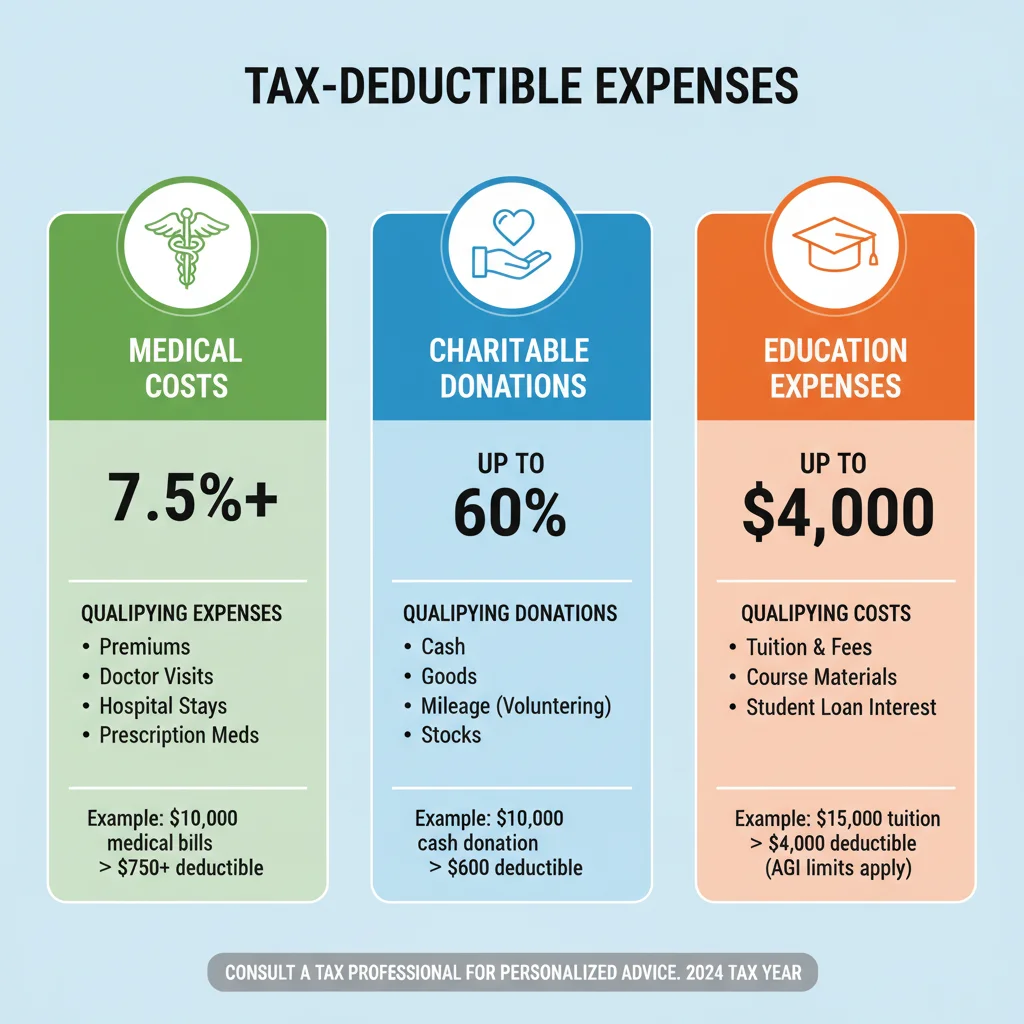
How DAFs Can Help Maximize Your 2026 Tax Deductions:
- Bunching Deductions: DAFs are ideal for the ‘bunching’ strategy mentioned earlier. You can make a large contribution to your DAF in a high-income year, or in a year where you anticipate itemizing, receiving a substantial tax deduction in that year. You can then distribute those funds to charities over several years, even if you take the standard deduction in subsequent years. This allows you to exceed the standard deduction threshold more easily.
- Donating Appreciated Securities: Contributing appreciated stocks or mutual funds directly to a DAF can be a highly tax-efficient strategy. You generally avoid capital gains taxes on the appreciation and receive a deduction for the fair market value of the securities at the time of contribution. This double benefit can significantly enhance your tax savings.
- Simplicity and Flexibility: A DAF simplifies your record-keeping as you receive one tax receipt from the sponsoring organization for your contributions. It also provides flexibility in terms of when and how you recommend grants to charities, allowing you to support various causes without the administrative burden of managing multiple donations directly.
- Estate Planning: DAFs can also play a role in estate planning, allowing you to leave a lasting legacy of giving.
As you plan for 2026, consider reviewing your giving strategy. If you typically make regular charitable contributions, explore whether a DAF could provide a more significant tax benefit. Consult with a financial advisor to determine the optimal timing and amount of contributions to your DAF, especially in light of potential changes to AGI limitations or carryover rules for charitable contributions. Strategic use of DAFs can be a powerful tool for maximizing your 2026 tax deductions while supporting the causes that matter most to you.
Strategy 3: Maximizing Retirement Contributions and Health Savings Accounts (HSAs)
Retirement savings and health savings are not just about securing your future; they are also powerful avenues for reducing your current taxable income. As we look towards 2026, leveraging tax-advantaged accounts such as 401(k)s, IRAs, and Health Savings Accounts (HSAs) will remain a cornerstone of effective tax planning and maximizing your 2026 tax deductions.
Retirement Accounts:
- 401(k)s and 403(b)s: Employer-sponsored retirement plans like 401(k)s and 403(b)s allow you to contribute pre-tax dollars, reducing your taxable income in the year of contribution. The contribution limits for these accounts are adjusted annually for inflation, and it’s crucial to contribute as much as you can, at least up to any employer match. For 2026, anticipate further inflation-adjusted increases in these limits. Maxing out these contributions is often one of the most straightforward ways to lower your AGI.
- Traditional IRAs: Contributions to a Traditional IRA may also be tax-deductible, depending on your income and whether you are covered by a workplace retirement plan. Even if you’re not eligible for a full deduction, non-deductible IRA contributions can still grow tax-deferred. The income limits and deductibility rules for IRAs are also subject to annual inflation adjustments.
- Catch-Up Contributions: If you are age 50 or older, you are eligible to make additional ‘catch-up’ contributions to both 401(k)s/403(b)s and IRAs. These additional contributions offer an even greater opportunity to reduce your taxable income and boost your retirement savings.
The beauty of these retirement accounts lies in their dual benefit: they provide a tax deduction today and allow your investments to grow tax-deferred until retirement, or even tax-free in the case of Roth accounts (though Roth contributions are not tax-deductible). As 2026 approaches, review your contribution levels and consider increasing them to the maximum allowed, especially if you anticipate being in a higher tax bracket in the future or if other deductions become less favorable.
Health Savings Accounts (HSAs):
HSAs are often referred to as the ‘triple-tax advantage’ account, and for good reason. To be eligible, you must be enrolled in a high-deductible health plan (HDHP). The tax benefits are substantial:
- Tax-Deductible Contributions: Contributions to an HSA are tax-deductible (or pre-tax if made through payroll deductions), reducing your taxable income.
- Tax-Free Growth: The funds in your HSA grow tax-free.
- Tax-Free Withdrawals: Qualified medical expenses can be paid for with tax-free withdrawals, including deductibles, copayments, and other eligible healthcare costs.
Unlike Flexible Spending Accounts (FSAs), HSA funds roll over year after year and are portable, meaning they stay with you even if you change employers or health plans. Once you reach age 65, you can withdraw funds for any purpose without penalty, though they will be subject to income tax if not used for qualified medical expenses. This makes HSAs an excellent retirement savings vehicle, especially for healthcare costs in retirement.
For 2026, anticipate inflation-adjusted increases in HSA contribution limits. If you are eligible for an HSA, maximizing your contributions is a no-brainer for reducing your taxable income and building a tax-advantaged fund for healthcare expenses. This is a powerful strategy to enhance your 2026 tax deductions while simultaneously planning for future health and financial security.
Strategy 4: Strategic Use of Tax Credits and Education Expense Deductions
While much of the focus in tax planning revolves around deductions, it’s equally important to understand and leverage available tax credits. Tax credits are often more valuable than deductions because they directly reduce your tax liability dollar-for-dollar, whereas deductions only reduce your taxable income. As the 2026 tax code approaches, it’s critical to identify which credits you may qualify for and how to maximize their benefit. Additionally, education-related expenses can offer significant deductions or credits, which are vital for families investing in higher education.
Leveraging Tax Credits:
The availability and specifics of tax credits can change with legislative updates, so staying informed is key. Some common and potentially impactful tax credits include:
- Child Tax Credit (CTC): The CTC has seen various iterations and expansions in recent years. While the enhanced CTC from the American Rescue Plan Act of 2021 has expired, future legislation could bring new forms or expansions of this credit. Monitor any proposals that could impact the CTC for 2026, as it can significantly reduce tax burdens for families with children.
- Earned Income Tax Credit (EITC): This credit is designed for low-to moderate-income working individuals and families. The amount of the EITC depends on your income, filing status, and number of qualifying children. Ensure you understand the eligibility requirements to claim this valuable credit if you qualify.
- Child and Dependent Care Credit: If you pay for childcare while you work or look for work, you might be eligible for this credit. The specifics, including the maximum amount and income limitations, are important to review.
- Clean Energy Credits: With a growing focus on sustainability, various credits are available for energy-efficient home improvements, electric vehicles, and renewable energy installations. These credits can provide substantial savings and align with environmental goals.
The key to maximizing tax credits is meticulous record-keeping and understanding the specific eligibility criteria for each. Many credits have income phase-outs or other restrictions. Don’t overlook them; a single credit can be worth far more than several deductions combined when it comes to reducing your final tax bill.
Education Expense Deductions and Credits:
Investing in education, whether for yourself or your dependents, often comes with significant costs, but the tax code offers several ways to alleviate this burden:
- American Opportunity Tax Credit (AOTC): This credit is for qualified education expenses for eligible students during their first four years of higher education. It can be worth up to $2,500 per eligible student, with 40% of the credit being refundable.
- Lifetime Learning Credit (LLC): The LLC is available for qualified education expenses for undergraduate, graduate, and professional degree courses, as well as courses taken to acquire job skills. It can be worth up to $2,000 per tax return.
- Student Loan Interest Deduction: You can deduct the amount of interest you paid during the year on a qualified student loan, up to $2,500. This is an above-the-line deduction, meaning it reduces your AGI regardless of whether you itemize.
- Tuition and Fees Deduction (Potentially Expired/Modified): While this deduction has had a fluctuating status, it’s important to monitor whether it will be reinstated or modified for 2026.
Carefully evaluate which education benefit provides the most advantage, as you typically cannot claim multiple benefits for the same student or expenses. The rules surrounding education credits and deductions can be complex, especially concerning income limits and qualifying expenses. Planning ahead for significant education expenses can help you strategically time payments to maximize the benefits in a particular tax year. By actively seeking out and understanding these credits and deductions, you can significantly reduce your tax burden and effectively maximize your 2026 tax deductions related to education.
Strategy 5: Proactive Tax Planning and Professional Guidance
The most effective strategy for navigating the 2026 tax code changes and maximizing your personal deductions is a proactive approach combined with professional guidance. Tax planning should not be a once-a-year event; it’s an ongoing process that adapts to your life events, financial goals, and legislative changes. Given the potential for significant shifts in 2026, relying on last-minute preparations could mean missing out on substantial savings.
Key Aspects of Proactive Tax Planning:
- Year-Round Record Keeping: Develop a robust system for organizing your financial documents, receipts, and statements. Digital tools and cloud storage can make this process efficient and ensure you have all necessary documentation when tax season arrives. Good record-keeping is the foundation for accurately claiming all eligible deductions and credits.
- Regular Financial Reviews: Periodically review your income, expenses, investments, and life changes (marriage, divorce, new children, home purchase, career changes). These events often have significant tax implications and can open up new deduction opportunities or alter your eligibility for existing ones.
- Estimated Tax Payments: If you are self-employed or have significant income not subject to withholding, ensure you are making accurate estimated tax payments throughout the year. Underpaying can lead to penalties, while overpaying ties up your capital unnecessarily.
- Tax Loss Harvesting: For investors, consider tax loss harvesting strategy. This involves selling investments at a loss to offset capital gains and potentially up to $3,000 of ordinary income. This strategy can be particularly effective in volatile markets and should be implemented strategically before year-end.
- Reviewing Withholding: Adjust your W-4 form with your employer if your tax situation changes significantly. This ensures that the correct amount of tax is withheld from your paycheck, preventing a large tax bill or an excessively large refund (which means you’ve given the government an interest-free loan).

The Indispensable Role of Professional Guidance:
While this guide provides a comprehensive overview, the intricacies of the tax code, especially during periods of change, can be overwhelming. A qualified tax professional, such as a Certified Public Accountant (CPA) or an Enrolled Agent (EA), offers invaluable expertise:
- Personalized Advice: A tax professional can provide tailored advice based on your unique financial situation, identifying deductions and credits you might overlook.
- Staying Updated: They stay abreast of the latest legislative changes, interpretations, and court rulings, ensuring your planning is always based on the most current information.
- Complex Situations: For complex financial situations, such as business ownership, significant investment activity, or international income, professional guidance is almost essential to ensure compliance and optimization.
- Audit Support: In the unlikely event of an audit, a tax professional can represent you and help navigate the process.
- Long-Term Planning: Beyond just the current tax year, a good advisor can help you develop a long-term tax strategy that aligns with your financial goals, optimizing for future tax environments and maximizing your 2026 tax deductions and beyond.
Don’t view the cost of a tax professional as an expense, but rather as an investment that can yield significant returns in tax savings and peace of mind. Begin engaging with a tax advisor early in 2025 to start planning for the 2026 tax year. This proactive engagement will position you optimally to adapt to the evolving tax landscape and secure your financial future.
Conclusion: Preparing for a Financially Optimized 2026
The upcoming 2026 tax code changes present both challenges and opportunities for individual taxpayers. While the specifics are still unfolding, the overarching message is clear: proactive planning and informed decision-making are paramount. By understanding the potential expiration of TCJA provisions and adopting a strategic approach, you can effectively navigate these shifts and significantly maximize your personal deductions.
We’ve explored five key strategies: re-evaluating your itemized vs. standard deduction choice, optimizing charitable contributions with tools like Donor-Advised Funds, maximizing contributions to retirement accounts and Health Savings Accounts, strategically utilizing tax credits and education expense deductions, and finally, embracing proactive tax planning with professional guidance. Each of these strategies, when implemented thoughtfully, contributes to a more robust and tax-efficient financial plan.
Remember that the tax code is dynamic, and what works today might not be the most advantageous approach tomorrow. Therefore, continuous learning, diligent record-keeping, and regular consultations with a qualified tax professional are not just recommendations but necessities for achieving financial optimization. Don’t wait for the new tax year to begin; start assessing your financial situation, projecting potential impacts, and adjusting your strategies now. By taking these steps, you will be well-positioned to turn the 2026 tax code changes into a significant advantage, securing your financial health and maximizing your 2026 tax deductions for years to come.