Retirement Savings 2026: Optimize 401(k) & IRA for Maximum Growth

Anúncios
Retirement Savings 2026: Optimize Your 401(k) and IRA Contributions for Maximum Growth
Are you looking ahead to your golden years and wondering how to best secure your financial future? As we approach 2026, the landscape of retirement planning continues to evolve, bringing new opportunities and considerations for optimizing your savings. The key to a comfortable retirement often lies in strategic planning and consistent execution, particularly when it comes to your 401(k) and IRA contributions. This comprehensive guide will delve into the best practices, emerging trends, and smart strategies to supercharge your Retirement Savings 2026, ensuring maximum growth and a secure financial outlook.
Anúncios
Understanding the nuances of these powerful retirement vehicles is crucial. For many, a 401(k) is the cornerstone of their retirement plan, often supplemented by an Individual Retirement Account (IRA). Both offer unique tax advantages and investment opportunities that, when leveraged correctly, can significantly boost your nest egg. However, simply contributing isn’t enough; optimizing these contributions requires a keen understanding of contribution limits, investment choices, and tax strategies. Our goal is to equip you with the knowledge to make informed decisions and set yourself up for financial success in 2026 and beyond.
Why 2026 is a Critical Year for Your Retirement Savings Strategy
Every year brings changes to tax laws, economic forecasts, and market conditions, all of which can impact your Retirement Savings 2026. Staying informed and adapting your strategy accordingly is paramount. The year 2026, while still a bit in the future, offers a perfect vantage point to review your current savings trajectory and implement adjustments that can have a profound effect on your long-term wealth. This isn’t just about tweaking numbers; it’s about making proactive choices that align with your retirement goals and maximize the potential of your investments.
Anúncios
One of the primary reasons 2026 is critical is the power of compounding. The earlier you start or optimize your contributions, the more time your money has to grow. Even small adjustments made now can lead to substantial differences down the line. Furthermore, potential shifts in inflation rates, interest rates, and stock market performance necessitate a flexible and well-thought-out approach. By focusing on your Retirement Savings 2026 now, you are giving yourself the gift of time and strategic advantage.
Moreover, understanding potential changes in contribution limits for 401(k)s and IRAs is vital. These limits are periodically adjusted for inflation, and knowing what to expect can help you plan your contributions more effectively. We will explore how to anticipate these changes and position your savings to take full advantage of the maximum allowable contributions, ensuring you don’t leave any growth potential on the table.
Understanding Your 401(k): The Foundation of Your Retirement Savings
For many employees, the 401(k) is the primary vehicle for Retirement Savings 2026. It’s an employer-sponsored retirement plan that allows you to contribute a portion of your paycheck, often pre-tax, directly into an investment account. A key advantage of a 401(k) is the potential for employer matching contributions, which is essentially free money. If your employer offers a match, contributing at least enough to receive the full match should be your absolute first priority.
Maximizing Your 401(k) Contributions in 2026
The IRS sets annual contribution limits for 401(k)s. While the exact limits for 2026 will be announced closer to the end of 2025, they typically increase incrementally each year. For example, if the limit for employee contributions in 2025 was $23,000, expect a slight increase for 2026. If you are 50 or older, you are also eligible for catch-up contributions, which allow you to contribute an additional amount above the standard limit. Aiming to contribute the maximum allowable amount is a powerful strategy to accelerate your Retirement Savings 2026.
Beyond the contribution amount, consider the type of 401(k) you have. Traditional 401(k) contributions are made with pre-tax dollars, meaning your taxable income is reduced in the current year, and your investments grow tax-deferred. You’ll pay taxes when you withdraw the money in retirement. A Roth 401(k), on the other hand, is funded with after-tax dollars, meaning your contributions don’t reduce your current taxable income, but qualified withdrawals in retirement are tax-free. The choice between a Traditional and Roth 401(k) depends on your current income level and your anticipated tax bracket in retirement.
Navigating Your 401(k) Investment Options
Your 401(k) typically offers a selection of investment funds, often including target-date funds, index funds, and actively managed funds. Understanding these options is critical for optimizing your Retirement Savings 2026. Target-date funds are a popular choice as they automatically adjust their asset allocation to become more conservative as you approach retirement. While convenient, it’s important to review their underlying holdings and expense ratios.
Index funds, which track a specific market index like the S&P 500, often have lower expense ratios and can be a cost-effective way to achieve broad market exposure. Actively managed funds, while potentially offering higher returns, also come with higher fees and no guarantee of outperforming the market. Diversification within your 401(k) is key. Don’t put all your eggs in one basket. Spread your investments across different asset classes (stocks, bonds) and sectors to mitigate risk and enhance potential returns for your Retirement Savings 2026.
Optimizing Your IRA: A Powerful Complement to Your 401(k)
An Individual Retirement Account (IRA) offers another excellent avenue for Retirement Savings 2026, especially if you want more control over your investment choices or if your employer doesn’t offer a 401(k). IRAs come in several forms, primarily Traditional and Roth, each with distinct tax implications and benefits.
Traditional IRA vs. Roth IRA: Which is Right for You?
A Traditional IRA allows pre-tax contributions to grow tax-deferred, similar to a Traditional 401(k). Contributions may be tax-deductible, reducing your current taxable income, depending on your income level and whether you’re covered by an employer-sponsored retirement plan. Withdrawals in retirement are taxed as ordinary income. This can be advantageous if you expect to be in a lower tax bracket in retirement than you are now.
A Roth IRA, on the other hand, is funded with after-tax dollars. Contributions are not tax-deductible, but qualified withdrawals in retirement are completely tax-free. This makes a Roth IRA particularly appealing if you expect to be in a higher tax bracket in retirement, or if you simply prefer the certainty of tax-free income in your golden years. There are income limitations for contributing directly to a Roth IRA, but for those who exceed these limits, the ‘backdoor Roth IRA’ strategy can be a viable option for boosting your Retirement Savings 2026.
IRA Contribution Limits and Strategies for 2026
Like 401(k)s, IRAs also have annual contribution limits, which are also subject to inflation adjustments. For 2026, expect a slight increase from the 2025 limits. Again, catch-up contributions are available for those aged 50 and over. Maximizing your IRA contributions alongside your 401(k) is a powerful dual-pronged approach to your Retirement Savings 2026.
If you’re self-employed or own a small business, consider other IRA options like a SEP IRA or a SIMPLE IRA. These plans offer higher contribution limits than a Traditional or Roth IRA and can be excellent tools for building substantial retirement wealth. Consulting with a financial advisor can help you determine the best IRA type for your specific situation and income.

Advanced Strategies for Boosting Your Retirement Savings 2026
Beyond simply contributing to your 401(k) and IRA, several advanced strategies can further optimize your Retirement Savings 2026 and accelerate your path to financial independence. These include leveraging health savings accounts (HSAs), understanding asset location, and rebalancing your portfolio.
Leveraging Health Savings Accounts (HSAs) for Retirement
An HSA is a triple-tax-advantaged account that can be a secret weapon for retirement planning. Contributions are tax-deductible, the money grows tax-free, and qualified withdrawals for medical expenses are tax-free. If you’re enrolled in a high-deductible health plan (HDHP), you’re likely eligible for an HSA. While primarily designed for healthcare costs, many savvy investors use HSAs as an additional retirement savings vehicle.
If you can afford to pay for current medical expenses out-of-pocket, you can let the money in your HSA grow and invest it. In retirement, you can use the funds tax-free for medical expenses, or after age 65, you can withdraw funds for any purpose and pay income tax, much like a Traditional IRA. This makes the HSA an incredibly flexible and powerful tool for your Retirement Savings 2026, especially for covering healthcare costs in retirement, which can be substantial.
Asset Location: Optimizing Tax Efficiency
Asset location refers to strategically placing different types of investments in different account types (taxable, tax-deferred, tax-free) to minimize taxes. For example, highly taxed investments like bonds or REITs (Real Estate Investment Trusts) might be better held in tax-deferred accounts like a Traditional 401(k) or IRA, where their income isn’t taxed annually. Growth stocks, which might generate long-term capital gains, could be more suitable for taxable brokerage accounts or Roth accounts, where their growth is either taxed at lower capital gains rates or is completely tax-free.
By carefully considering asset location, you can reduce the drag of taxes on your investment returns, thereby maximizing the growth of your Retirement Savings 2026. This strategy requires a good understanding of your investment portfolio and the tax implications of different asset classes, and it’s an area where a financial advisor can provide significant value.
Portfolio Rebalancing and Risk Management
Regularly rebalancing your portfolio is crucial for maintaining your desired risk level and ensuring your investments align with your long-term goals. Over time, some investments may grow faster than others, causing your asset allocation to drift. Rebalancing involves selling some of your outperforming assets and buying more of your underperforming assets to bring your portfolio back to its target allocation. This disciplined approach can help manage risk and lock in gains, contributing positively to your Retirement Savings 2026.
Risk management also involves understanding your personal risk tolerance. As you get closer to retirement, it’s generally advisable to gradually shift towards a more conservative asset allocation to protect your accumulated wealth. However, blindly becoming too conservative too early can hinder growth potential. Finding the right balance is key to ensuring your Retirement Savings 2026 strategy is both robust and aligned with your personal comfort level.
The Importance of Financial Planning and Professional Guidance
While this article provides a wealth of information, successful Retirement Savings 2026 often benefits from personalized financial planning. A qualified financial advisor can help you:
- Assess Your Current Situation: Understand your income, expenses, existing savings, and financial goals.
- Develop a Customized Plan: Create a tailored strategy that considers your risk tolerance, time horizon, and unique circumstances.
- Navigate Tax Laws: Stay abreast of ever-changing tax regulations and optimize your contributions and withdrawals for tax efficiency.
- Choose the Right Investments: Select funds and assets that align with your goals and risk profile within your 401(k), IRA, and other accounts.
- Stay on Track: Provide ongoing guidance, help you rebalance your portfolio, and make adjustments as your life circumstances or market conditions change.
Even if you’re comfortable managing your own investments, a periodic review with a professional can offer fresh perspectives and identify potential blind spots, ensuring your Retirement Savings 2026 strategy remains robust and on course.
Common Pitfalls to Avoid in Your Retirement Savings Journey
Even with the best intentions, several common mistakes can derail your Retirement Savings 2026 efforts. Being aware of these pitfalls can help you avoid them:
Not Contributing Enough, Especially to Get the Employer Match
As mentioned, missing out on your employer’s 401(k) match is like turning down free money. It’s the highest guaranteed return you’ll ever get on an investment. Prioritize contributing at least enough to get the full match before considering other savings vehicles.
Excessive Fees and High Expense Ratios
Investment fees, especially high expense ratios on mutual funds, can eat significantly into your returns over the long term. Even seemingly small percentages can amount to tens or hundreds of thousands of dollars over decades. Always review the fees associated with your 401(k) and IRA investments and opt for low-cost index funds or ETFs where appropriate to maximize your Retirement Savings 2026.
Emotional Investing and Market Timing
Reacting emotionally to market fluctuations (e.g., selling during a downturn or buying heavily during a bubble) is a common mistake that often leads to poor returns. Similarly, trying to time the market by predicting its ups and downs is notoriously difficult and usually unsuccessful. A disciplined, long-term approach, focusing on consistent contributions and diversification, is far more effective for your Retirement Savings 2026.
Ignoring Inflation
Inflation erodes the purchasing power of your money over time. What seems like a substantial sum today might not go as far in 20 or 30 years. Your investment strategy for Retirement Savings 2026 must account for inflation, ensuring your investments are growing at a rate that outpaces it, or at least keeps pace, to preserve your future purchasing power.
Not Having a Clear Retirement Goal
Without a clear understanding of what you want your retirement to look like – when you want to retire, where you want to live, what activities you want to pursue, and your estimated expenses – it’s difficult to set realistic savings targets. Define your retirement vision to give your Retirement Savings 2026 efforts direction and motivation.
The Power of Starting Early and Staying Consistent
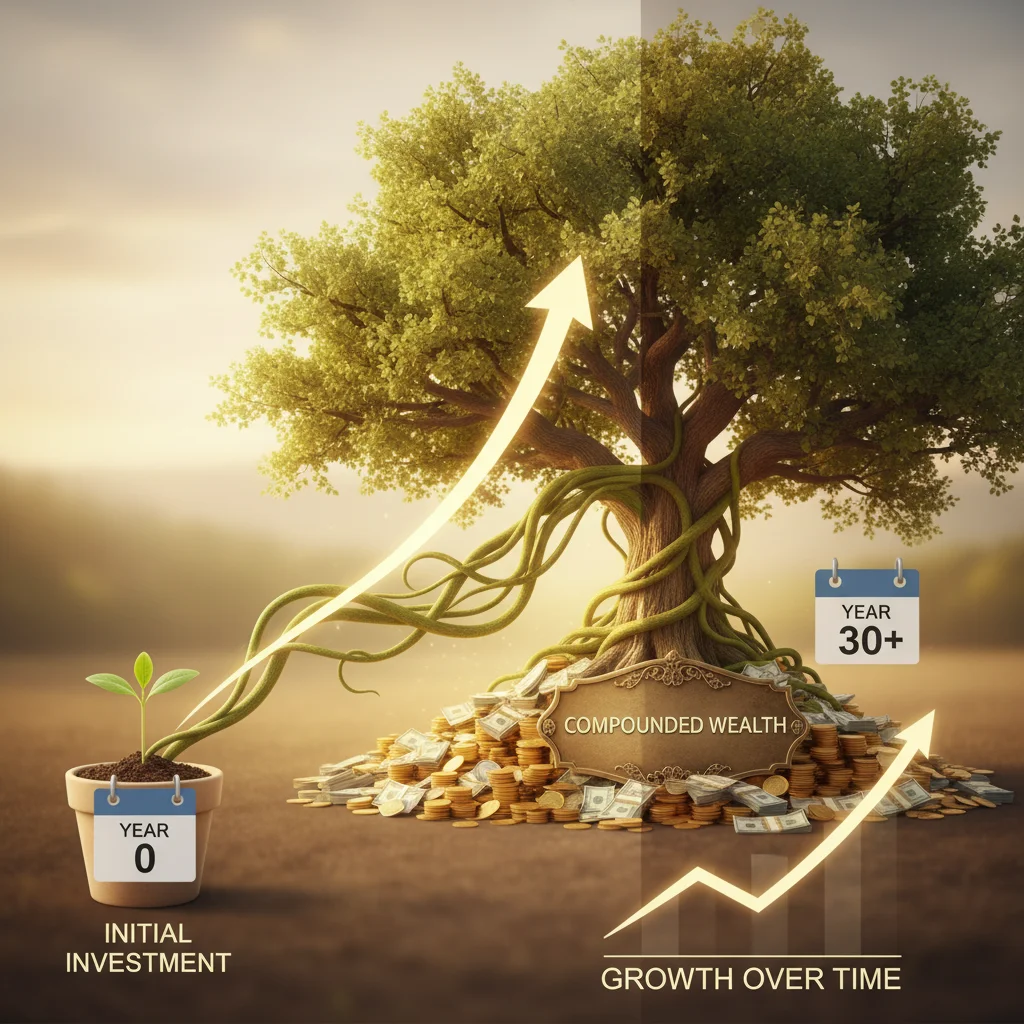
The single most powerful factor in successful Retirement Savings 2026 is time. The longer your money has to grow, the more compounding interest can work its magic. Even if you can only start with small contributions, the act of starting early and maintaining consistency can lead to astonishing results over decades. Don’t underestimate the impact of small, regular contributions.
Think of your retirement savings as a marathon, not a sprint. There will be market ups and downs, economic shifts, and personal life changes. The key is to stay consistent with your contributions, regularly review your plan, and make adjustments as needed. Automation can be a great tool here; setting up automatic contributions to your 401(k) and IRA ensures you’re consistently saving without having to think about it every month.
By diligently focusing on your Retirement Savings 2026, optimizing your 401(k) and IRA, and avoiding common pitfalls, you are actively building a robust financial foundation for your future. The peace of mind that comes with knowing you are prepared for retirement is invaluable.
Conclusion: Your Path to a Secure Retirement in 2026 and Beyond
As we’ve explored, optimizing your Retirement Savings 2026 involves more than just putting money aside. It requires a strategic approach to your 401(k) and IRA contributions, a thoughtful consideration of investment options, an understanding of tax implications, and the discipline to stay the course. By maximizing your contributions, leveraging employer matches, choosing appropriate investment vehicles, and considering advanced strategies like HSAs and asset location, you can significantly enhance your retirement nest egg.
Remember the importance of starting early, staying consistent, and seeking professional guidance when necessary. The financial decisions you make today will directly impact the quality of your life in retirement. Take control of your financial future, make informed choices, and set yourself on a path towards maximum growth and a secure, comfortable retirement. Your future self will thank you for the diligent efforts you put into your Retirement Savings 2026.