Spotting Fake Online Reviews: A Comprehensive Guide for Consumers
Anúncios
In the vast and ever-expanding landscape of online commerce, consumer reviews have become an indispensable tool. They serve as a digital word-of-mouth, guiding purchasing decisions, building trust, and shaping brand reputations. However, with the proliferation of platforms and the sheer volume of feedback, a new challenge has emerged: the insidious spread of fake online reviews. These deceptive testimonials, often designed to mislead consumers or unfairly boost a product’s appeal, can severely skew perceptions and lead to regrettable purchases. Understanding how to identify and navigate these fraudulent claims is no longer just a helpful skill; it’s a crucial necessity for any savvy online shopper.
The digital marketplace thrives on transparency and trust, yet the presence of fake online reviews undermines these foundational principles. From glowing five-star endorsements for subpar products to scathing one-star attacks on legitimate businesses, the motives behind these fabricated reviews are varied. They can range from direct competitors attempting to sabotage rivals, to businesses paying for positive feedback, or even individuals seeking free products in exchange for biased opinions. The consequences for consumers are significant: wasted money, disappointment, and a general erosion of trust in the online review system itself.
This comprehensive guide aims to arm you with the knowledge and tools necessary to become a discerning digital detective. We will delve into the common characteristics of fake online reviews, explore the psychological tactics they employ, and provide actionable strategies to help you distinguish genuine consumer feedback from cleverly disguised propaganda. By the end of this article, you’ll be better equipped to make informed decisions, protect your wallet, and contribute to a more authentic online shopping experience for everyone.
Anúncios
The Pervasive Problem of Fake Online Reviews
The internet has democratized information, but it has also created fertile ground for misinformation. Online reviews, once seen as an unfiltered voice of the customer, are now a battleground where authenticity is constantly challenged. The sheer volume of transactions occurring daily means that even a small percentage of fake online reviews can have a massive cumulative impact. Consider the scale: millions of products, millions of services, and billions of reviews. It’s a goldmine for those looking to manipulate public perception for financial gain.
Why Do Fake Online Reviews Exist?
The motivations behind generating fake online reviews are primarily economic. Businesses, especially smaller ones or those launching new products, might feel pressured to quickly establish a positive online presence. They might resort to:
Anúncios
- Boosting Sales: Higher star ratings and positive comments directly correlate with increased sales and visibility.
- Damaging Competitors: Negative reviews, often unfair or untrue, can drive customers away from rivals.
- Improving SEO: Many review platforms are indexed by search engines, and a strong review profile can indirectly improve search rankings.
- Reputation Management: Burying legitimate negative feedback with a flood of positive but fake ones.
- Product Launches: Creating early buzz and credibility for new items before genuine feedback can accumulate.
On the other side, individuals might be incentivized to write fake online reviews through:
- Free Products or Services: Often called ‘review manipulation schemes’ or ‘review farms’.
- Monetary Compensation: Direct payments for writing positive or negative reviews.
- Affiliate Marketing: Promoting products they haven’t genuinely used to earn commission.
The ecosystem supporting these activities is surprisingly sophisticated, with entire industries dedicated to buying and selling reviews. This makes it increasingly difficult for the average consumer to discern what’s real and what’s manufactured.
Red Flag 1: Unnatural Review Patterns and Timing
One of the most telling signs of fake online reviews is an unnatural pattern in their submission. Authentic reviews tend to trickle in over time, reflecting organic customer experiences. Sudden spikes or suspiciously consistent ratings are major red flags.
Sudden Influx of Reviews
Imagine a product that has had a steady stream of 5-10 reviews per month for a year, suddenly receiving 100 reviews in a single week, all overwhelmingly positive. This abrupt surge, especially if it coincides with a product launch, a special promotion, or a competitor’s negative press, is highly suspicious. It suggests a coordinated effort rather than genuine, spontaneous customer feedback.
Lack of Review History or Too Many Reviews for a New Product
Conversely, a brand new product or service with hundreds of glowing reviews within days or weeks of its launch should also raise an eyebrow. While some early adopters might be enthusiastic, a massive volume of highly positive feedback so quickly is often indicative of paid or incentivized reviews. Genuine products need time to accumulate a substantial, diverse body of reviews.
Identical or Very Similar Review Phrasing
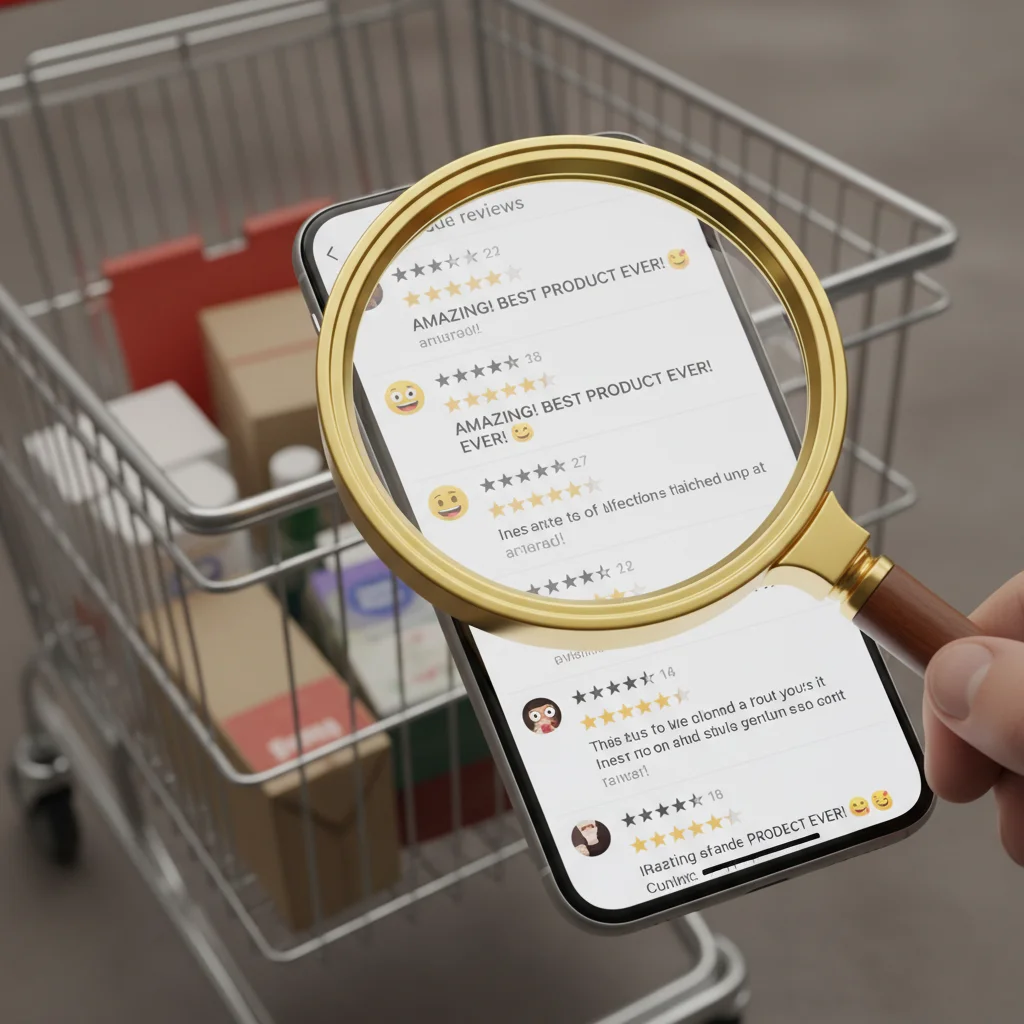
Reviewers who are part of a coordinated campaign might use similar phrases, keywords, or even entire sentences. This is particularly common when review farms are given specific instructions on what to highlight. Look for repetitive language, generic praise, or the same key features being lauded across multiple reviews, especially if they sound like marketing copy rather than personal experience.
Reviews Posted in Batches or at Odd Hours
Automated systems or review farms often operate globally, leading to reviews being posted in large batches, sometimes at unusual hours for the target market. If you see a cluster of reviews posted within minutes of each other, or all appearing in the middle of the night for your timezone, it’s a strong indicator of non-organic activity.
To spot these patterns, it’s helpful to look at the review date and time stamps. Many platforms allow you to sort reviews by ‘most recent.’ Scrolling through these can quickly reveal anomalies. Tools like Fakespot or ReviewMeta also analyze these patterns to help identify suspicious activity.

Red Flag 2: Generic, Vague, or Overly Enthusiastic Language
Authentic reviews often contain specific details, personal anecdotes, and a balanced perspective. Fake online reviews, on the other hand, tend to lean towards the extremes of generic praise or overly enthusiastic, almost unbelievable, adoration.
Lack of Specific Details
Genuine reviews usually describe a product’s features, how it was used, the specific problem it solved, or the experience with a service. For example, a real review for a coffee maker might mention its brewing speed, the quality of the coffee, ease of cleaning, or specific design elements. A fake review might simply say, “This is the best coffee maker ever!” without elaborating on *why* it’s the best.
Look for reviews that avoid specifics about the product’s functionality, durability, or user experience. If a review could apply to almost any product in its category, it’s a potential red flag.
Over-the-Top Praise or Unrealistic Expectations
While genuine enthusiasm exists, reviews that sound like they were written by a marketing department, using excessive superlatives (“life-changing,” “absolutely perfect,” “flawless”), without any hint of a drawback or nuance, are suspect. No product is perfect for everyone, and even the best products have minor imperfections or areas for improvement. A review that paints a picture of absolute perfection often lacks credibility.
Generic, Boilerplate Language
Some fake online reviews use very bland, generic language that could apply to almost any product. Phrases like “great value,” “works as expected,” or “highly recommend” without any context or explanation are common. These reviewers often don’t want to spend too much time crafting unique content, making their reviews sound hollow and unconvincing.
Repetitive Keywords (SEO Stuffing)
Sometimes, fake reviews are designed not just to mislead consumers but also to boost a product’s search engine ranking. This can lead to reviews being stuffed with specific keywords repeatedly, even when it sounds unnatural. For instance, a review might repeatedly mention “best XYZ brand wireless headphones for bass” multiple times in a short paragraph, indicating an attempt to manipulate search algorithms rather than provide genuine feedback.
Red Flag 3: Reviewer Profile Anomalies
Just as important as the content of the review is the profile of the reviewer. Suspicious reviewer profiles can reveal a lot about the authenticity of the feedback.
New Profiles with Few or Only 5-Star Reviews
Many platforms allow you to click on a reviewer’s profile to see their other contributions. A brand-new profile with no past reviews, or a profile that only ever posts 5-star reviews for a specific brand or product category, is highly suspicious. Genuine reviewers typically have a more diverse review history, with varying star ratings and products from different categories and brands.
Lack of Profile Picture or Generic Usernames
While not a definitive sign on its own, a reviewer with a generic username (e.g., ‘User12345’) and no profile picture, especially if combined with other red flags, can be an indicator of a fake account. Real users often personalize their profiles to some extent.
Reviews for Unrelated Products or Services
If a reviewer’s history shows them reviewing a diverse range of completely unrelated products – for example, a car part, a baby stroller, a gourmet coffee blend, and a financial service – all within a very short timeframe and all with glowing 5-star ratings, it suggests a professional reviewer or someone participating in multiple review schemes. It’s improbable for one person to have such deep, positive experiences across such disparate categories so quickly.
Suspiciously High Number of Reviews in a Short Period
While some people are prolific reviewers, someone posting dozens or even hundreds of reviews in a single day or week is a red flag. This volume of activity is often indicative of a bot or a person being paid to generate a large quantity of feedback rapidly.
Non-Native Language or Grammatical Errors
Many review farms operate internationally. This can result in reviews that sound unnatural, contain awkward phrasing, or have numerous grammatical errors, even if the overall sentiment is positive. While native speakers can make mistakes, a consistent pattern of poor English (or the local language of the platform) can be a strong indicator of a non-native writer attempting to sound authentic.
Red Flag 4: Extreme Sentiment Polarization
Authentic products and services usually elicit a range of opinions. While some products might be overwhelmingly positive, a healthy review profile typically includes a distribution of 3-star and 4-star reviews, alongside the 1-star and 5-star ones. Extreme sentiment polarization can be a sign of manipulation.
Only 1-Star and 5-Star Reviews
If a product or service has almost no middle-ground reviews (2, 3, or 4 stars) and is dominated solely by 1-star and 5-star ratings, it’s a significant red flag. This pattern suggests that genuine, nuanced feedback is either being suppressed or is simply not present because the reviews are fabricated. The 5-star reviews are likely purchased positives, and the 1-star reviews could be competitor attacks or attempts to appear ‘balanced’ by the review manipulators themselves.
Lack of Constructive Criticism or Praise
Genuine reviews, even positive ones, often include some form of constructive criticism or mention a minor drawback. Similarly, negative reviews, while highlighting flaws, often acknowledge some positive aspects. Reviews that are entirely devoid of any nuance, painting a product as either completely perfect or utterly terrible without any specific justification, are often fake.
Reviewers Responding with Aggression or Defensiveness
While rare, if you notice reviewers engaging in overly aggressive or defensive comments, especially against other reviewers who express skepticism, it could be a sign of a coordinated effort to protect the fake narrative. Authentic users typically engage in more civil discourse.

Red Flag 5: External Factors and Platform Behavior
Beyond the content and reviewer profile, external factors and how the review platform itself handles feedback can offer clues to the presence of fake online reviews.
Disproportionate Reviews Compared to Sales Volume
If a relatively unknown brand or a niche product has an enormous number of reviews compared to its apparent market presence or sales volume, it’s worth investigating. While popular items naturally garner many reviews, an obscure product with thousands of glowing testimonials might be artificially inflated.
Reviews Appearing on Multiple Platforms Simultaneously
Sometimes, fake online reviews campaigns involve posting the same or very similar content across various e-commerce sites or review platforms. If you see identical reviews for a product on Amazon, eBay, and the brand’s own website, it’s a strong indication of a coordinated effort rather than independent customer experiences.
Reviews That Don’t Align with the Product Description or Images
Carefully read the product description and look at the images. Then, compare them with the reviews. If reviews are praising features that aren’t mentioned or shown, or if they describe a product that seems entirely different from what’s advertised, it could be a sign that the reviews were written for a different product or are completely fabricated.
Lack of Verified Purchase Badges
Many review platforms (like Amazon) have ‘Verified Purchase’ badges, indicating that the reviewer actually bought the product through their platform. While not all genuine reviews will have this badge (e.g., if bought elsewhere or received as a gift), a large percentage of unverified reviews, especially for an expensive item, should raise suspicion. It’s much easier for review manipulators to post unverified reviews.
Platform’s Own Warning Systems
Some advanced platforms employ AI and other algorithms to detect and flag suspicious reviews. Pay attention if a platform itself issues warnings or removes a large number of reviews for a particular product. While not always visible to the public, consistent reports of review manipulation can sometimes lead to platform-level interventions.
Strategies for Navigating Online Reviews Effectively
Now that you’re aware of the red flags, how can you integrate this knowledge into your shopping habits to avoid falling victim to fake online reviews?
1. Don’t Rely Solely on Star Ratings
The overall star rating is a quick glance metric, but it can be easily manipulated. Always dive deeper into the actual content of the reviews. A 4.5-star product with thoughtful, detailed 3-star and 4-star reviews might be a better choice than a 4.9-star product with only generic 5-star reviews.
2. Read the 3-Star and 4-Star Reviews First
These are often the most honest and balanced. They tend to highlight both the pros and cons, offering a more realistic expectation of the product or service. The 1-star and 5-star reviews are more prone to being fake or overly emotional.
3. Look for Specifics, Not Just Sentiment
Prioritize reviews that provide concrete examples, describe specific use cases, and mention particular features. These details are much harder to fake convincingly. For instance, a review that says, “The battery life on these headphones lasted me a full 8 hours on my cross-country flight, unlike my previous pair that died after 4,” is far more credible than “Amazing headphones!”
4. Check Reviewer Profiles
Take a moment to click on the profiles of reviewers, especially those with very strong opinions. Look for a diverse review history, varying star ratings, and signs of genuine engagement with different products over time.
5. Use Third-Party Analysis Tools
Websites like Fakespot and ReviewMeta specialize in analyzing Amazon, Yelp, and other platform reviews to detect patterns of manipulation. While not infallible, they can provide an additional layer of scrutiny and highlight products with a high probability of having fake reviews. These tools use algorithms to identify suspicious language, timing, and reviewer behavior.
6. Cross-Reference Reviews Across Different Platforms
Don’t just rely on one website. If you’re considering a significant purchase, check reviews on multiple platforms (e.g., Amazon, the brand’s own site, independent tech blogs, YouTube reviews, consumer reports). A consistent pattern of feedback across various sources is a good indicator of authenticity.
7. Consider the Date of the Reviews
Newer reviews are often more relevant, but also pay attention to the overall timeline. A product with a consistent stream of reviews over months or years is generally more trustworthy than one with all its reviews clustered in a short period.
8. Be Wary of Excessive Discounts for Reviews
While some brands offer small incentives for reviews, be cautious of schemes that offer heavily discounted or free products in exchange for a ‘fair and honest’ review. The line between incentivized and coerced reviews can be blurry, and such reviews often lean overwhelmingly positive.
9. Trust Your Gut
If a review sounds too good to be true, it probably is. If something feels off about a product’s review section, listen to that intuition. The goal of fake online reviews is to override your natural skepticism.
The Broader Impact and Future of Online Reviews
The battle against fake online reviews is ongoing. Platforms are constantly improving their detection algorithms, but manipulators are also becoming more sophisticated. The integrity of online reviews is vital for the health of e-commerce, as consumer trust is a fragile commodity. When trust is eroded, consumers become hesitant, leading to slower adoption of new products and services.
For businesses, maintaining an authentic review profile is not just about ethics; it’s about long-term sustainability. Companies caught engaging in review manipulation often face severe penalties, including removal from platforms and significant reputational damage. Consumers are increasingly aware and unforgiving of such deceptive practices.
The future of online reviews will likely involve even more advanced AI detection, stricter platform policies, and perhaps even blockchain technology to verify review authenticity. In the meantime, the most powerful tool against fake reviews remains the informed and vigilant consumer.
Conclusion
Navigating the digital marketplace requires a keen eye and a healthy dose of skepticism. Fake online reviews are an unfortunate reality, but by understanding their characteristics and employing critical thinking, you can significantly improve your ability to distinguish genuine feedback from deceptive marketing. Remember to look beyond the star rating, scrutinize reviewer profiles, analyze review patterns, and always prioritize specific, detailed feedback over generic praise.
By becoming adept at spotting these red flags, you not only protect yourself from poor purchasing decisions but also contribute to a more honest and reliable online environment for everyone. Your informed choices help to empower legitimate businesses and starve the parasitic industry of review manipulation. Shop smart, stay vigilant, and let authentic voices guide your online journey.