Achieve an 800+ FICO Score: 7 Steps to Maximize Your Credit in 12 Months

Maximizing Your Credit Score: 7 Actionable Steps to Achieve an 800+ FICO Score Within 12 Months
Anúncios
In today’s financial landscape, a high credit score is more than just a number; it’s a powerful tool that unlocks doors to better interest rates, favorable loan terms, and even improved rental and insurance opportunities. An 800+ FICO score represents the pinnacle of creditworthiness, signaling to lenders that you are an exceptionally reliable borrower. While achieving such a score might seem daunting, it’s an entirely attainable goal with strategic planning and consistent effort. This comprehensive guide will walk you through 7 actionable steps designed to help you maximize credit score potential and reach that coveted 800+ FICO score within a 12-month timeframe. By understanding the key factors that influence your score and diligently implementing these strategies, you can transform your financial future.
Understanding the FICO Score: The Foundation of Your Credit Journey
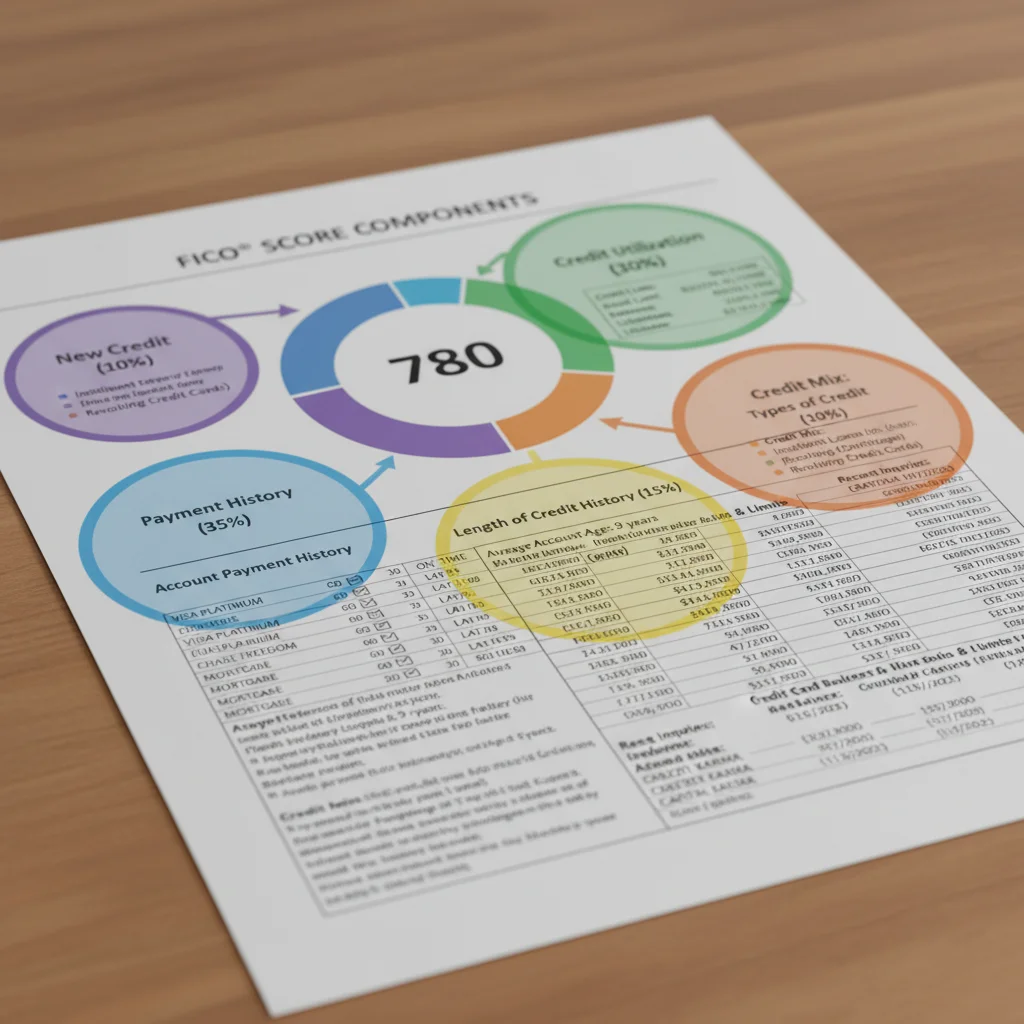
Before diving into the actionable steps, it’s crucial to understand what a FICO score is and how it’s calculated. FICO, or Fair Isaac Corporation, is the most widely used credit scoring model. Your FICO score is a three-digit number, typically ranging from 300 to 850, that lenders use to assess your credit risk. The higher your score, the lower your perceived risk. Five main categories contribute to your FICO score:
Anúncios
- Payment History (35%): This is the most significant factor. It reflects whether you pay your bills on time. Late payments, bankruptcies, and collections can severely damage your score.
- Amounts Owed (30%): This refers to how much debt you have relative to your available credit. High credit utilization, especially above 30%, can negatively impact your score.
- Length of Credit History (15%): The longer your credit accounts have been open and in good standing, the better. This demonstrates a consistent history of responsible borrowing.
- Credit Mix (10%): Lenders like to see a healthy mix of different types of credit, such as installment loans (mortgages, car loans) and revolving credit (credit cards).
- New Credit (10%): Opening too many new credit accounts in a short period can be seen as risky, as it might indicate financial distress.
Each of these components plays a vital role in determining your overall credit health. To maximize credit score, you must address each area strategically. Our goal is to optimize each of these factors over the next 12 months.
Step 1: Master Your Payment History – The 35% Weight
The single most impactful action you can take to maximize credit score is to ensure a flawless payment history. This component alone accounts for 35% of your FICO score. Late payments, even by a few days, can stay on your credit report for up to seven years and significantly drag down your score. To achieve an 800+ FICO score, perfection is the goal.
Automate All Payments
The easiest way to avoid missing payments is to set up automatic payments for all your bills. This includes credit cards, loans, utilities, rent, and any other recurring expenses. Most banks and creditors offer this service, allowing you to schedule payments to be deducted from your checking account on or before the due date. This eliminates the risk of forgetting a payment or missing a due date due to a busy schedule.
Anúncios
Set Up Reminders
Even with automation, it’s wise to have backup reminders. Use calendar alerts, smartphone apps, or even simple sticky notes to remind yourself a few days before a payment is due. This allows you to double-check that the automatic payment is on track and that you have sufficient funds in your account to cover it.
Pay More Than the Minimum
While paying the minimum keeps your account current, paying more than the minimum, especially on credit cards, can significantly reduce your interest payments and accelerate debt payoff. This, in turn, helps with the ‘Amounts Owed’ category, which we’ll discuss next.
Review Your Credit Report Regularly
Mistakes happen. Periodically review your credit report from all three major bureaus (Equifax, Experian, TransUnion) to ensure all payments are accurately reported. You can obtain a free copy of your credit report from each bureau once every 12 months at AnnualCreditReport.com. If you find any inaccuracies, dispute them immediately.
Step 2: Optimize Your Credit Utilization Ratio – The 30% Impact
Your credit utilization ratio is the second most important factor in your FICO score, accounting for 30%. This ratio is calculated by dividing your total credit card balances by your total credit limits. For example, if you have a total credit limit of $10,000 across all your cards and you owe $3,000, your utilization is 30%. To maximize credit score and aim for 800+, you generally want to keep this ratio below 30%, with experts often recommending below 10% for excellent scores.
Reduce Your Balances
The most straightforward way to lower your utilization is to pay down your credit card balances. Focus on the cards with the highest balances first, or use the debt snowball or avalanche methods to pay off debt strategically. Even if you can’t pay off everything, reducing balances significantly will have a positive impact.
Increase Your Credit Limits
Another effective strategy is to increase your available credit. You can request a credit limit increase from your existing credit card issuers. Be cautious with this approach: only do this if you trust yourself not to spend the additional credit. The goal is to increase your limit without increasing your spending, thereby lowering your utilization ratio. Some issuers may perform a hard inquiry, which can temporarily ding your score, so weigh the pros and cons.
Open New Credit Accounts (Strategically)
While opening new accounts can temporarily lower your score due to a hard inquiry and a shorter average age of accounts, it can also increase your total available credit, thus lowering your utilization. This should be done very cautiously and only if you have a solid plan to manage the new credit responsibly and avoid accumulating more debt. This strategy is more advanced and should be considered only after mastering the first two points.
Pay Off Balances Before the Statement Closing Date
Credit card companies typically report your balance to the credit bureaus on your statement closing date, not your payment due date. To ensure a low reported utilization, aim to pay down your balance before the statement closes each month. This trick can significantly impact your reported utilization, even if you carry a small balance throughout the month.
Step 3: Cultivate a Long Credit History – The 15% Factor
The length of your credit history, accounting for 15% of your FICO score, measures how long your credit accounts have been open and how long it has been since you used certain accounts. Lenders prefer to see a long history of responsible borrowing because it provides more data points to assess your reliability.
Don’t Close Old Accounts
One common mistake people make is closing old, paid-off credit card accounts. While it might feel like a good idea to simplify your finances, closing an old account reduces your total available credit and shortens the average age of your accounts, both of which can negatively impact your score. Keep old accounts open, even if you rarely use them, as long as they don’t have annual fees you can’t justify.
Keep Old Accounts Active
To ensure old accounts remain active and continue to contribute positively to your credit history, make a small purchase on them every few months and pay it off immediately. This prevents the issuer from closing the account due to inactivity.
Be Patient
Building a long credit history takes time. There’s no shortcut here. The longer you maintain open, active accounts with a perfect payment history, the more your score will naturally improve in this category. Focus on the other actionable steps, and time will take care of this factor.
Step 4: Diversify Your Credit Mix – The 10% Contribution
Your credit mix, representing 10% of your FICO score, refers to the different types of credit accounts you have. A healthy mix typically includes both revolving credit (like credit cards) and installment loans (like car loans, mortgages, or student loans). Lenders like to see that you can responsibly manage various forms of credit.
Consider a Secured Loan (If Necessary)
If your credit mix is heavily skewed towards credit cards, or if you’re new to credit, consider a small secured loan. These loans are backed by collateral (like a savings account) and can help you establish a positive payment history for an installment loan without significant risk. Just ensure the loan is reported to all three credit bureaus.
Avoid Unnecessary Loans
While diversification is good, don’t take out loans you don’t need just to improve your credit mix. The interest costs and potential for debt accumulation far outweigh the minor benefit to your credit score. Only take on new credit when it aligns with your financial goals and you can comfortably afford the payments.
Student Loans and Mortgages
If you have student loans or a mortgage, these already contribute positively to your credit mix, provided you make on-time payments. These types of accounts demonstrate your ability to handle significant, long-term debt responsibly.
Step 5: Be Strategic with New Credit – The Other 10%
New credit inquiries and recently opened accounts make up the remaining 10% of your FICO score. Each time you apply for new credit, a ‘hard inquiry’ is typically made on your credit report. A hard inquiry can cause a small, temporary dip in your score (usually 3-5 points) and remains on your report for two years, although its impact lessens over time. Opening multiple new accounts in a short period can signal higher risk to lenders.

Limit New Credit Applications
During your 12-month journey to an 800+ FICO score, try to limit applications for new credit unless absolutely necessary. If you need a new credit card to help with utilization, research options carefully and apply for only one or two that best suit your needs. Avoid opening store credit cards just for a small discount, as these often have high interest rates and can lead to multiple hard inquiries.
Understand Soft vs. Hard Inquiries
It’s important to distinguish between soft and hard inquiries. Soft inquiries (like checking your own credit score or pre-qualified offers) do not affect your credit score. Hard inquiries, which occur when a lender checks your credit for a lending decision, do. Be mindful of when a hard inquiry will be performed.
Rate Shopping for Loans
If you are shopping for a mortgage or an auto loan, multiple inquiries from different lenders within a short period (typically 14-45 days, depending on the scoring model) are often treated as a single inquiry. This allows you to compare rates without undue negative impact on your score. However, this only applies to specific types of loans, not credit cards.
Step 6: Monitor Your Credit Report and Score Regularly
Proactive monitoring is a non-negotiable step to maximize credit score. Regularly checking your credit report and score allows you to catch errors, identify fraudulent activity, and track your progress. This vigilance is key to maintaining control over your financial health.
Access Your Free Credit Reports
As mentioned earlier, you are entitled to a free credit report from each of the three major bureaus (Equifax, Experian, and TransUnion) once every 12 months via AnnualCreditReport.com. Stagger your requests (e.g., one every four months) to keep a continuous eye on your reports throughout the year.
Utilize Free Credit Monitoring Services
Many credit card companies and financial institutions offer free credit score monitoring services (e.g., Credit Karma, Experian Boost, FICO Score Open Access). These services often provide regular updates to your score and alerts for significant changes, helping you stay informed without cost.
Dispute Errors Immediately
If you find any inaccuracies on your credit report, whether it’s a late payment you made on time, an incorrect balance, or fraudulent activity, dispute it immediately with the credit bureau and the creditor. The Fair Credit Reporting Act (FCRA) requires credit bureaus to investigate disputes and correct or remove inaccurate information. This process can take time, so prompt action is essential.
Step 7: Practice Consistent Financial Discipline and Patience
Achieving an 800+ FICO score within 12 months is an ambitious but realistic goal that requires consistent financial discipline and patience. Credit building is a marathon, not a sprint. While the previous six steps provide the tactical roadmap, this final step emphasizes the mindset and long-term commitment required.
Budgeting and Saving
A solid budget is the foundation of financial discipline. It helps you understand where your money is going, identify areas for savings, and ensure you have enough funds to meet your payment obligations. Building an emergency fund can also prevent you from relying on credit cards for unexpected expenses, thus keeping your utilization low.
Avoid Lifestyle Inflation
As your income potentially increases, resist the urge to immediately increase your spending. Maintain a modest lifestyle to ensure you have ample funds to pay down debt and save, further solidifying your financial position and ability to manage credit responsibly.
Stay Informed
The financial world is constantly evolving. Stay informed about credit best practices, changes in credit scoring models, and new financial products. Knowledge is power when it comes to managing your money and maximizing credit score.
Don’t Give Up
There might be bumps in the road. A small slip-up or an unexpected expense could temporarily impact your score. Don’t get discouraged. Recommit to your plan, learn from any setbacks, and continue to apply the strategies outlined here. Consistency over time is what truly builds an excellent credit score.
Conclusion: Your Path to an 800+ FICO Score
Achieving an 800+ FICO score in 12 months is a testament to financial diligence and smart decision-making. By meticulously focusing on these 7 actionable steps – mastering your payment history, optimizing credit utilization, cultivating a long credit history, diversifying your credit mix, being strategic with new credit, regularly monitoring your reports, and practicing consistent financial discipline – you lay a robust foundation for exceptional creditworthiness. This high score will not only save you thousands of dollars in interest over your lifetime but also open doors to unparalleled financial opportunities. Start implementing these strategies today, track your progress diligently, and watch your efforts maximize credit score potential, paving the way for a secure and prosperous financial future.